

McGill Cam Followers: Structure, Types and Model Code Guide

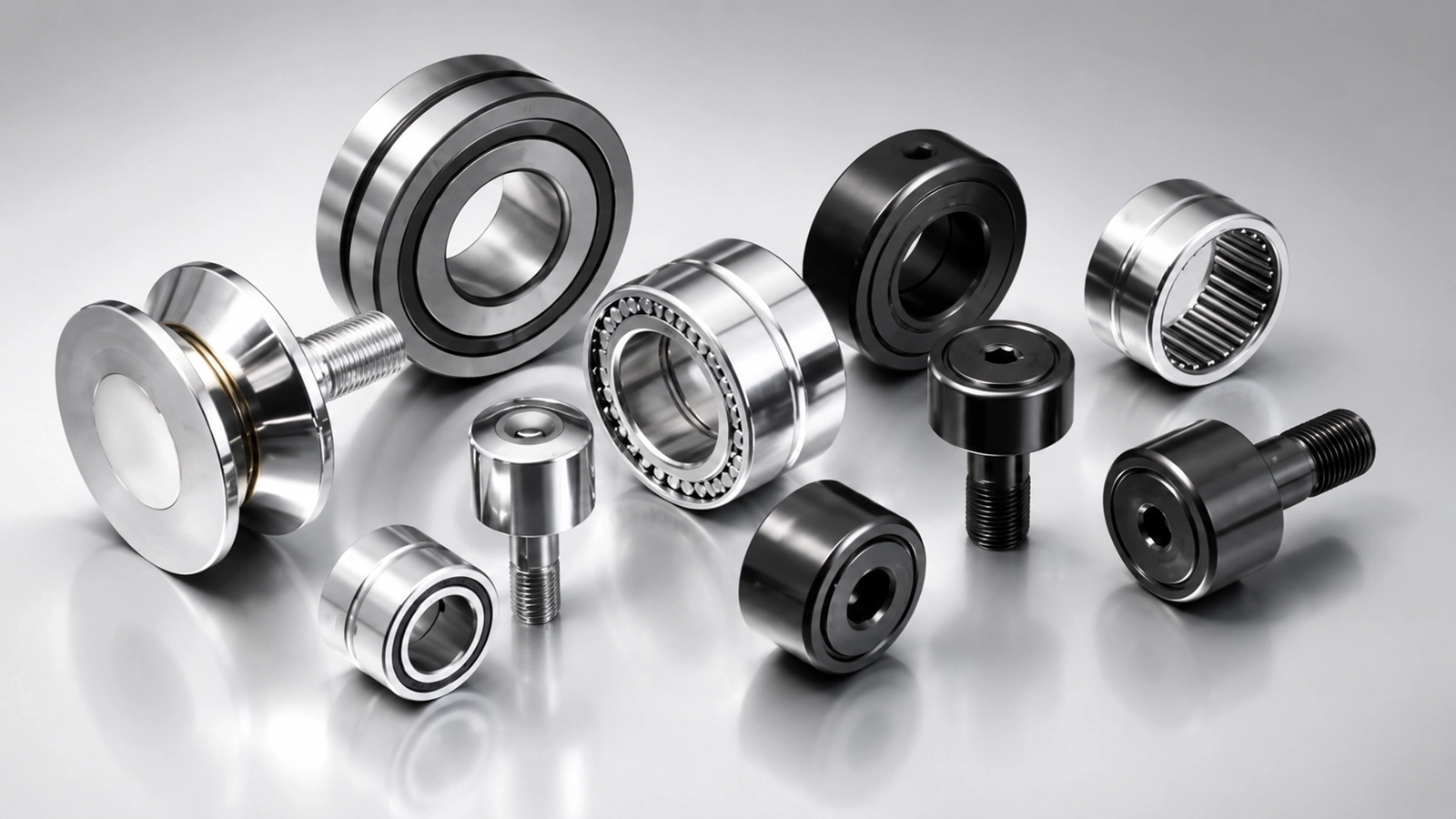
When purchasing McGill cam followers, a familiar outside shape is not enough to confirm the correct bearing. A cam follower bearing may look similar from the outside, but the model code can indicate important differences in mounting style, stud strength, sealing, roller design, outside diameter profile, and inch or metric dimensions.
For distributors, maintenance teams, engineers, and OEM buyers, this matters because the wrong structure may lead to difficult installation, shorter service life, or poor load sharing in the machine. Before ordering a McGill cam follower or discussing an alternative option, buyers should read the full designation and compare it with the actual working conditions.
Table of contents
- McGill Main Bearing Types
- Detailed Classification of McGill Cam Follower Bearings
- What the Letters and Suffixes in McGill Cam Follower Models Usually Indicate
- Application Conditions Buyers Should Confirm
- McGill Cam Follower Bearing Model List and Key Parameters
- How HSN Supports Buyers Looking for McGill Cam Follower Alternatives
- What Information to Send for a Faster Quotation or Replacement Check
- Remarks
McGill Main Bearing Types
McGill precision bearings cover several families used in motion, guiding, and support applications. The main focus of this page is CAMROL cam follower bearings, but buyers may also meet related McGill names when checking older equipment or maintenance records.
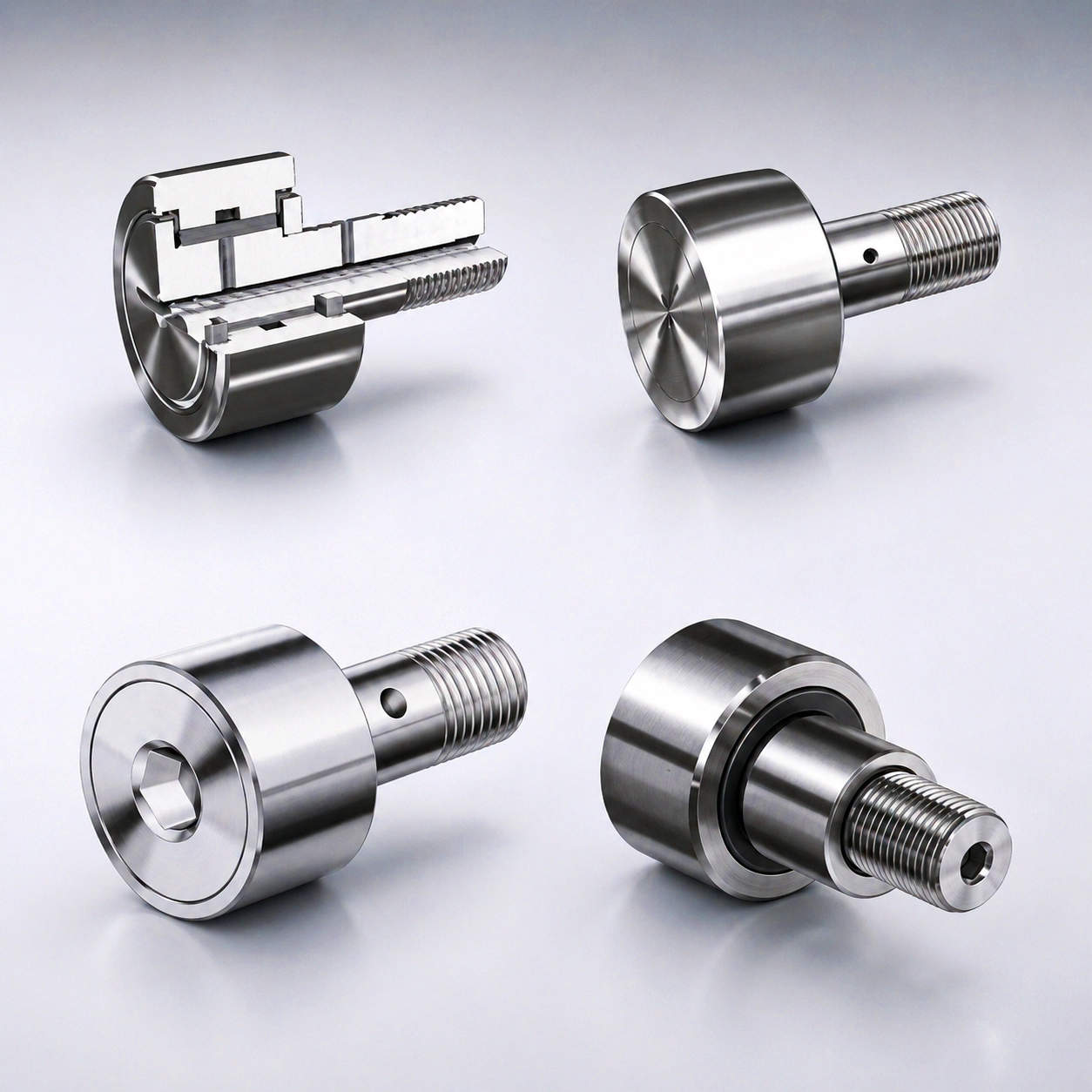
- CAMROL cam follower bearings: stud type and yoke type roller followers used in cam tracks, guide rollers, table support positions, follower arms, and linear movement systems.
- TRAKROL track roller bearings: track roller and guide bearing designs used where the outer ring runs directly on a track or guide surface.
- CAGEROL and GUIDEROL roller bearings: caged and center-guided roller bearing families used where compact radial load support is required.
- SPHERE-ROL spherical roller bearings: a separate McGill family for applications where spherical roller bearing features are required.
In procurement communication, it is better to separate these families clearly. A CAMROL bearing, a TRAKROL bearing, and a CAGEROL bearing may all be related to rolling contact, but they are not the same product type.
Detailed Classification of McGill Cam Follower Bearings
McGill cam followers are usually identified first by mounting style. The mounting design affects shaft support, load capacity, installation method, and the way the bearing should be checked for replacement.
Stud Type Cam Followers
Stud type cam followers are often used where the bearing is mounted in a housing or support plate through an integral stud. This structure is simple to install and is commonly selected for follower arms, cam mechanisms, indexing equipment, packaging machinery, and guide positions.
Typical model families include CF, CF-S, MCF, MCF-S, MCFR, and MCFR-S. When checking these models, buyers should confirm the roller outside diameter, roller width, stud diameter, thread, lubrication method, and whether the bearing uses a sealed structure.
Heavy Stud Cam Followers
Heavy stud versions are used when the stud area needs stronger support under heavier loads, intermittent shock, or more demanding cam operation. CFH and CFH-S series names are commonly associated with this category.
For replacement discussion, do not replace a heavy stud cam follower with a standard stud design only because the outer roller size looks similar. The stud section, thread size, mounting condition, and load direction should be checked together.
Yoke Type Cam Followers / Cam Yoke Rollers
Yoke type cam followers, also called cam yoke rollers, are mounted on a shaft or pin and supported from both sides. This structure can be considered where the machine allows a yoke mounting arrangement. It may be preferred when reducing stud deflection is important.
Typical model families include CYR, CYR-S, MCYR, MCYR-S, MCYRR, and MCYRR-S. Buyers should confirm the bore, shaft fit, end clamping method, and whether the application has light, moderate, or heavy load conditions.
Bushing Type and Special Cam Follower Designs
Some applications use bushing type cam followers or special designs for compact mounting, unusual guiding requirements, or equipment-specific structures. Examples include BCF-S and BCYR-S series references. Special cam follower designs should be reviewed with drawings, sample photos, and application details rather than confirmed only by a partial model number.
Metric CAMROL Bearings
Metric cam follower bearings help buyers working with ISO or metric machinery designs. Model families such as MCF, MCFR, MCYR, MCYRR, MCFD, and MCYRD are often checked when the machine design uses metric dimensions and metric threads.
Some metric designs use cylindrical rollers instead of standard needle rollers. These models should be identified carefully because the roller type can affect load rating, axial load behavior, and application suitability.
Housing design also matters. A fixed housing is suitable when the shaft alignment and mounting accuracy are already controlled. A self-aligning housing can help compensate for small alignment errors. However, it is not a substitute for poor machine design. The shaft layout, load direction and drive position still need to be reviewed.
What the Letters and Suffixes in McGill Cam Follower Models Usually Indicate
The complete model code is the starting point for identification. However, code meanings should still be confirmed by the full model and drawing, because suffixes can vary by series.
| Code Element | Common Identification Meaning |
Procurement Note |
|---|---|---|
| CF | Standard stud type cam follower | Confirm stud size, roller O.D., width, and lubrication details. |
| CFH | Heavy stud cam follower | Check whether heavy stud design is required by the load condition. |
| CYR | Cam yoke roller | Confirm bore, shaft fit, yoke mounting, and end clamping. |
| MCF / MCFR | Metric stud type cam follower | Confirm metric thread, roller shape, and seal requirement. |
| MCYR / MCYRR | Metric yoke type cam follower | Confirm mounting arrangement and bore dimensions. |
| S | Often associated with sealed versions | Confirm the actual seal type and contamination level. |
| D | May indicate cylindrical roller versions in certain metric series | Confirm load direction and roller construction before replacement. |
| Eccentric collar | Radial adjustment feature | Useful where positioning, preload, clearance, or wear compensation is needed. |
| Crowned O.D. | Crowned outer diameter surface | Helpful where slight misalignment may cause edge loading. |
Application Conditions Buyers Should Confirm
A cam follower bearing works directly with the track, cam, or guide surface. Therefore, selection should consider both the bearing itself and the surrounding machine design.
- Mounting style: stud mounting, yoke mounting, cantilever support, straddle support, or eccentric adjustment.
- Load condition: uniform load, light shock, moderate shock, heavy shock, reversing load, or intermittent operation.
- Track contact: crowned O.D., cylindrical O.D., guide position, edge loading risk, and alignment condition.
- Lubrication and sealing: grease or oil lubrication, relubrication access, dust, moisture, metal particles, and seal requirement.
- Operating environment: temperature, vibration, contamination, speed, and installation accuracy.
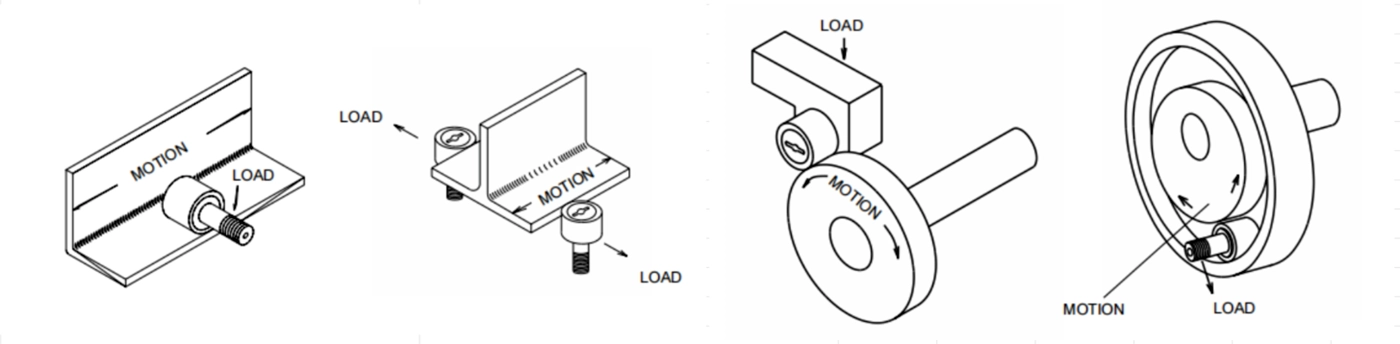
If the cam follower works in shock loading, vibration, high contamination, or limited lubrication, buyers should not rely only on interchange tables. The actual working condition should be included in the inquiry.
McGill Cam Follower Bearing Model List and Key Parameters
| UNSEALED BRG. NO. (1) |
SEALED BRG. NO. (1) |
ROLLER DIA. RD NOM. (2) |
ROLLER WIDTH W +0.00 -0.12 |
STUD DIA. SD NOM. (3) |
STUD L’GTH. SL NOM. |
OVERAL LENGTH L NOM. |
ENDPLATE EXTENSION E NOM. |
THREAD | THREAD LENGTH TL MIN. |
OIL HOLE | |
|---|---|---|---|---|---|---|---|---|---|---|---|
| mm | mm | mm | mm | mm | mm | mm | mm | (HC) NOM. |
(HD) NOM. |
||
| mm | mm | ||||||||||
| MCFR-13 | MCFR-13-S | 13 | 9 | 5 | 13 | 23 | 0.6 | M5x0.8 | 7.5 | – | – |
| MCFR-16 MCF-16 | MCFR-16-S MCF-16-S | 16 | 11 | 6 | 16 | 28 | 0.6 | M6x1 | 9 | – | – |
| MCFR-19 MCF-19 | MCFR-19-S MCF-19-S | 19 | 11 | 8 | 20 | 32 | 0.6 | M8x1.25 | 11 | – | – |
| MCFR-22 MCF-22 | MCFR-22-S MCF-22-S | 22 | 12 | 10 | 23 | 36 | 0.6 | M10x1 | 12 | – | – |
| MCFR-22A MCF-22A | MCFR-22A-S MCF-22A-S | 22 | 12 | 10 | 23 | 36 | 0.6 | M10x1.25 | 13 | – | – |
| MCFR-26 MCF-26 | MCFR-26-S MCF-26-S | 26 | 12 | 10 | 23 | 36 | 0.6 | M10x1 | 12 | – | – |
| MCFR-26A MCF-26A | MCFR-26A-S MCF-26A-S | 26 | 12 | 10 | 23 | 36 | 0.6 | M10x1.25 | 13 | – | – |
| MCFR-30 MCF-30 | MCFR-30-S MCF-30-S | 30 | 14 | 12 | 25 | 40 | 0.6 | M12x1.5 | 14 | 6 | 3 |
| MCFR-32 MCF-32 | MCFR-32-S MCF-32-S | 32 | 14 | 12 | 25 | 40 | 0.6 | M12x1.5 | 14 | 6 | 3 |
| MCFR-35 MCF-35 | MCFR-35-S MCF-35-S | 35 | 18 | 16 | 32.5 | 52 | 0.8 | M16x1.5 | 18 | 8 | 3 |
| MCFR-40 MCF-40 | MCFR-40-S MCF-40-S | 40 | 20 | 18 | 36.5 | 58 | 0.8 | M18x1.5 | 19 | 8 | 3 |
| MCFR-40A MCF-40A | MCFR-40A-S MCF-40A-S | 40 | 20 | 18 | 36.5 | 58 | 0.8 | M18x1.5 | 20 | 10 | 3 |
| MCFR-47 MCF-47 | MCFR-47-S MCF-47-S | 47 | 24 | 20 | 40.5 | 66 | 0.8 | M20x1.5 | 21 | 9 | 4 |
| MCFR-47A MCF-47A | MCFR-47A-S MCF-47A-S | 47 | 24 | 20 | 40.5 | 66 | 0.8 | M20x1.5 | 22 | 12 | 4 |
| MCFR-52 MCF-52 | MCFR-52-S MCF-52-S | 52 | 24 | 20 | 40.5 | 66 | 0.8 | M20x1.5 | 21 | 9 | 4 |
| MCFR-52A MCF-52A | MCFR-52A-S MCF-52A-S | 52 | 24 | 20 | 40.5 | 66 | 0.8 | M20x1.5 | 22 | 12 | 4 |
| MCFR-62 MCF-62 | MCFR-62-S MCF-62-S | 62 | 29 | 24 | 49.5 | 80 | 0.8 | M24x1.5 | 25 | 11 | 4 |
| MCFR-62A MCF-62A | MCFR-62A-S MCF-62A-S | 62 | 29 | 24 | 49.5 | 80 | 0.8 | M24x1.5 | 25 | 12 | 4 |
| MCFR-72 MCF-72 | MCFR-72-S MCF-72-S | 72 | 29 | 24 | 49.5 | 80 | 0.8 | M24x1.5 | 25 | 11 | 4 |
| MCFR-72A MCF-72A | MCFR-72A-S MCF-72A-S | 72 | 29 | 24 | 49.5 | 80 | 0.8 | M24x1.5 | 25 | 12 | 4 |
| MCFR-80 MCF-80 | MCFR-80-S MCF-80-S | 80 | 35 | 30 | 63 | 100 | 1 | M30x1.5 | 32 | 15 | 4 |
| MCFR-85 MCF-85 | MCFR-85-S MCF-85-S | 85 | 35 | 30 | 63 | 100 | 1 | M30x1.5 | 32 | 15 | 4 |
| MCFR-90 MCF-90 | MCFR-90-S MCF-90-S | 90 | 35 | 30 | 63 | 100 | 1 | M30x1.5 | 32 | 15 | 4 |
How HSN Supports Buyers Looking for McGill Cam Follower Alternatives
HSN Bearing Group supports overseas buyers with industrial bearing supply, quality inspection, replacement discussions, and customization communication based on models, drawings, samples, and working conditions. HSN is an independent bearing supplier and technical service provider, not an official McGill distributor.
For buyers who cannot quickly find a required McGill cam follower model, HSN can help review the model reference, check available supply options, and discuss alternative production or sourcing routes when the technical details are clear. Replacement suitability should always be confirmed before ordering.
Before shipment, HSN focuses on key inspection items such as dimensional tolerance, hardness, and clearance. Additional checks such as material verification, vibration, noise, rotation accuracy, and ultrasonic flaw detection can be discussed according to customer requirements.
What Information to Send for a Faster Quotation or Replacement Check
To reduce back-and-forth communication, please send as much information as possible at the beginning of the inquiry.
- Complete McGill model number or the model printed on the bearing.
- Clear photos of the bearing, package, marking, and application position.
- Drawing or main dimensions, including roller O.D., width, stud or bore size, and thread.
- Stud type, heavy stud type, yoke type, metric type, sealed type, or cylindrical roller type.
- Application, load condition, speed, vibration, shock, contamination, and lubrication method.
- Quantity, inspection requirements, and expected delivery time.
Remarks
For detailed McGill cam follower models beyond the above-listed series, please contact HSN for confirmation. For other types of bearings, please contact HSN with model numbers, drawings, sample photos, or working conditions.
This article is based on independent analysis of publicly available technical information and industry understanding, and aims to provide knowledge sharing. All brand names and trademarks mentioned in this article belong to their respective owners. HSN Bearing Group is an independent bearing supplier and technical service provider.
Have a Question?
Need hard-to-find bearing models from China? Send the model number, drawing, sample photo, quantity, and working conditions to HSN for technical confirmation.