

Why Oil Sleeve Bearing Orders Need Structure and Model Checks?

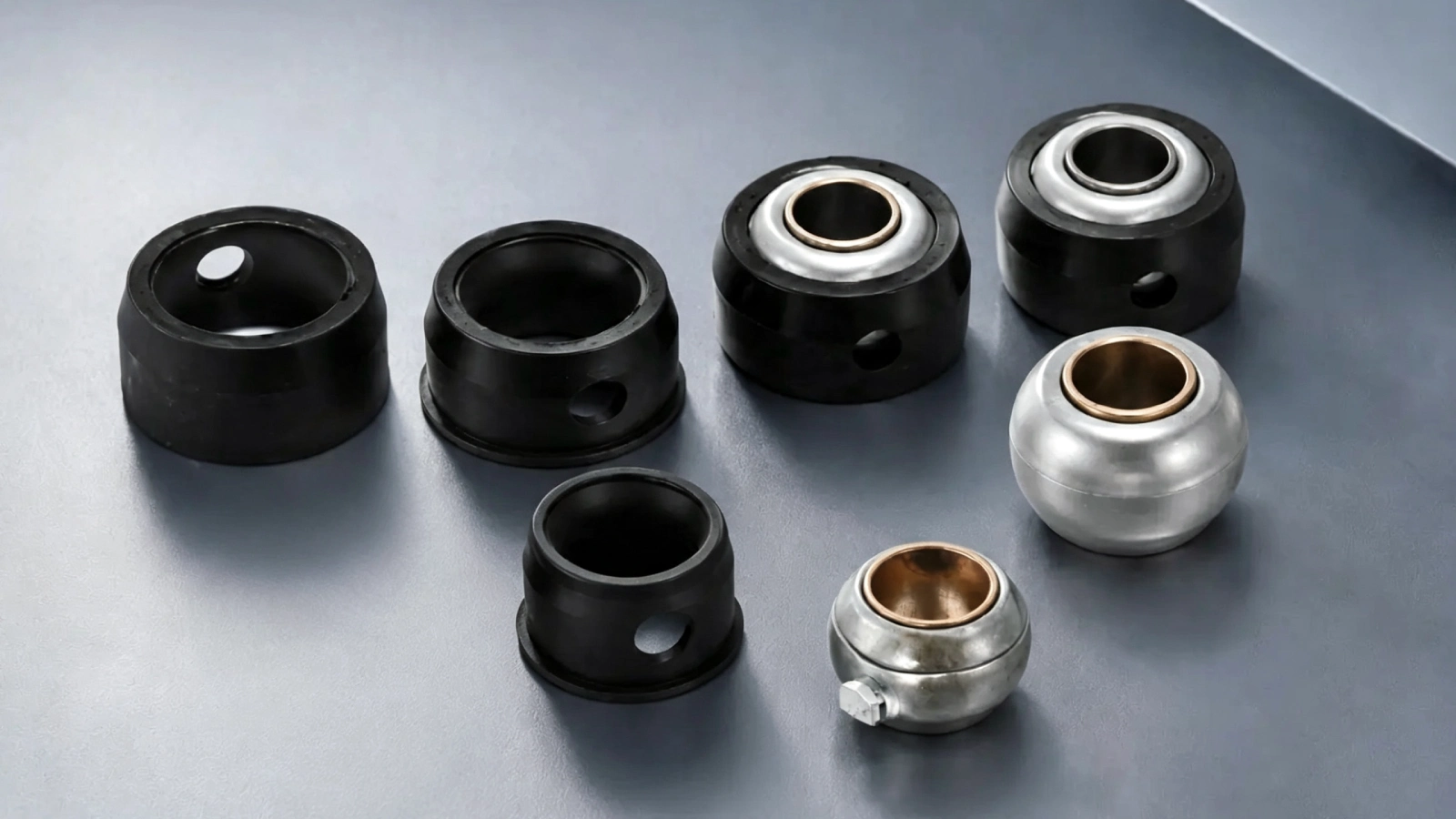
An oil sleeve bearing supports a rotating shaft on a sliding film rather than rolling elements. In blower equipment, a porous bronze bushing, oil cup, housing, rubber cushion, and self-aligning seat can work together as one compact support. The arrangement can run quietly, but it depends on correct oil delivery and shaft condition.
Similar-looking units can use different outside diameters, journals, insulators, sealing methods, or thrust-control parts. Therefore, a buyer should confirm the complete assembly and not select from shaft diameter alone. Lau part numbers also act as complete references; their digits should not be decoded as universal dimensions without the matching product data.
Table of contents
- How Does an Oil Sleeve Bearing Support a Shaft?
- Which Oil Sleeve Bearing Structures Are Available?
- Where Are Oil Sleeve Bearings Commonly Used?
- What Installation and Removal Details Matter?
- Which LAU Series and Models Should Buyers Know?
- What Must Buyers Confirm Before Ordering?
- How Can HSN Support Oil Sleeve Bearing Orders?
- FAQ
How Does an Oil Sleeve Bearing Support a Shaft?
The bushing provides the cylindrical sliding surface, while oil reaches the shaft through pores, a wick, or an oil cup. Rotation draws lubricant into the contact zone. The supporting housing keeps the bushing aligned, and a resilient cushion can isolate vibration in blower assemblies.
A sleeve bearing does not automatically control shaft end movement. Several Lau oil and sealed sleeve designs require a separate thrust collar kit. Cartridge models with a journal can use a different axial arrangement. Consequently, the shaft support, thrust control, oil path, and mounting bracket must be reviewed together.
Which Oil Sleeve Bearing Structures Are Available?
The main structural differences concern lubricant supply, sealing, rubber cushioning, and whether the assembly includes a journal. In LAU product names,“with insulator”identifies a specified bearing construction. However, buyers should not interpret this term as proof of electrical insulation unless the manufacturer provides an electrical rating.
| Structure | Main feature | Ordering check |
|---|---|---|
| Re-oilable sleeve unit | Porous bronze bushing with a drive-type oil cup | Oil grade, cup access, shaft size, and thrust collar |
| Sealed sleeve unit | Factory-packed lubricant and an enclosed sliding element | Temperature, outside diameter, and collar requirement |
| Sleeve bearing with insulator | Bearing assembly supported by a molded rubber outer component | Outside diameter over rubber, cushion geometry, bracket fit, and vibration-control requirements |
| Cartridge type | Bushing and journal assembly supported by steel caps and resilient cushioning | Spider bracket, journal, shaft condition, and axial location |
| Pillow block sleeve unit | Re-oilable bushing in a two-piece steel housing | Bolt spacing, center height, horizontal-shaft use, and thrust collar |
The rubber component can help cushion the bearing assembly and limit transmitted vibration. Nevertheless, its outside geometry must match the surrounding bracket. Buyers should therefore confirm the complete part number, shaft diameter, outside diameter over the rubber, journal arrangement, oil path, and required thrust-control parts.
Where Are Oil Sleeve Bearings Commonly Used?
Oil sleeve bearings are used in belt-drive blowers, air-handling units, evaporative coolers, ventilation equipment, fan shafts, and other low-to-moderate-speed rotating assemblies. Their quiet sliding contact and vibration-isolating supports suit equipment where a compact shaft support is preferred.
However, each application must provide a reliable oil path and suitable thrust control. Dust, heat, belt tension, shaft deflection, and long idle periods can change lubrication conditions. Buyers should state the blower arrangement, shaft orientation, speed, duty cycle, ambient temperature, contamination, and maintenance access. This information helps distinguish a re-oilable unit from a sealed or cartridge design.




What Installation and Removal Details Matter?
Clean the shaft and remove burrs before assembly. Confirm the shaft is straight and not deeply worn at the running surface. Align both supports before tightening the bracket because forced alignment can create edge loading. For dry-shipped oil-type units, lubricate at installation with the specified oil; Lau lists SAE 20 or 30 for the relevant re-oilable designs.
Do not strike the porous bushing or deform the insulator during removal. First release belts, thrust collars, and bracket fasteners, then support the shaft. Mark the position of spacers and collars for inspection. After installation, rotate the shaft by hand, check end movement, and confirm that the oil cups remain accessible.
Which LAU Series and Models Should Buyers Know?
LAU, also presented through LAU Parts, supplies replacement parts for blower and air-moving equipment. Its sleeve-bearing range includes re-oilable, sealed, insulated, cartridge, and pillow-block constructions. The following complete examples belong to Lau’s own part-number system.
| Lau construction | Complete part number | Purchasing interpretation |
|---|---|---|
| Oil Sleeve Bearings | 38269601 | Pair for 3/4 in shaft; 2 1/16 in outside diameter over cushion |
| Lau-Pak – Sleeve Sealed Type Bearings with Insulator | 38244302 | Pair for 3/4 in shaft; 1 13/16 in outside diameter |
| Cartridge Type Sleeve Bearings | 38227201 Mark III | Pair for 3/4 in shaft with journal; 1 13/16 in outside diameter |
| Lau Oil Type – Sleeve Bearings with Insulator | 38240401 | Pair for 5/8 in shaft; 1 13/16 in outside diameter |
| Oil Type – Sleeve Bearings with Insulator | 38245001 | Pair for 3/4 in shaft; 1 27/32 in outside diameter |
A number such as 38244302 identifies a specific supplied pair, but the digits do not provide a safe, universal breakdown of shaft diameter, outside diameter, or sealing type. For example, 38244302 and 38245001 both suit a 3/4 in shaft, yet their construction and outside diameters differ.
Keep the full number, any name such as Mark III, and the stated pair quantity together. Then confirm shaft diameter, outside diameter over the rubber cushion, bracket style, journal, insulator, oil cup, and thrust collar. A shortened or transposed number can point to a different blower component.
What Must Buyers Confirm Before Ordering?
A useful inquiry should identify the removed unit and the surrounding shaft arrangement. Provide the following information before discussing supply or a replacement option:
- Complete Lau or existing brand part number and required pair quantity
- Shaft diameter, bearing outside diameter, width, and bracket dimensions
- Re-oilable, sealed, cartridge, pillow block, or insulated construction
- Journal, thrust collar, spacers, oil cups, and mounting hardware required
- Speed, belt load, shaft orientation, temperature, contamination, and duty cycle
- Photos, drawing, equipment model, and inspection requirements
How Can HSN Support Oil Sleeve Bearing Orders?
HSN Bearing Group supports part confirmation, sourcing, inspection, and custom supply discussions. Buyers should send the complete number, photos, dimensions, quantity, equipment model, and working conditions. HSN can then review the bushing, housing, insulator, cushion, journal, oil cup, thrust collar, bracket fit, shaft size, and lubrication method.
For obsolete or difficult units, HSN can compare samples and controlled drawings before discussing a replacement or custom option. Agreed checks may cover dimensions, material, hardness, surface condition, fit, and assembly. However, matching shaft diameter alone does not confirm interchangeability because outside geometry, oil delivery, axial control, and mounting interfaces can differ.
FAQ
Do oil sleeve bearings need added oil?
Some are re-oilable, while others are factory packed. Confirm the exact construction and lubrication instructions.
Is an insulator included with every model?
No. Insulated and non-insulated units are separate constructions, so the complete part number must be checked.
Is a thrust collar always supplied?
No. Many sleeve types require a separate collar kit, while some cartridge designs use another arrangement.
Can shaft diameter confirm a replacement?
No. Also compare outside diameter, bracket fit, journal, lubrication, insulator, and thrust control.
Remarks
For oil sleeve bearing models not listed above, contact HSN for confirmation. Send the complete model, photos, dimensions, quantity, application, and working conditions.
This article is based on independent analysis of publicly available technical information and industry understanding for knowledge sharing. All brand names and trademarks belong to their respective owners. HSN Bearing Group is an independent bearing supplier and technical service provider.
Tel: +86 156 6578 7336 Email: service@hsnindustrial.com Website: www.rollingparts.com www.hsnbearing.com
Need Help Finding an Oil Sleeve Bearing?
Contact HSN to confirm a hard-to-find model or discuss a replacement after technical review. Send the full number, photos, dimensions, quantity, application, and working conditions.