

Why Radial Spherical Plain Bearings Need Sliding Pair Checks?


Radial spherical plain bearings use spherical sliding surfaces rather than rolling elements. This construction allows oscillating or tilting movement and helps accommodate misalignment between connected components. However, the sliding pair, maintenance method, seals, clearance, and fit must match the application.
For buyers, the complete designation matters as much as the bore size. A similar GE code from another brand may identify a comparable product family, but it does not confirm the same sliding material, clearance, sealing, or performance.
Table of contents
- What Defines Radial Spherical Plain Bearings?
- Which Sliding-Contact Designs Are Available?
- Where Are Radial Spherical Plain Bearings Used?
- How Should Buyers Select the Right Sliding Pair?
- Which Brand Series and Complete Models Should Buyers Know?
- How Do Buyers Read a Radial Spherical Plain Bearing Code?
- What Installation, Lubrication, and Removal Checks Matter?
- How Can HSN Support Radial Spherical Plain Bearing Orders?
- FAQ
What Defines Radial Spherical Plain Bearings?
The inner ring presents a convex spherical outer surface, while the outer ring provides a matching concave surface. The two rings slide against each other to allow angular movement. Unlike self-aligning ball bearings or spherical roller bearings, this design contains no balls or rollers between the rings.
The bearing primarily supports radial load while allowing angular movement or misalignment. Some series also carry combined radial and axial loads. Therefore, buyers must check the permitted load ratio and movement limits for the exact series instead of relying on the product name alone.
Which Sliding-Contact Designs Are Available?
The first classification is maintenance-required versus maintenance-free. Steel/steel designs normally require suitable lubrication and relubrication planning. Maintenance-free designs use a low-friction sliding layer, such as a PTFE-based composite or PTFE-bronze film, depending on the series.
Open bearings are suitable where the surrounding arrangement provides protection and lubrication access. Sealed versions help limit contamination at the sliding surfaces. However, seals do not remove the need to confirm storage, handling, adjacent-component condition, or the maintenance requirements of the chosen sliding pair.
| Sliding Design | Maintenance Approach | Main Ordering Check |
|---|---|---|
| Steel/steel | Periodic lubrication normally required | Grease path, load, movement, and relubrication interval |
| PTFE-based layer | Designed for maintenance-free operation | Sliding layer, temperature, contamination, and duty |
| Open design | Protection comes from the arrangement | External sealing and lubricant access |
| Sealed design | Integral protection on both sides where specified | Exact seal suffix and operating environment |
Where Are Radial Spherical Plain Bearings Used?
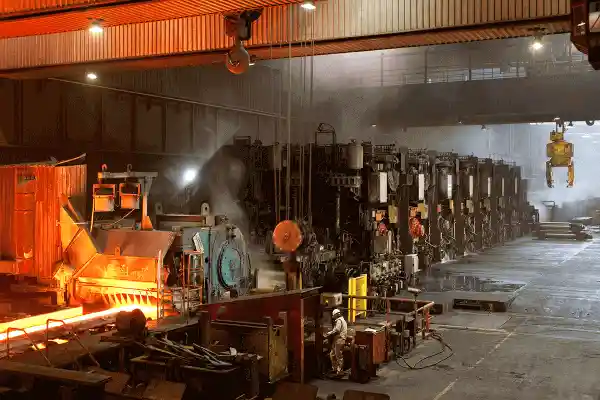
Radial spherical plain bearings are commonly used in construction, agriculture, material handling, industrial machinery, and hydraulic equipment. Typical positions include hydraulic-cylinder pivots, steering and suspension joints, articulated linkages, lifting mechanisms, and other joints exposed to heavy radial loads, shock, oscillation, or angular movement.
These applications often require the bearing to accommodate misalignment or oscillating motion within a compact joint. Selection should consider load direction, oscillation angle, movement frequency, contamination, moisture, corrosion, and maintenance access. These factors help determine whether a lubricated steel/steel design or a maintenance-free sliding combination is more suitable.




How Should Buyers Select the Right Sliding Pair?
Selection should start with the actual motion and load. A slowly oscillating, heavily loaded joint has different requirements from a lightly loaded linkage with frequent movement. Buyers should also distinguish continuous rotation from oscillation because the sliding speed and heat generation are different.
Check the following before ordering:
- radial load and any axial component;
- static, alternating, shock, or impact loading;
- swivel angle, tilt angle, and frequency of movement;
- required lubrication and available relubrication access;
- shaft and housing fits, internal clearance, and axial location;
- sealing, temperature, moisture, dust, and corrosive media.
For maintenance-free types, “maintenance-free” describes the sliding system. It does not mean that fit, sealing, alignment, inspection, or surrounding-component maintenance can be ignored.
Which Brand Series and Complete Models Should Buyers Know?
The following examples show international radial spherical plain bearing series. The shared GE prefix can indicate a similar product family, but sliding materials, maintenance requirements, seals, clearance, and ring construction can differ.
| Brand | Series examples | Complete model example |
|---|---|---|
| INA | GE..-DO open; GE..-DO-2RS sealed; maintenance-free GE..-UK designs | GE20-DO-2RS-E |
| SKF | GE..ES open; GE..ES-2RS sealed | GE 20 ES-2RS |
| Timken/Aurora | GE..ES open; GE..ES-2RS sealed | GE20ES-2RS |
| Timken | 6000, 6200, 6300, and 6400 series; 2RS and NR options | 6205-2RS-NR-C3 |
INA offers both maintenance-required and maintenance-free radial designs, so the sliding-pair suffix must be preserved. Before treating one brand as an alternative, compare bore, outside diameter, width, ring geometry, clearance, sliding material, seals, load requirements, and adjacent-component fits.
How Do Buyers Read a Radial Spherical Plain Bearing Code?
INA model GE20-DO-2RS-E shows how the code identifies the bearing family, bore section, sliding pair, sealing, and execution.
| Code | Code section | Meaning |
|---|---|---|
| GE | Series prefix | Radial spherical plain bearing |
| 20 | Bore section | 20 mm nominal bearing bore |
| DO | Sliding-pair suffix | Maintenance-required steel/steel contact |
| 2RS | Seal suffix | Integral seals on both sides |
| E | Execution suffix | Standard-performance INA execution |
The GE and 2RS elements do not prove interchangeability. Buyers still need the manufacturer, complete reference, current dimensions, clearance, sliding-pair description, seal design, and application data. A missing suffix can change the maintenance and lubrication arrangement.
What Installation, Lubrication, and Removal Checks Matter?
Keep the assembly area clean and protect the bearing from moisture and aggressive media. Mount the bearing concentrically. Apply fitting force to the ring with the interference fit; if both rings are fitted at the same time, use tooling that supports both ring faces. Do not transmit uncontrolled impact through the sliding surfaces.
For maintenance-required designs, confirm that the lubrication holes and grooves align with the supply path. Follow the manufacturer’s heating limits and never use a naked flame. Removal is easier when the shaft or housing includes extraction threads, reliefs, or puller access designed into the arrangement.
How Can HSN Support Radial Spherical Plain Bearing Orders?
HSN reviews the complete bearing model, brand reference, dimensions, sliding pair, seals, clearance, lubrication method, quantity, and operating conditions before confirming availability. Before shipment, HSN checks dimensional tolerances, hardness, and internal clearance. The inspection team can also verify materials or perform additional checks according to customer requirements.
For replacement inquiries, HSN compares dimensions, bearing design, sliding combination, load, and movement requirements case by case. A similar base code serves only as an initial reference and does not confirm interchangeability.
FAQ
Do radial spherical plain bearings roll?
No. Movement occurs through sliding contact between matching spherical surfaces.
When is relubrication required?
Relubrication normally applies to maintenance-required designs and must follow the selected series and duty.
What does 2RS mean in the model?
It commonly identifies seals on both sides, but the manufacturer’s complete designation must be checked.
Can similar GE codes be interchanged?
Not automatically. Compare dimensions, sliding pair, clearance, seals, fits, load, and movement first.
Remarks
For detailed radial spherical plain bearing models not listed above, other bearing types, model confirmation, and supply discussion, contact HSN. Send the complete model, photos, dimensions, quantity, and working conditions.
This article is an independent analysis for knowledge sharing. All brand names and trademarks belong to their respective owners. HSN Bearing Group is an independent bearing supplier and technical service provider.
Tel: +86 156 6578 7336 Email: service@hsnindustrial.com Website: www.rollingparts.com www.hsnbearing.com
Need Help Finding Radial Spherical Plain Bearings?
Contact HSN to confirm a hard-to-find model or discuss a cost-effective replacement or improvement option after technical review.