

How Should Buyers Select Stainless Steel Ball Bearings?


Overseas buyers should select stainless steel ball bearings by the complete bearing specification, not by material name alone. Ring and ball grade, cage, seals, grease, load, speed, temperature, fit, and cleaning chemicals all affect suitability. This guide uses SKF stainless deep groove designs to show how buyers can build a more reliable inquiry.
Table of contents
- What Structure and Classifications Should Buyers Check?
- Where Are Stainless Steel Ball Bearings Used?
- What Should Buyers Verify Before Ordering?
- Which SKF Series and Complete Models Should Buyers Know?
- How Do Buyers Read an SKF Stainless Bearing Code?
- What Installation and Removal Practices Matter?
- What Incoming Inspection and Records Matter?
- How Can HSN Support Stainless Steel Ball Bearing Orders?
- FAQ
What Structure and Classifications Should Buyers Check?
A stainless deep groove ball bearing normally contains an inner ring, outer ring, balls, cage, lubricant, and optional shields or contact seals. Deep raceway grooves support radial load and some axial load in both directions. However, the allowable axial load still depends on size, internal geometry, speed, and operating clearance.
Buyers should classify the product by more than the word “stainless”:
- Metric or inch dimensional system.
- Open, shielded, or sealed construction.
- Standard industrial grease, food-grade grease, or a solid-oil execution.
- Ring and ball material, cage material, seal compound, and lubricant package.
- Standard clearance, special internal fit, or application-specific execution.
Stainless steels differ in hardness and corrosion behaviour. Moreover, a stainless ring does not make the grease, cage, or seal immune to every chemical. State the actual washdown agent, concentration, temperature, exposure time, and rinse method before approval.
Where Are Stainless Steel Ball Bearings Used?
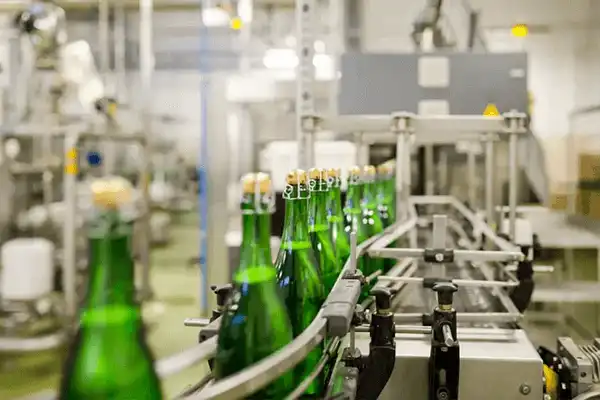
Typical applications include food-processing conveyors, filling and packaging equipment, pharmaceutical machines, laboratory devices, pumps, marine equipment, humid production areas, and light chemical-processing machinery. They also suit instruments or compact equipment where corrosion risk is higher than with standard bearing steel.
The operating environment controls the final design. Therefore, buyers should provide the radial and axial load, speed, duty cycle, temperature, moisture, washdown pressure, chemicals, contamination, and required life. In addition, identify whether the bearing can be relubricated or must remain sealed for life.
Food-related service needs separate verification. A stainless bearing may use food-grade lubricant and visually detectable blue seals, but only a complete approved execution carries those features. Do not infer food compliance from the stainless steel prefix alone.



What Should Buyers Verify Before Ordering?
First, confirm bore, outside diameter, width, chamfers, shaft fit, housing fit, and available shoulders. Then compare load ratings, limiting speed, seal friction, grease fill, temperature range, and internal clearance in the current manufacturer data.
Next, define corrosion exposure precisely. Fresh water, salt spray, acidic product, alkaline cleaner, and chlorine-based washdown can affect materials differently. Also check whether moisture can pass the seal during cooling or pressure washing.
Finally, confirm the complete suffix. A standard W-series bearing, a /VP311 Food Line execution, and a bearing with W64F Solid Oil filling have different specifications. Some Food Line bearings can also combine /VP311 with W64F, so buyers should retain the complete suffix sequence. Likewise, removing `2RS1` changes the sealing arrangement and lubricant protection.
Which SKF Series and Complete Models Should Buyers Know?
SKF stainless steel ball bearings include metric, inch-dimensional, sealed, shielded, and food-processing configurations. The following examples show five useful series or execution groups.
| Series example | Series description | Complete model example |
|---|---|---|
| W 6000 group | Metric stainless steel bearing series | W 6000-2RS1 |
| W 6200 group | Metric stainless steel bearing series | W 6206-2RS1 |
| W 6300 group | Metric stainless steel bearing series | W 6305-2RS1 |
| D/W R series | Inch-dimensional stainless steel series | D/W R10-2RS1 |
| W 6000 and W 6200 Food Line | Stainless steel Food Line execution | W 6206-2RS1/VP311 |
The W prefix identifies a stainless steel execution, whereas D/W identifies an inch-dimensional stainless bearing. The 6000, 6200, and 6300 groups have different cross sections and load capacities. Suffixes such as 2RS1 and VP311 also affect sealing, grease, and application suitability.
How Do Buyers Read an SKF Stainless Bearing Code?
Model W 6000-2RS1 shows four important code sections.
| Code | Code section | Meaning |
|---|---|---|
| W | Material prefix | SKF stainless steel metric deep groove bearing execution |
| 6000 | Basic designation | 6000 dimensional series with a 10 mm nominal bore |
| 2RS1 | Seal suffix | Contact seals on both sides |
Additional suffixes change the product. For example, `/VP311` identifies a defined SKF Food Line execution, while `W64F` iidentifies an SKF Solid Oil filling for applicable bearing executions. Consequently, buyers should never shorten the designation to “6000 stainless.”
What Installation and Removal Practices Matter?
Keep the bearing wrapped until the shaft, housing, tools, and work area are clean. Apply mounting force only through the ring being fitted. Therefore, press an interference-fit inner ring through the inner ring and an interference-fit outer ring through the outer ring.
Do not transmit force through the balls. Also, avoid touching cleaned stainless surfaces with contaminated gloves or carbon-steel tools that can transfer particles. After mounting, rotate the bearing by hand and verify seal contact, freedom of movement, alignment, and axial retention.
For removal, use a puller or press that loads the correct ring. Mark the orientation when failure analysis matters. Finally, inspect corrosion location, grease condition, seal lips, raceways, fits, and contamination before selecting the replacement.
What Incoming Inspection and Records Matter?
Check the complete designation, packaging, quantity, corrosion protection, visible damage, seal colour and condition, and lubricant documentation specified by the order. Measure the agreed bore, outside diameter, width, and running accuracy using clean equipment.
Material or food-compliance documents should match the exact product execution. A generic stainless certificate does not confirm the grease or seal compound. Therefore, align purchase specifications, incoming inspection, and supplier documents before production use.
How Can HSN Support Stainless Steel Ball Bearing Orders?
HSN can review the full bearing model, dimensions, load, speed, seals, grease, material requirement, corrosion exposure, washdown process, temperature, fit, quantity, and application before sourcing begins. When a bearing comes from an installed machine, photos and measurements can help identify the likely series, but the final order still requires a complete technical comparison.
Agreed checks can cover markings, dimensions, seal condition, visible corrosion, hardness, clearance, rotational condition, packaging, and required documents. HSN can arrange material or lubricant-document verification when specified. Before discussing an alternative, HSN compares ring and ball material, seals, grease, envelope, load data, speed, and acceptance criteria instead of treating all stainless bearings as equivalent.
FAQ
Are all stainless bearings suitable for food equipment?
No. Confirm the exact grease, seals, materials, documentation, washdown chemicals, and application requirements.
Does stainless steel prevent all corrosion?
No. Corrosion resistance depends on alloy, surface condition, chemicals, temperature, concentration, and exposure time.
Can 2RS1 be omitted from the order?
No. It defines the sealing arrangement and can change lubricant retention, contamination protection, and friction.
What information should buyers send?
Send the full model, dimensions, load, speed, chemicals, temperature, seals, grease, quantity, and application.
Remarks
For detailed stainless steel ball bearing models not listed above, or for other bearing types, contact HSN with the reference, photos or drawing, dimensions, quantity, application, and working conditions.
This article is based on independent analysis of publicly available technical information and industry understanding for knowledge sharing. All brand names and trademarks belong to their respective owners. HSN Bearing Group is an independent bearing supplier and technical service provider.
Tel: +86 156 6578 7336 Email: service@hsnindustrial.com Website: www.rollingparts.com www.hsnbearing.com
Need Help Finding Stainless Steel Ball Bearings?
Contact HSN to confirm a hard-to-find model or discuss a replacement after technical review.