

Why Do Timken Differential Bearings Need Vehicle Fitment Checks?

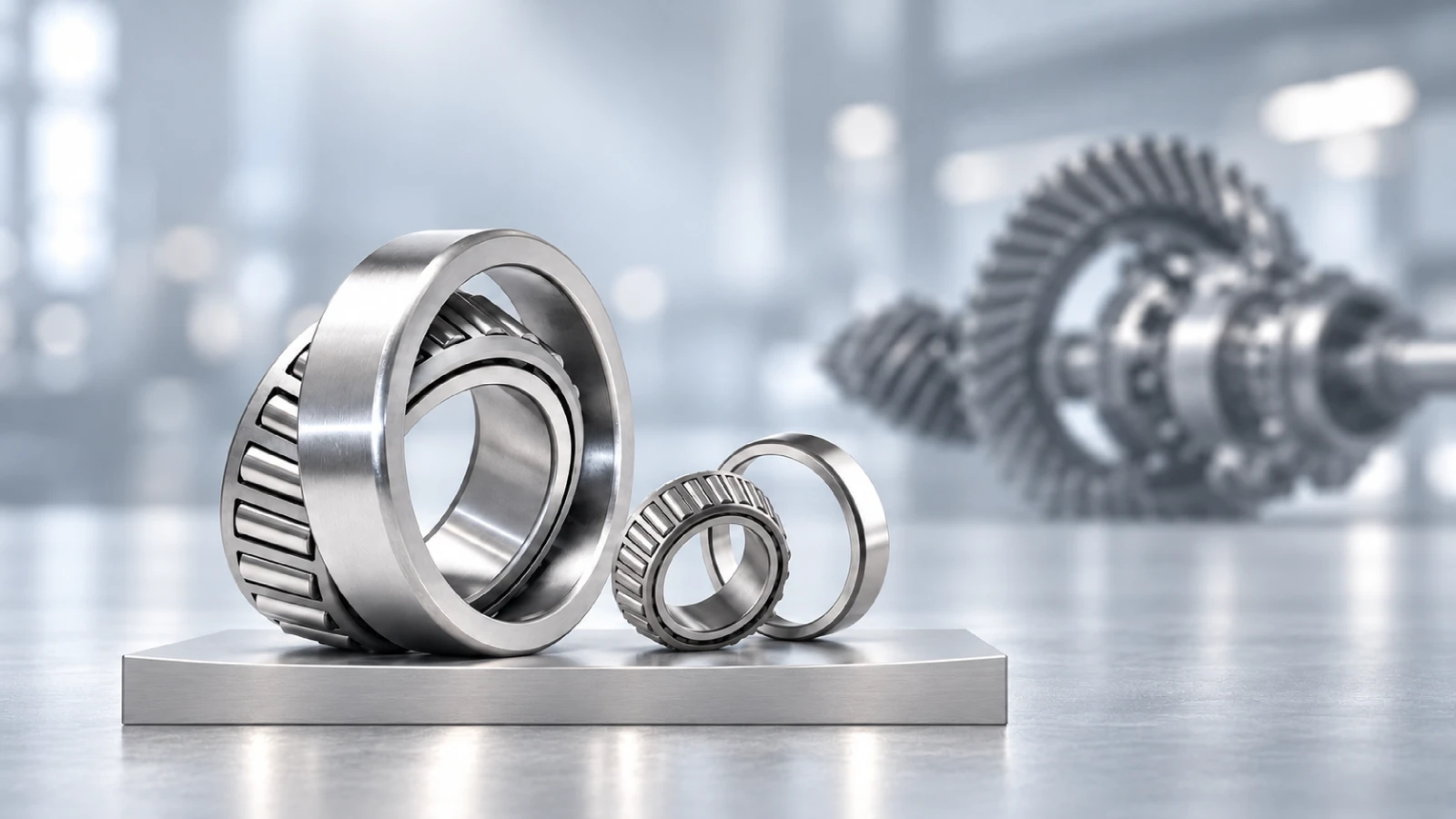
Timken Differential bearings can serve different positions within an axle, including pinion and differential-carrier supports. These locations may use similar-looking tapered roller bearings, but vehicle year, axle design, bearing position, and cone-and-cup combination can differ. Buyers should therefore identify the installed axle and exact bearing location before using a catalog number or dimension to search for a replacement.
A reliable sourcing review also needs the complete component markings and the axle’s setting requirements. Cone and cup numbers, shaft and housing fits, spacers or shims, preload or endplay, and gear-position adjustments can all affect the completed differential. This guide explains how to identify the correct position, verify Timken component numbers, and prepare the information needed for a replacement or urgent axle-rebuild inquiry.
Which Differential Position Uses the Replacement Bearing?
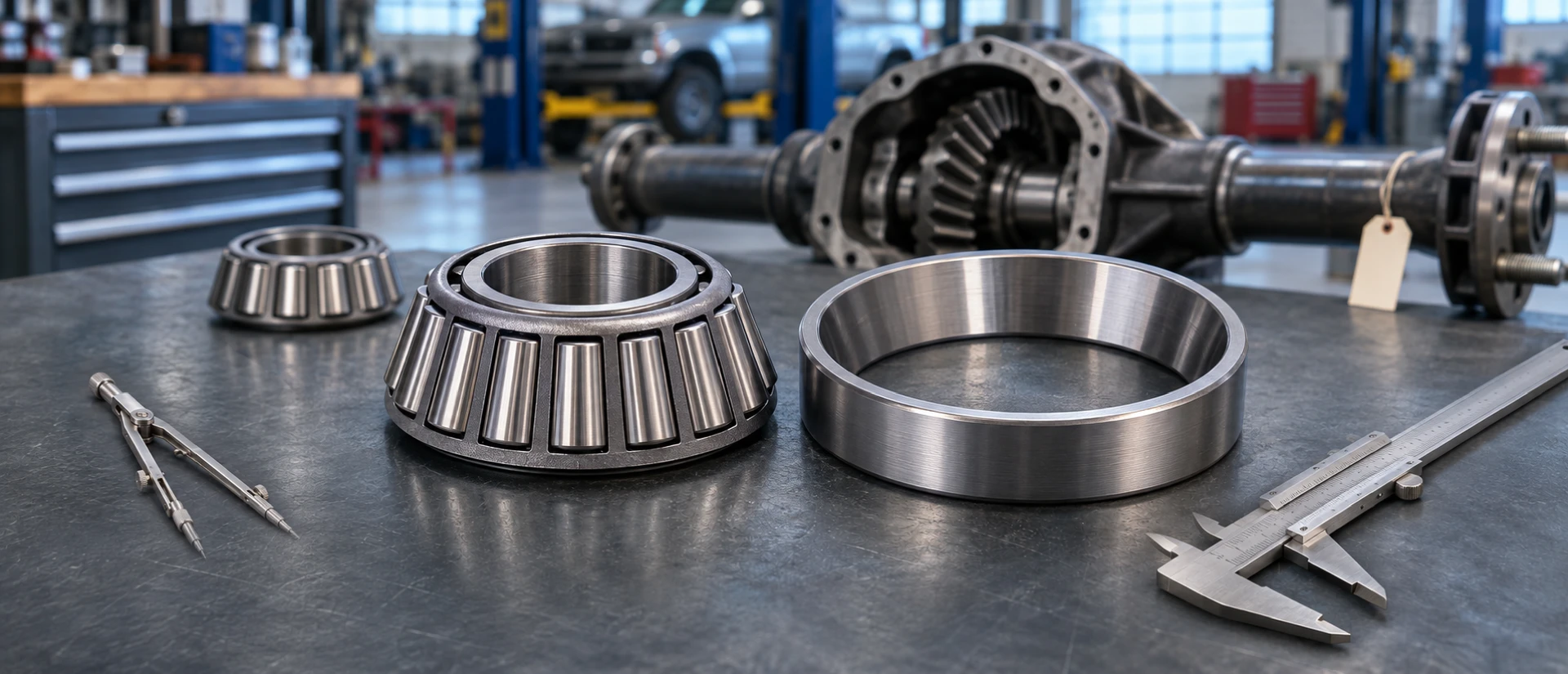
Locate the removed bearing on the axle drawing. The pinion shaft typically has bearings on opposite sides of the pinion gear, while the differential carrier has bearings supporting the case and ring gear. Some axle designs use an integrated pinion unit. A wheel-end bearing sits farther out in the axle system and should not be ordered as a differential bearing simply because the same housing contains both.
| Position | Assembly role | Identification clue |
|---|---|---|
| Pinion support | Maintains pinion shaft support and gear alignment | Front/rear position, cone and cup or integrated unit |
| Differential carrier | Supports the case and controls ring-gear position | Left/right location, adjusters or shims |
| Wheel end | Supports the wheel or axle end | Hub location; separate from carrier and pinion |
Take a photo before disassembly showing the side, adjacent shim or spacer, and any visible marking. A bearing removed from the pinion nose cannot be assigned to the carrier by diameter. If the customer supplies an axle exploded view, mark the position on that view rather than relying on a parts-list label that may be abbreviated.
How Do Pinion, Carrier and Side Bearing Functions Differ?
Pinion bearings keep the drive pinion aligned as gear forces create both radial and axial loading. Tapered roller arrangements support these combined forces, but the pair’s orientation and setting affect contact and shaft stiffness. The carrier bearings support the differential case and help establish the ring gear’s working position. Both locations matter to gear mesh, yet their adjacent shoulders and adjustment methods can differ.
“Side bearing” may refer to the carrier bearing on one side of the differential case. In other contexts it may describe a different side position. Ask the repair shop to point to the actual part on its axle diagram. Avoid using the label alone as a universal part identifier; axle documentation and the removed assembly decide what is needed.
Timken’s Pinion-Pac product illustrates another boundary. It is a pre-set, sealed tapered roller bearing unit for a defined axle application, rather than a loose cone-and-cup pair to be rebuilt from individual parts. Check whether the axle requires an integrated unit or serviceable separate components. Neither construction automatically substitutes for the other.
Why Must Vehicle, Axle, VIN and Part Numbers Match?
Start with the vehicle year, make, model, drivetrain, axle code, and vehicle identification number (VIN). One vehicle model may use different axle ratios, housing versions, or service revisions. The VIN can help the repair team locate the original parts information, but it should still be checked against the installed axle and its identification tag, especially if the axle has previously been replaced or rebuilt.
Bearing markings then provide the component-level check. A tapered roller bearing normally uses separate cone and cup references, so both numbers should be recorded before ordering. For example, Timken lists LM501349 / LM501310 as one single-row tapered roller bearing combination, with LM501349 as the cone and LM501310 as the cup. The example shows why a cone number alone is not enough to define the complete bearing set.
The same cone can also appear with a different cup. Timken lists LM501349 / LM501314 as another combination, and its assembly width differs from the LM501349 / LM501310 pairing. This does not mean either set fits a particular differential; instead, it shows why buyers should preserve both ring markings and the complete assembly reference.
Keep removed cone-and-cup components paired and label their exact pinion or carrier position. If the vehicle catalog, axle tag, and bearing markings do not agree, resolve the difference against the installed axle and service records before placing the order. Vehicle data identifies the application, while the bearing markings confirm the actual components being replaced.
How Do Fit, Preload and Stack-Up Affect Selection?
The shaft and housing fits determine whether rings stay seated while the axle heats and loads change. Check the seating diameters, shoulder support, fillets, and any spacer or shim that affects axial setting. A nominal bearing envelope cannot reveal a damaged bore, incorrect shoulder, or altered pinion stack. Compare measured features with the relevant axle service instructions.
Tapered roller bearings require the intended endplay or preload after installation. Setting changes when cones, cups, spacers, housing faces, or shims change. Too much endplay can reduce shaft and gear support; excessive preload can increase heat and damage risk. Timken’s bearing setting guide discusses methods used for pinion and differential shafts. Use the axle maker’s procedure and acceptance limits for the actual assembly.
Carrier adjustment affects ring-gear position and backlash; pinion setting affects another part of the gear contact relationship. A repair must therefore measure the whole assembly according to its service procedure. HSN can compare a proposed bearing’s dimensions, hardness, and clearance information where agreed, but it cannot infer the finished axle setting from a loose bearing measurement.
What Information Helps Confirm a Differential Bearing Set?
For a precise request, send the VIN, axle tag or code, position diagram, both cone and cup numbers, photos, and quantity. Add the bearing kit number when the repair manual specifies a kit, plus the spacer or seal information if it affects scope. State the required delivery date and whether the shop needs a complete matched assembly, a single component, or an integrated unit.
For an urgent U.S. axle rebuild, identify the mechanic or engineer who will confirm the installed part and perform the final gear-setting checks. A distributor should separate the Timken reference number from any proposed independent replacement. In an RFQ, ask suppliers to state exactly which rings or kit components they will ship; “one bearing” can mean a cone, a cup, or a full set.
HSN may check stock through its China-based supply network or review a difficult drawing-based request. It can discuss inspection criteria for a proposed product, then present the technical differences for customer review. Availability, matched dimensions, or a shared catalog series alone never establishes vehicle fit. The responsible repair team must approve the part and verify the completed differential.
FAQ
Can a cone number identify the complete differential set?
No. Record the cup, full assembly or kit number, axle position and vehicle data too.
What if the axle catalog and ring markings disagree?
Pause the order. Check the installed axle tag, both ring numbers, service records and the applicable parts listing.
What should a U.S. axle repair RFQ include?
Send the VIN, axle code, pinion or carrier position, both ring numbers, quantity and deadline.
Can HSN review a hard-to-find axle bearing?
Yes. HSN can check possible stock or assess a proposed option; the repair team confirms fit and setting.
Remarks
For detailed models beyond those listed above, or for other bearing types, please contact HSN. Send the complete model, photographs, dimensions, quantity, and working conditions so the inquiry starts with the right information.
This article is based on independent analysis of publicly available technical information and industry understanding, and aims to provide knowledge sharing. All brand names and trademarks mentioned in this article belong to their respective owners. HSN Bearing Group is an independent bearing supplier and technical service provider.
Tel: +86 156 6578 7336 Email: service@hsnindustrial.com Website: www.rollingparts.com www.hsnbearing.com
Need Help With Timken Differential Bearings?
Contact HSN to confirm a hard-to-find model or discuss a replacement after technical review.