

How to Use the American Bearing Manufacturers Association for Sourcing?

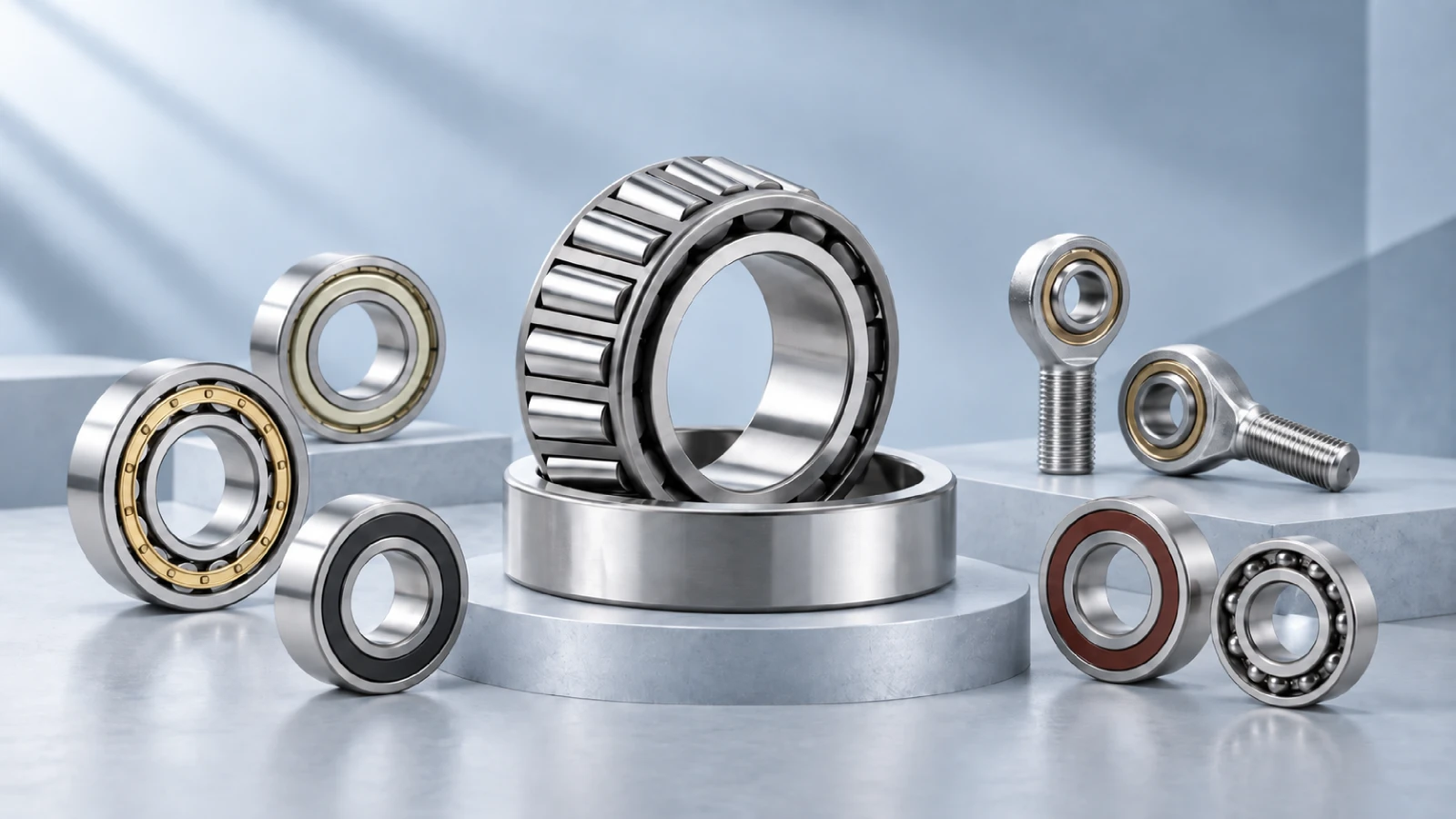
International buyers may search the American Bearing Manufacturers Association when they want to identify U.S. bearing suppliers. In 2025, ABMA and the American Gear Manufacturers Association merged to form the Motion + Power Manufacturers Alliance, or MPMA. ABMA now operates as a division of MPMA, while the ABMA name continues to appear on U.S. bearing standards and related industry information.
Therefore, buyers can use MPMA and ABMA bearing-industry resources as a starting point and then qualify each company independently. An association directory can identify candidates, but it does not confirm stock, authorization, technical suitability, export capability, or commercial terms for a specific order.
What Supplier Information Can Industry Associations Provide?
The American Bearing Manufacturers Association has long supported bearing standards, education, technical work, and industry cooperation. Following the 2025 merger, ABMA became a division of MPMA, which brings together organizations across bearings, gears, and mechanical power transmission.
For sourcing, the MPMA member directory can help a buyer identify company names and business categories. In addition, technical committees, standards activities, and training resources can show where a company participates in the industry. However, membership is an initial signal, not a product approval.
Buyers who need distribution coverage can also consult the Bearing Specialists Association. Its resources focus on bearing distributors and can complement a manufacturer-oriented search. Before contacting any listed company, define the full bearing designation, quantity, delivery country, application, and required documents.
How Should Buyers Shortlist Ten U.S. Bearing Companies?
A useful shortlist should separate manufacturers from distributors and describe why each candidate may fit the request. The ten companies below are representative U.S.-market candidates, not a revenue ranking, a complete association membership list, or confirmation of current MPMA/ABMA membership.
| Company | Type | Relevant sourcing focus |
|---|---|---|
| The Timken Company | Manufacturer | Engineered bearings and industrial motion products, with strong tapered roller and heavy-duty application coverage |
| RBC Bearings | Manufacturer | Plain, roller, and ball bearings for aerospace, defense, and diversified industrial applications |
| New Hampshire Ball Bearings | Manufacturer | Precision ball bearings, spherical bearings, and rod ends for demanding aerospace and industrial uses |
| Schatz Bearing Corporation | Manufacturer | Precision and custom ball-bearing solutions for aerospace, defense, medical, and industrial equipment |
| American Roller Bearing Company | Manufacturer | Heavy-duty ball, cylindrical, spherical and tapered roller bearings for industrial equipment |
| Motion | Distributor | Bearings, mechanical power transmission, automation, and industrial maintenance support |
| Applied Industrial Technologies | Distributor | Bearings, power transmission, fluid power, automation, and related technical services |
| BDI | Distributor | Bearings, mechanical power transmission, and other industrial products |
| Bearing Headquarters | Distributor | Bearings, power transmission products, and repair or service support |
| IBT Industrial Solutions | Distributor | Bearings, belting, power transmission, fluid power, electrical, and automation products |
Next, check the company’s current website, locations, product coverage, and contact route. A familiar name may still lack the exact brand, series, quantity, or export service required for the order.
How Do Manufacturers and Distributors Differ?
Manufacturers design and produce bearing families, control product specifications, and publish technical limits. Therefore, they are often the best source for application engineering, custom design, or confirmation of a current production designation.
Distributors combine products from one or more manufacturers and may hold local inventory. As a result, they can simplify mixed-brand orders, urgent maintenance requirements, and regional delivery. Their capabilities vary by branch, so buyers should verify brand relationships, stock location, traceability, and technical support for the exact item.
The two channels can also work together. For example, a manufacturer may define the correct bearing while a distributor manages local supply. Buyers should document who provides the technical confirmation, who supplies the product, and who handles warranty communication.
Which Products, Industries and Branches Need Comparison?
Company names alone do not reveal whether a supplier fits an application. Instead, compare the bearing family, served industries, and branch-level capabilities against the purchasing requirement.
- Product scope: ball, tapered roller, spherical roller, cylindrical roller, needle, thrust, plain, mounted, precision, or custom bearings
- Application scope: aerospace, defense, automotive, rail, mining, steel, food processing, agriculture, machine tools, or general industry
- Technical scope: load and speed review, fits and tolerances, clearance, cage, seals, lubrication, materials, and failure analysis
- Branch scope: local stock, cutting or repair services, inspection capability, export handling, and after-sales response
- Commercial scope: minimum order, lead time, packaging, documentation, Incoterms, and warranty procedure
For example, a national distributor may offer broad geographic coverage, while a regional specialist may know local heavy-industry applications in greater detail. Meanwhile, a precision manufacturer may be suitable for an engineered item but less useful for a mixed maintenance order. The shortlist should reflect the actual purchasing case.




How Should Buyers Review an Alternative Source?
The American Bearing Manufacturers Association search path can reveal possible suppliers, but an alternative source still requires technical and commercial verification. First, confirm whether the request concerns the same brand and complete designation or a cross-brand replacement option.
For the same designation, compare markings, dimensions, packaging, traceability, inspection records, and supply terms. For example, Timken identifies X32205 and Y32205 as separate cone and cup references for a tapered roller bearing assembly. A distributor quote that lists only one component should therefore clarify whether the buyer is purchasing a single service component or the complete bearing set.
For a cross-brand or custom option, compare internal design, load ratings, speed limits, fits, clearance, cage, seals, lubrication, temperature, and material requirements. Do not approve interchangeability from bore, outside diameter, and width alone.
HSN can support this review when a U.S. source cannot provide the required model, quantity, or timing. Before proposing an option, HSN needs the complete designation, photos or drawing, quantity, application, and working conditions. Dimensions, hardness, and clearance form the normal pre-shipment inspection scope, while additional tests can be agreed for the order.
Finally, request a sample or first-article inspection when the technical or commercial risk justifies it. Association membership can help buyers build a supplier list, but documented verification should decide the purchase.
FAQ
Does ABMA still operate under the same name?
ABMA became a division of MPMA in 2025, but the ABMA name continues to be used for U.S. bearing standards and related industry activities.
Does association membership approve a supplier?
No. Buyers must still verify products, stock, technical capability, traceability, export service, and terms.
Should a buyer contact a maker or distributor?
Contact a maker for product engineering or custom work. Use a distributor for stocked items, mixed orders, or local service.
Can dimensions alone confirm a replacement?
No. Review loads, speed, clearance, cage, seals, lubrication, precision, materials, fits, and operating conditions.
Remarks
For detailed supplier or bearing model confirmation, send the complete designation, product photos or drawing, dimensions, quantity, application, and working conditions. Confirm each company’s current product coverage and commercial terms directly before ordering.
This article is based on independent analysis of publicly available technical information and is intended for knowledge sharing. All brand names and trademarks belong to their respective owners. HSN Bearing Group is an independent bearing supplier and technical service provider.
Tel: +86 156 6578 7336 Email: service@hsnindustrial.com Website: www.rollingparts.com www.hsnbearing.com
Need Help Using the American Bearing Manufacturers Association?
Contact HSN to confirm a hard-to-find model or discuss a replacement after technical review.