

Wheel Bearing Replacement Price: Costs, DIY Steps and Safety

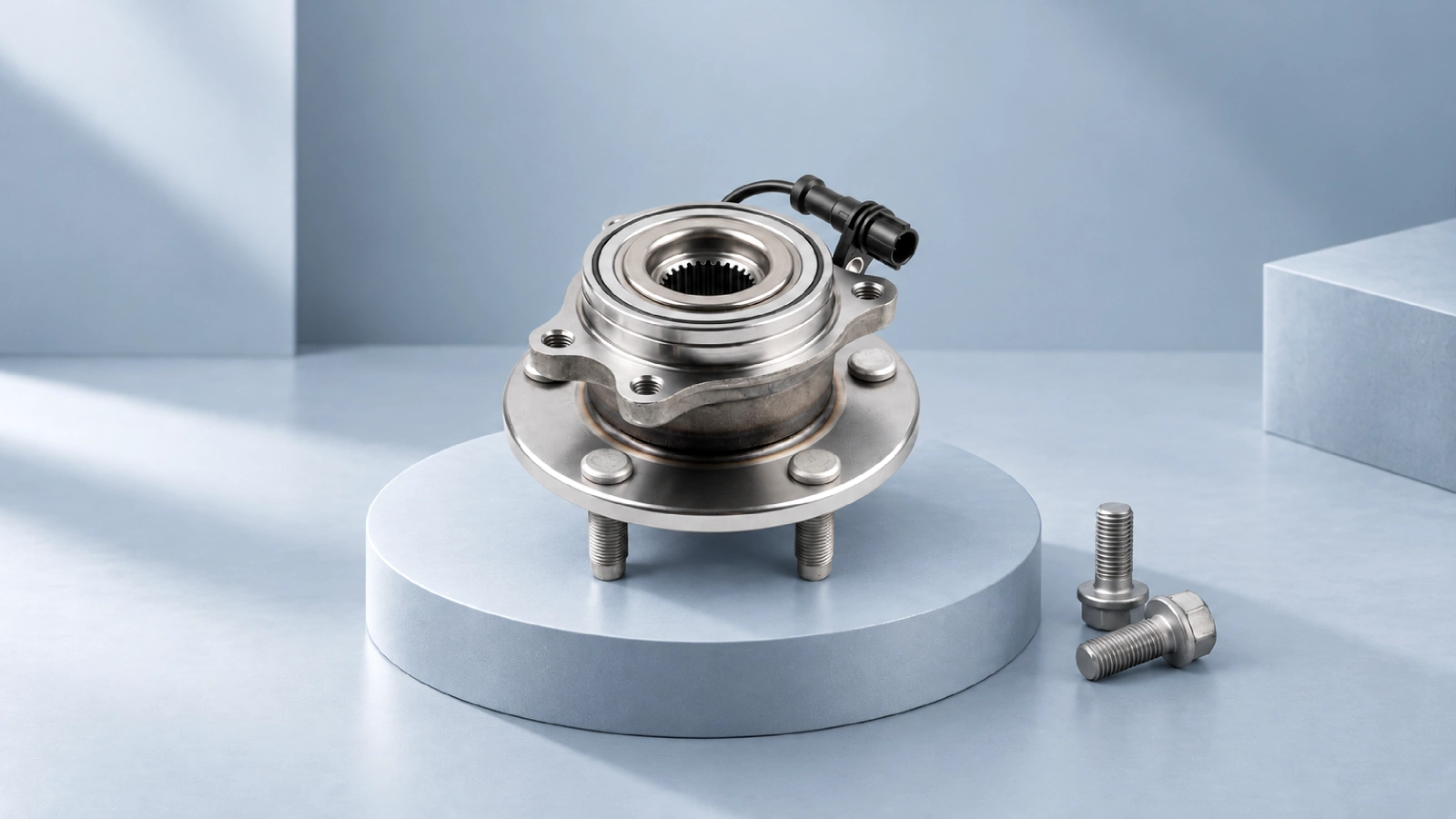
A wheel bearing replacement price covers more than the bearing itself. Vehicle design, the replacement format, labor time, corrosion, tools, and related parts can all change the final cost. Buyers should first identify whether the vehicle uses a serviceable bearing, a press-fit bearing, or a complete hub assembly.
Public U.S. repair estimates provide only a starting point. As of September 2026, RepairPal lists an average U.S. wheel bearing replacement cost of approximately USD 346–504. Its Wheel Hub Assembly Replacement estimate is approximately USD 512–652. Taxes, location, vehicle configuration, and related repairs remain outside those ranges. Therefore, buyers should confirm the VIN-specific part and obtain a written local quotation before approving the repair.
What Does a Wheel Bearing Replacement Price Include?
The invoice normally combines parts, labor, shop supplies, and applicable taxes. However, the parts line can represent very different products. A loose tapered roller bearing, a press-fit cartridge, and a hub unit with a flange or wheel-speed sensor do not have the same purchase price or installation process.
| Cost element | What it may cover | Buyer check |
|---|---|---|
| Bearing or hub | Bearing, hub unit, seals, retaining rings, or installation hardware | Match the VIN, axle position, driven or non-driven wheel, and sensor configuration |
| Labor | Diagnosis, disassembly, pressing, installation, torque checks, and road testing | Ask whether corrosion or seized components may add time |
| Related parts | Axle nut, circlip, seal, damaged hub, knuckle, sensor, or brake hardware | Confirm which items are included and which require approval |
| Tools and supplies | Press adapters, pullers, sockets, penetrating fluid, and approved lubricant | Include rental or purchase costs in a DIY comparison |
Complete hub assemblies also use manufacturer-specific references. For example, SKF BR930184 and Timken HA590085 both appear in front-wheel hub applications for certain Chevrolet Impala configurations. However, buyers should not treat them as automatically interchangeable. Model year, VIN, axle position, drivetrain, ABS or sensor configuration, and current fitment data must still be confirmed before ordering.
A low parts price may exclude a hub, sensor, seal, or single-use fastener. Conversely, a complete hub assembly can cost more but reduce pressing work. Always compare quotations with the same repair scope.
How Do Vehicle Design and Labor Affect Total Cost?
Labor rises when the technician must remove the steering knuckle and use a hydraulic press. Rusted fasteners, a seized axle spline, or a damaged retaining ring can add further time. By comparison, some bolt-on hub units can be replaced without pressing, although access may still be difficult.
Front and rear axles can use different designs on the same vehicle. All-wheel-drive systems, parking-brake layouts, and integrated wheel-speed sensors also affect the job. In addition, replacing a damaged hub, knuckle, or sensor increases the total beyond a basic bearing repair.
Before accepting a quotation, request the part number, brand, axle position, included hardware, labor hours, and warranty terms. This makes the wheel hub bearing replacement cost easier to compare across workshops.
Is DIY Wheel Bearing Replacement Actually Cheaper?
DIY work removes the workshop labor charge, but it introduces tool cost and installation risk. A bolt-on hub may require a floor jack, rated jack stands, wheel chocks, breaker bar, torque wrench, sockets, puller, wire brush, and service information. A press-fit bearing may also require a hydraulic press and adapters that support the correct bearing ring.
The calculation should include the part, new fasteners, tool rental, transport, and the cost of correcting an installation error. Pressing through the wrong ring can damage the raceways before the vehicle moves. Incorrect axle-nut torque can reduce clamp load and, depending on the wheel-end design, disturb the bearing setting or preload and contribute to early failure.
Therefore, DIY is cheaper only when the installer has the correct tools, verified procedures, and enough experience to complete the work safely. A front wheel bearing cost comparison should include the part, tools, hardware, transport, and potential rework, not just workshop labor.
Which Steps, Tools and Safety Checks Does the Job Require?
The exact sequence must follow the vehicle manufacturer’s service information. Nevertheless, a typical wheel-end job includes the following stages:
- Confirm the fault. Check for noise, rough rotation, looseness, warning lights, and tire or brake conditions that can produce similar symptoms.
- Secure the vehicle. Work on level ground, chock the wheels, use the correct lifting points, and support the vehicle with rated stands. Never rely on a jack alone.
- Remove surrounding parts. Remove the wheel, brake components, axle nut, sensor connections, and other parts specified for the vehicle. Support the brake caliper without loading its hose.
- Remove the bearing or hub. Unbolt a hub unit or remove the knuckle for pressing. Use adapters that apply force to the correct ring, and protect the sensor encoder and mounting surfaces.
- Clean and inspect. Check the hub, knuckle bore, axle spline, threads, circlip groove, sensor wiring, and mating faces. Replace damaged related parts instead of forcing the new bearing into an unsuitable seat.
- Install and torque. Fit new seals, rings, and single-use hardware where specified. Tighten fasteners with a calibrated torque wrench according to the vehicle manufacturer’s specified procedure and values. Bearing and hub suppliers also warn against using an impact wrench for final axle-nut tightening.
- Complete final checks. Reassemble the brakes, confirm cable and sensor routing, rotate the wheel, check for play, verify warning lights, and perform a controlled road test.
A general online tutorial cannot provide the correct torque or pressing direction for every vehicle. Stop when the service information, tools, or safe lifting arrangement is unavailable.
When Should a Professional Complete the Replacement?
Professional service is appropriate when diagnosis remains uncertain, the bearing needs pressing, severe corrosion is present, or the hub includes an electronic sensor that requires careful handling. The same applies when axle-nut torque data, special tools, or safe lifting equipment are unavailable.
In addition, noise alone does not always identify the failed side. Tires, brakes, CV joints, and drivetrain components can produce similar sounds. A technician can compare wheel play, noise under load, sensor data, and surrounding components before ordering parts.
For a purchasing team, the safest approach is to provide the VIN, year, make, model, axle position, drivetrain, part reference, and required quantity. These details support accurate product confirmation and a realistic wheel bearing replacement price.
FAQ
Does a wheel bearing need replacement in pairs?
Not always. Replace the failed side unless vehicle guidance, equal wear, or inspection findings support replacing both.
Is a hub assembly the same as a wheel bearing?
No. A hub assembly may combine the bearing, flange, seals, sensor features, and mounting hardware in one unit.
Can an impact wrench tighten the axle nut?
Do not use one for final tightening. Use a torque wrench and the vehicle manufacturer’s specified procedure.
What details are needed before ordering?
Provide the VIN, vehicle details, axle position, drivetrain, complete part reference, photos, and quantity.
Remarks
For detailed wheel bearing model confirmation, send the VIN, complete part reference, product photos, dimensions, quantity, axle position, and vehicle configuration. Final selection and installation must follow the vehicle manufacturer’s current service requirements.
This article is based on independent analysis of publicly available technical information and is intended for knowledge sharing. All brand names and trademarks belong to their respective owners. HSN Bearing Group is an independent bearing supplier and technical service provider.
Tel: +86 156 6578 7336 Email: service@hsnindustrial.com Website: www.rollingparts.com www.hsnbearing.com
Need Help Confirming Wheel Bearing Replacement Price?
Contact HSN to confirm a hard-to-find model or discuss a replacement after technical review.