

Why Vibrating Screen Bearing Selection Needs Acceleration Checks?

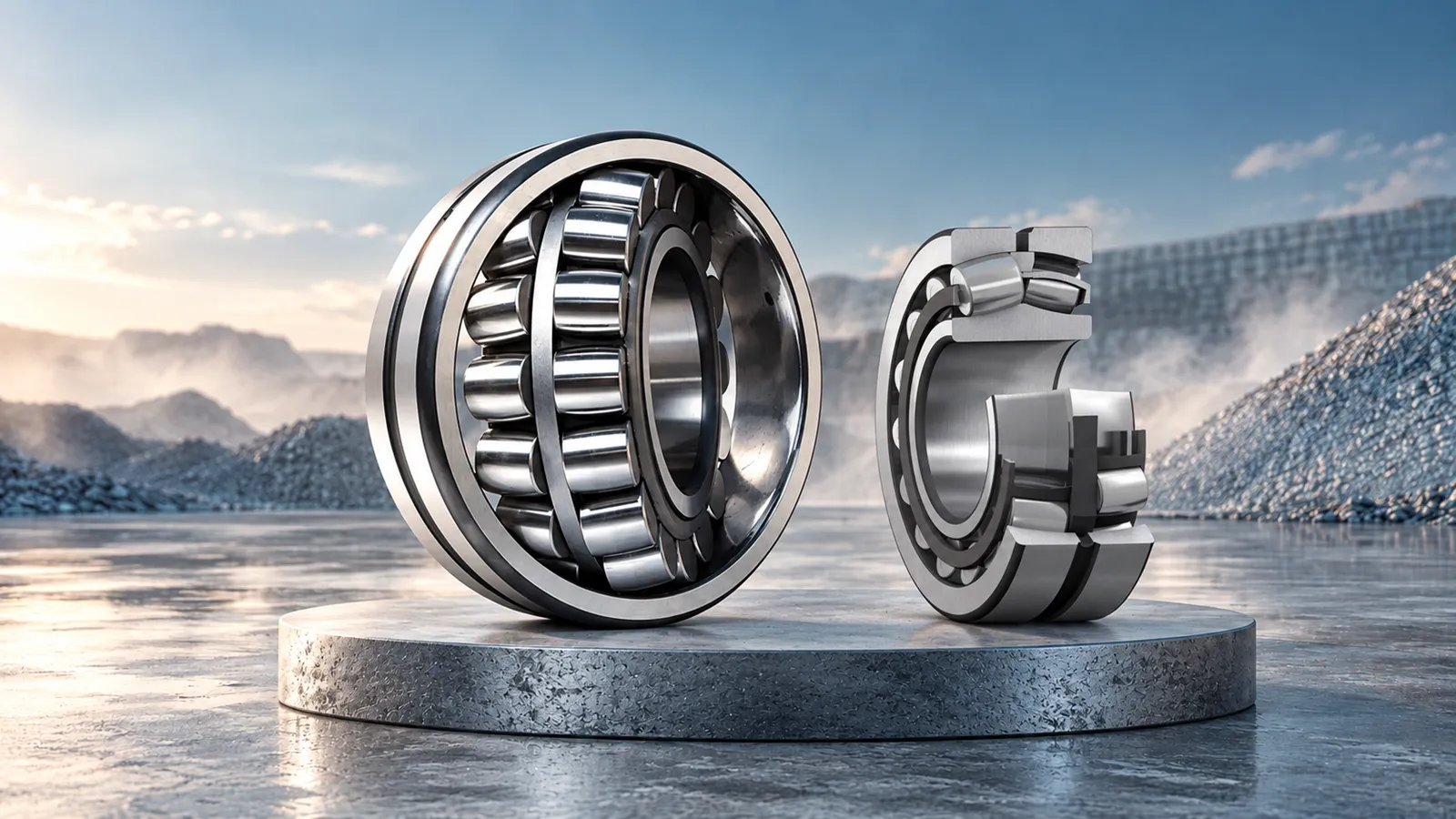
A vibrating screen bearing supports a shaft or exciter that drives screening motion. In a quarry, acceleration, dust and frequent load reversals can make an apparently similar general-purpose bearing a poor purchasing shortcut. Buyers should specify the full bearing code and check the housing, mounting and lubrication arrangement before requesting a replacement for a shutdown.
Which Bearing Types Support Vibrating Screens?
Screens separate stone or mineral feed after crushing. Bearings support the rotating exciter or shaft that creates screen motion. For a replacement inquiry, start with the bearing type shown in that machine’s design and its exact shaft position.
- Vibratory spherical roller bearings carry heavy radial loads and accommodate some misalignment in screen supports. Their application-specific cage and clearance details matter; a basic 223-series number alone is insufficient.
- Vibratory cylindrical roller bearings are used in certain screen or exciter designs. For example, NSK’s EMM-VS series covers NU, NJ and NUP constructions. These designs have different axial locating behavior, so the approved arrangement governs the order.
Before requesting shaker screen bearings, mark the drive and opposite positions on a drawing. Check whether the work order calls for one bearing, a pair, a housing or a complete exciter repair. At an aggregate plant working toward a fixed shutdown, the full code and bearing position help prevent an urgent order for a part that fits the bore but not the shaft arrangement.
How Do Bearing and Housing Requirements Differ?
The rolling bearing carries load between its rings and rolling elements. The vibrating screen bearing housing holds the outer ring, maintains the specified fit and supports seals and lubrication. A damaged housing seat can therefore prevent a correctly specified new bearing from working as intended.
| Item | Details to verify | Why the buyer needs them |
|---|---|---|
| Bearing | Full code, bore, clearance and cage | Identifies the approved vibratory design |
| Housing | Bore, seat condition and locating features | Determines fit and axial restraint |
| Seals and lubrication | Seal type, grease path and purge points | Controls contamination at the support |
Two real vibratory bearing examples are SKF 22332 CCJA/W33VA405 and Timken 22312EMW33W800. Both are spherical roller bearing designations associated with vibratory applications, but they are different sizes and constructions. They are not stated here as interchangeable or as confirmed fits for a particular screen. Confirm the equipment drawing and complete original marking before using either as a purchasing reference.
A shaker screen bearing order can fail even when a dimension appears close. Confirm whether the inner ring uses a cylindrical or tapered bore, whether a sleeve is included, and how the housing locates the outer ring. Record any seat damage and the planned repair of the shaft or housing before the new component ships.
Which Loads, Seals and Lubricants Matter?
Screen bearings see cyclic forces and high acceleration. A replacement specification should include shaft speed, stroke, operating acceleration where available, screen orientation and any unusual feed pattern. These details help a technical reviewer assess whether the requested internal clearance and cage suit the actual duty.
Dust and washdown water threaten grease condition. Record the existing seal type and whether contamination was found in the housing. Also note the grease product, relubrication route and any evidence of overfilling or blocked purge paths. Repeatedly adding grease without addressing a failed seal can hide the problem temporarily while contaminants remain inside.
Timken’s W800 designation and SKF’s VA405 vibratory designations illustrate why suffixes matter. A truncated 223-series number does not capture every construction feature. However, suffix conventions belong to their respective manufacturers; do not translate one brand’s code into another brand’s specification without verifying the full drawing and operating requirements.
For a replacement order, specify which inspection items the supplier should check before shipment. HSN focuses on dimensional tolerance, hardness and clearance. Cage, surface condition or other checks can be discussed according to the approved purchase specification. Ask the supplier to identify the exact item being quoted and the records included with it.
When Is Replacement or Custom Supply Appropriate?
Unusual noise, heat and vibration call for inspection, but the screen is designed to vibrate. Compare each bearing position with its earlier operating behavior and check lubrication, fasteners, seals and fits. Damage at the shaft or housing can produce symptoms that a new bearing alone will not resolve.
If a complete existing model is available, verify the full designation and approved replacement scope before checking stock. If a machine-specific bearing or modified assembly cannot be identified, a drawing and measured sample support a custom discussion. Record which dimensions come from undamaged surfaces; a worn seat should not become the unquestioned manufacturing target.
Buying a bearing and repairing its housing may involve separate suppliers. Assign responsibility for shaft and housing fits before ordering. If an alternative bearing is proposed, engineering should review clearance after mounting, cage design, seals and lubricant compatibility. A dimensional match is only one part of interchangeability.
HSN Bearing Group can discuss stock sourcing or customized bearing supply based on a full designation, drawing, sample and working conditions. It cannot confirm an original brand interchange from a screen family name alone. A repair buyer should request a quotation that clearly separates bearings from housing machining, seals and other work.
What Information Confirms a Screen Bearing Inquiry?
For a reliable quote, identify the screen and the precise bearing location. The RFQ should let a buyer compare technical offers while the site prepares for installation.
- Supply the machine make, model, serial number and shaft or exciter position.
- Send the complete bearing code and clear photos of the old bearing and housing.
- Specify bore, outside diameter, width, clearance, cage and mounting method.
- Describe speed, stroke, lubrication, seals, contamination and observed damage.
- State quantity, delivery destination, inspection requirements and required arrival date.
When one side failed, record the condition of the other bearing and both housing seats. Ask whether the purchase includes one position or the complete set called for by the repair plan. This avoids an urgent second order after disassembly has already started.
Finally, tie the quotation to the agreed full code and drawing revision. Document any approved alternative in writing. That gives the distributor, maintenance contractor and end user the same technical description when the replacement reaches the quarry.
FAQ
Should I inspect the housing before ordering?
Yes. Measure the seat and check locating features, seals and any evidence of fretting or movement.
Can a standard 223-series bearing replace a screen bearing?
Do not assume so. Verify the complete construction and operating requirements before approval.
Why source vibrating screen bearings through HSN?
HSN can review the full designation and screen duty, discuss stock or custom supply, and agree cage, clearance and dimensional checks.
What helps a U.S. distributor quote an outage spare?
Provide the complete bearing code, screen position, housing photos, operating duty, quantity and shutdown date.
Remarks
For detailed vibrating screen bearing models not listed above, please contact HSN for model confirmation and supply discussion. When checking other bearing references, you can also send the complete model, photos, dimensions, quantity, application, and working conditions.
This article is based on independent analysis of publicly available technical information and industry understanding for knowledge sharing. All brand names and trademarks mentioned belong to their respective owners. HSN Bearing Group is an independent bearing supplier and technical service provider.
Tel: +86 156 6578 7336 Email: service@hsnindustrial.com Website: www.rollingparts.com www.hsnbearing.com
Need Help With a Vibrating Screen Bearing?
Contact HSN to confirm a hard-to-find guide wheel or discuss a technically reviewed alternative.