

How to Identify a Transmission Main Shaft Bearing

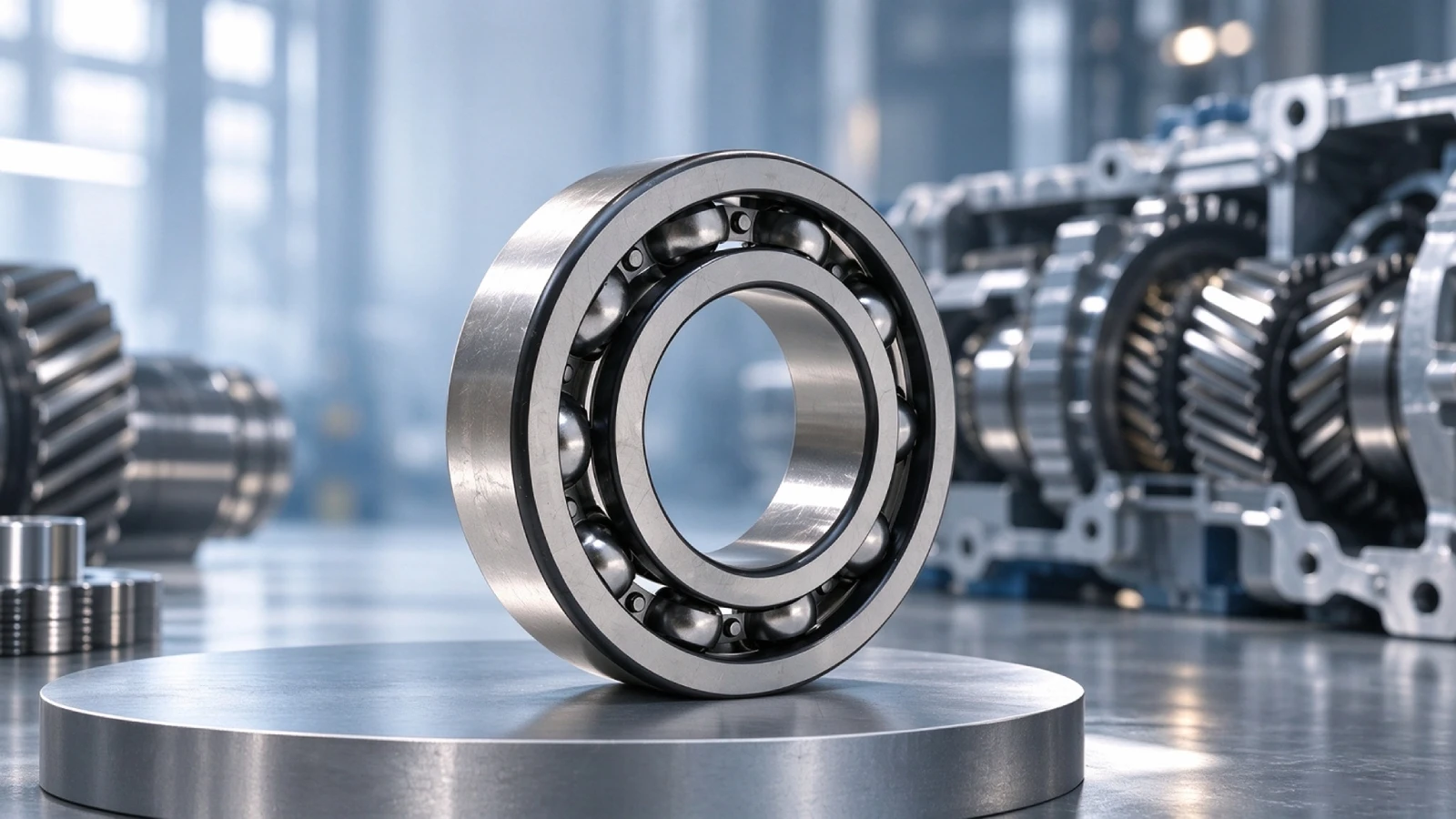
A transmission main shaft bearing supports a shaft within a vehicle gearbox. The front and rear supports can use different bearings, and the gearbox may also contain needle bearings inside gears. A buyer must identify the precise shaft position before searching stock or requesting a custom part. Vehicle name alone may not distinguish transmission versions.
This guide covers automotive and commercial vehicle repair inquiries. It shows how to separate a main shaft support from neighboring parts, compare bearing structures and send a usable RFQ. The vehicle maker’s service information governs the final fit and installation.
Where Does the Main Shaft Bearing Work?
In a manual transmission, the main shaft carries selected gears and transfers torque through the gearbox. Bearings support it at positions defined by the case and shaft design. The input shaft, countershaft and differential or output assembly can have separate bearings nearby. A noise complaint does not identify which position has failed.
Record whether the part is at the main shaft front, rear or an internal gear location. Photograph the old bearing in place before disassembly. Keep the transmission identification code, case number and shaft drawing with the removed part. Commercial vehicle gearboxes can have different housing and load arrangements from passenger cars, so do not apply a passenger vehicle part number to a truck by general description.
For replacement planning, describe the repair scope. The shop may need a loose bearing, a needle-bearing set, a carrier, a retainer or seals. If the case or shaft seat is damaged, fitting a new bearing may require a separate repair decision.
Which Bearing Types and Positions Need Comparison?
Depending on the gearbox design, a shaft support may use a ball, cylindrical roller or tapered roller bearing. Needle rollers can support a gear or a specified shaft position within a compact envelope. These are different functions. The complete assembly drawing shows which bearing locates the shaft axially and where axial movement is allowed.
GM Genuine Parts 90142090 is a manual transmission main shaft bearing part number. GM 19206227 is separately identified as a manual transmission main shaft rear needle bearing. Their labels show why “main shaft bearing” is not a complete order description. These numbers belong to different GM applications and are not presented as interchangeable or suitable for an unspecified gearbox. Identify the transmission code and illustrated shaft position before using either OE number in an RFQ.
| Identification item | Question it answers | Evidence to send |
|---|---|---|
| Gearbox code | Which transmission version? | Case tag and service record |
| Shaft position | Front, rear or internal gear? | Assembly drawing and installed photo |
| Complete part number | Which bearing or kit? | Marking, OE reference and measured envelope |
Compare bore, outside diameter, width, seal or shield form, cage and any locating ring or groove. Also check whether the original supply is a complete unit or a component that works with a separate retainer. Matching the three main dimensions is insufficient when the internal arrangement differs.
How Do Load, Speed and Lubrication Affect the Bearing?
Gear forces change with gear selection, torque and duty cycle. The shaft supports must control alignment under these loads. Record the vehicle or equipment duty and any known modifications. A high-use fleet gearbox can have a different service history from a low-mileage passenger car even when the base transmission family appears similar.
The gearbox oil, level and delivery path affect bearing life. Check for metal particles, low oil, blocked passages and heat discoloration during teardown. Some bearings receive oil through the case or shaft rather than a separate grease fill. Do not assume a generic sealed bearing can replace an oil-fed open design.
Internal clearance, shaft and case fits, and endplay or preload should follow the specific service procedure. A loose seat may cause recurring damage. Therefore, ask the repair shop to measure both mating seats and verify that the surrounding retainer and seal remain usable before ordering a bearing-only replacement.
What Calls for Replacement or a Custom Review?
Whine, vibration or debris can trigger inspection, but each symptom has several possible causes. Inspect gears, shaft straightness, case bores, lubrication and the bearing itself. Record the actual raceway or roller damage and separate it from the diagnosis. This helps the buyer request the correct part while the technician confirms the repair.
A stock inquiry is practical when the exact OE or manufacturer number and transmission version are known. If a bearing marking is unreadable or a part is discontinued, a technical review needs drawings, samples and measured interfaces. Do not propose a generic bearing based on nominal size alone. Special features, clearance, material or lubrication may be part of the original design.
HSN can review the full part reference, drawing, sample and operating conditions for stock or custom possibilities. Inspection requirements may cover dimensions, material, hardness or clearance against an agreed specification. For a U.S. fleet planning a gearbox rebuild, provide the required receipt date and quantity so the supply route can be assessed alongside the technical review. Vehicle compatibility still requires confirmation by the repair team.
What Should a Transmission Bearing RFQ Include?
Send the vehicle make, model, year and VIN when available, plus the transmission code and main shaft position. Include every visible OE or bearing marking, installed and removed-part photos, drawing, dimensions, quantity and reason for replacement. State whether the request includes a retainer, carrier, seal or other related part.
For commercial vehicles, add gearbox model, axle or driveline application as relevant, duty and planned rebuild date. Identify which measurements come from an approved drawing and which come from a worn sample. If the unit has been modified, note the changes so the buyer does not assume a standard vehicle lookup remains valid.
Ask the supplier to restate the exact proposed part and supply scope. The receiving team should compare the marking and inspection data with the approved gearbox specification before installation. A cross-reference is a sourcing lead, not final proof of compatibility.
FAQ
Can I order by vehicle model alone?
Confirm the transmission code, VIN, main shaft position and complete OE or bearing number.
Is a rear needle bearing the same as a front support?
No. Their positions and functions differ. Use the gearbox drawing to identify each part.
How can HSN help with a discontinued bearing?
HSN can review a drawing or sample, discuss stock or custom supply and agree on inspection criteria.
Does HSN support shipping and customs clearance for U.S. customers?
Yes. HSN supports flexible trade terms, shipping arrangements, customs documentation, and delivery coordination for U.S. orders.
Remarks
For detailed transmission main shaft bearing models not listed above, please contact HSN for model confirmation and supply discussion. When checking other bearing references, you can also send the complete model, photos, dimensions, quantity, application, and working conditions.
This article is based on independent analysis of publicly available technical information and industry understanding for knowledge sharing. All brand names and trademarks mentioned belong to their respective owners. HSN Bearing Group is an independent bearing supplier and technical service provider.
Tel: +86 156 6578 7336 Email: service@hsnindustrial.com Website: www.rollingparts.com www.hsnbearing.com
Need Help with a Transmission Main Shaft Bearing?
Contact HSN to confirm a hard-to-find model or discuss a replacement after technical review.