

Why Roll Mill Bearings Need Stand-Specific Sourcing?

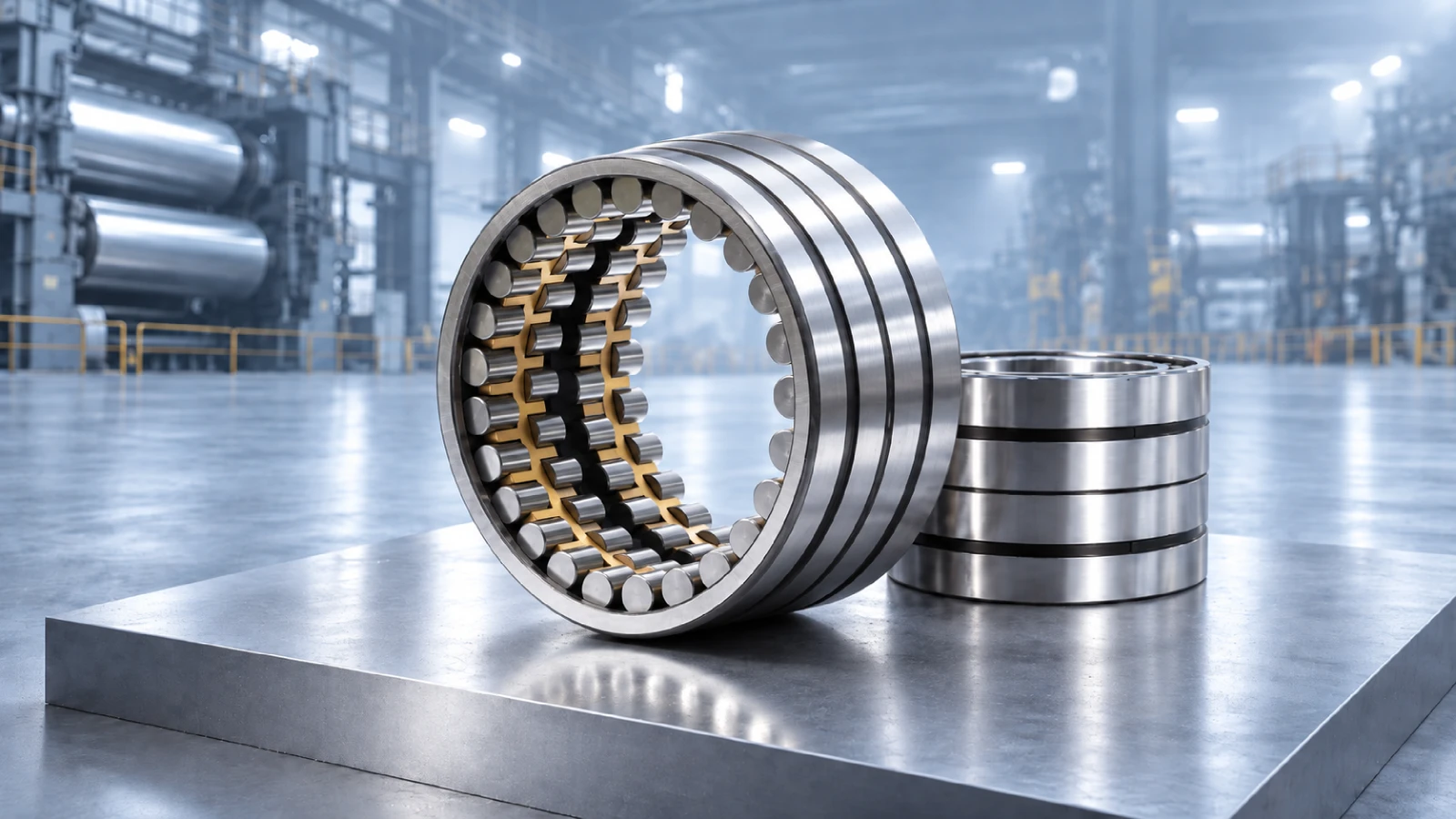
Roll mill bearings support work rolls, backup rolls, and other rotating positions across roughing, intermediate, and finishing stands. These locations can use different bearing arrangements, including four-row cylindrical or tapered roller designs, and they do not share one purchase specification. Buyers should therefore identify the mill stand, roll position, drive or operator side, and complete bearing arrangement before comparing stock or replacement options.
The sourcing review should also consider load, speed, lubrication, chock and roll-neck condition, axial-location method, and the required repair scope. A request may involve a complete bearing, ring set, thrust component, or a coordinated custom solution rather than one standard part. This guide explains how stand position, bearing structure, maintenance evidence, and RFQ details work together when planning a replacement or outage order.
Where Do Roll Mill Bearings Work in the Line?
In a two-high mill, work rolls transmit rolling force through their bearings to the stand. In a four-high mill, backup rolls support the work rolls. Six-high and other arrangements add positions with different loads and roll-change procedures. Therefore, record the actual stand configuration before comparing bearings across the line.
The same mill may have roughing, intermediate and finishing stands. Loads, speeds and cooling practices vary across them. Note the stand number, upper or lower roll, work or backup position, and drive or operator side. A request for “mill bearing, stand 4” still needs a roll drawing and bearing assembly code.
Roller tables, gearboxes and electric motors also contain bearings near the mill. Identify them separately from roll-neck positions. The term rolling mill bearings can cover these components in a broad inventory list, but a purchase order should name the machine location and its own part number.
For spares planning, map each stand to its installed bearing and approved spare-roll assembly. Separate work-roll and backup-roll positions, and identify any thrust component outside the radial bearing. An inventory list grouped only by nominal size can hide different clearance, axial-location or lubrication requirements. Maintenance can then prioritize the stands that need a complete set before the next scheduled roll change. This approach also helps distributors quote the right quantity for each position.
Which Bearing Arrangements Match Each Roll Position?
Four-row tapered roller bearings can support combined radial and axial loads in certain roll-neck designs. Four-row cylindrical roller bearings carry heavy radial load, while a separate thrust bearing or defined locator handles axial position. Two-row tapered arrangements also appear in some long-product mills where space limits the bearing width. Selection follows the approved stand design.
Timken 340RYL1963 is a four-row cylindrical roll-neck bearing. Its manufacturer identifies separate inner- and outer-ring sets and requires radial internal clearance information when ordering the assembly or an inner-ring set. M280049DW–M280010 is a four-row tapered arrangement in a two-high mill case. These examples show distinct structures and ordering scopes; neither is a universal replacement for the other.
| Position or structure | Main purchasing question | Information to confirm |
|---|---|---|
| Two-high work roll | Is the approved support tapered or cylindrical with separate axial location? | Stand drawing, full assembly code and thrust arrangement |
| Four-high work roll | Which bearing parts stay with the spare work roll? | Roll-neck and chock drawings, ring sets, clearance and lubricant route |
| Four-high backup roll | Which bearing assembly and seals match the backup-roll chock? | Full code, chock fit, spacers, seals and lubrication |
Do not select a bearing by row count alone. Bore form, cage, corner radii, lubrication entry and ring arrangement affect mounting. Ask whether the plant needs a complete bearing or only approved subassemblies for a spare roll.
How Do Load, Speed and Lubrication Shape Selection?
Rolling force and shock depend on the product, reduction and stand operation. A finishing stand can have a different speed range from a roughing stand. Send the design load data and duty history when available. Avoid deriving bearing capacity from the roll diameter or motor rating alone.
Cooling water and scale challenge chock seals. Review seal tracks, drain openings and the lubricant path before blaming the bearing for recurring damage. A blocked drain can hold water next to a sealed roll-neck bearing. Likewise, insufficient lubricant delivery can damage raceways even when the selected bearing has the correct designation.
Check roll-neck and chock fits after removal. Fretting, a spun ring or a worn shoulder can change the running clearance and alignment of a new bearing. Measurements should be compared with the approved drawing, not treated as the original tolerance when the removed part is damaged.
When Does Replacement Need a Custom Review?
A straightforward stock inquiry starts with the complete model and confirmed mating seats. A deeper review is needed when the marking is incomplete, the existing design is obsolete or a failure has damaged the roll neck. Separate the observed condition from the proposed remedy. A bearing replacement alone may leave the cause of water entry or seat wear unresolved.
Define whether the buyer needs a bearing, an inner-ring set, a thrust component or a coordinated set of parts. Any proposed alternative requires a comparison of dimensions, load direction, clearance, cage, lubrication, fits and assembly procedure. The plant’s engineer should approve changes to the original arrangement.
HSN can review a model, drawing or measured sample for stock availability or a custom route. It can discuss dimensional, material, hardness and clearance checks against agreed requirements. For a U.S. mill planning a roll-change outage, specify the receiving date and whether a trial unit can be inspected before the full order. This makes the procurement schedule part of the technical decision.
What Should a Mill Bearing RFQ Include?
Send the mill type, stand number, roll position and side, full original bearing designation and quantity. Attach the roll-neck and chock drawings, photographs of markings and damaged areas, and the lubricant and seal requirements. Identify a separate thrust bearing or spacer set where the arrangement uses one.
List design dimensions apart from measurements on the removed bearing. Add operating speed, load data, failure observations, inspection requirements and required delivery date. State whether the quotation should include a complete assembly, named bearing sets or a custom design review.
Before placing an order, compare the offered code and scope with the approved machine documentation. Ask the supplier to identify which inspection records will accompany the shipment. That record gives maintenance and receiving teams a consistent basis for acceptance.
FAQ
Can one bearing model fit every mill stand?
No. Confirm the stand, roll position, full designation, fits and axial arrangement for each location.
Can I order only an inner-ring set?
Check the exact bearing family, mating outer set, clearance and finish-grinding requirements first.
How can HSN support a mill bearing inquiry?
HSN can review a code or drawing, discuss stock or custom supply and agree on relevant inspection checks.
What helps a U.S. mill plan an outage order?
Send the approved drawing, quantity, trial needs and required receiving date with the full bearing code.
Remarks
For detailed rolling mill bearings not listed above, please contact HSN for model confirmation and supply discussion. When checking other bearing references, you can also send the complete model, photos, dimensions, quantity, application, and working conditions.
This article is based on independent analysis of publicly available technical information and industry understanding for knowledge sharing. All brand names and trademarks mentioned belong to their respective owners. HSN Bearing Group is an independent bearing supplier and technical service provider.
Tel: +86 156 6578 7336 Email: service@hsnindustrial.com Website: www.rollingparts.com www.hsnbearing.com
Need Help with Roll Mill Bearings?
Contact HSN to confirm a hard-to-find model or discuss a replacement after technical review.