

Why Does Oil Drilling Rig Bearing Sourcing Start with Position?

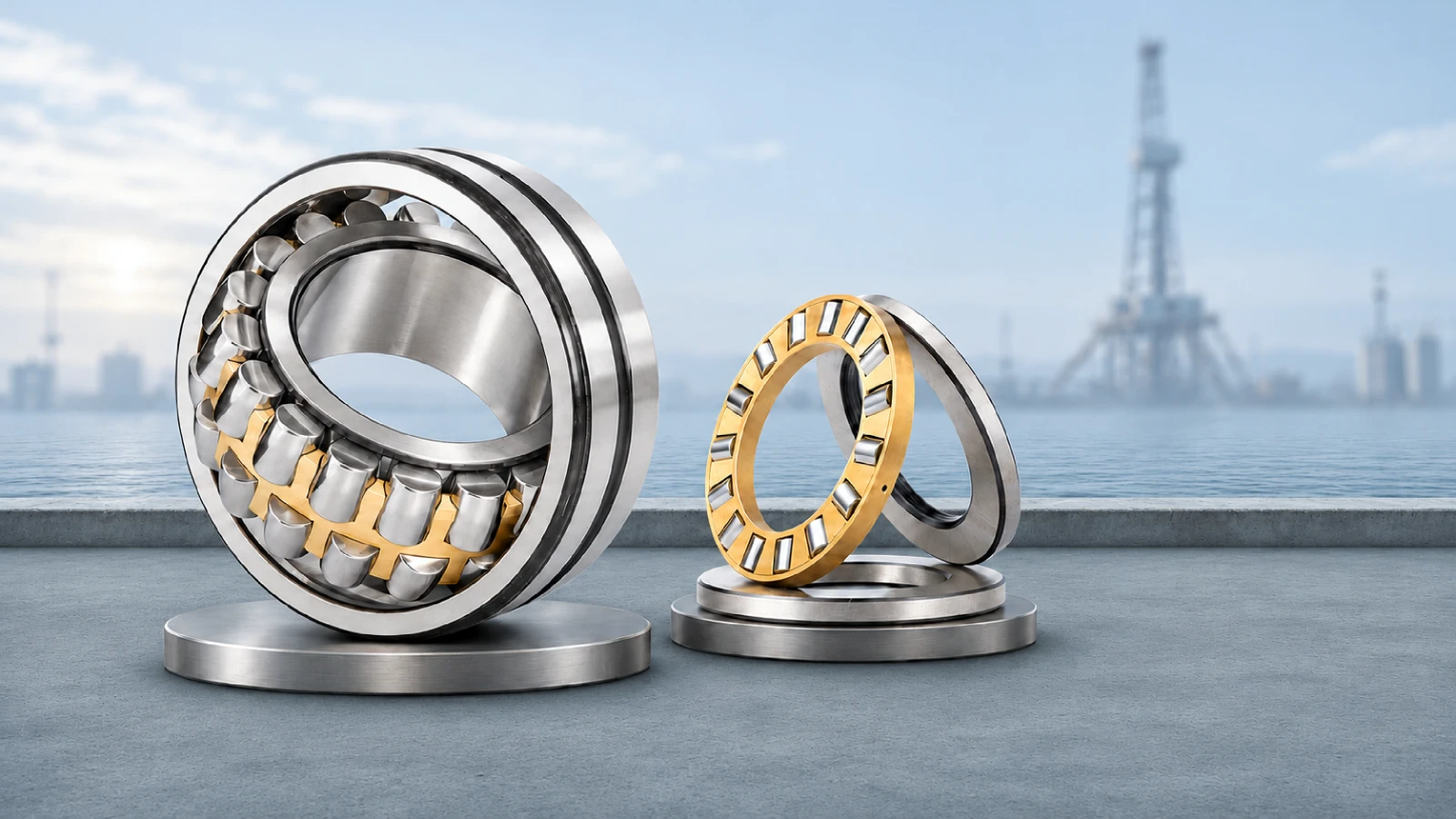
An oil drilling rig contains several bearing systems, including the top drive, hoisting blocks, drawworks, mud pumps, and downhole equipment. These positions do not use one generic “rig bearing.” Their load paths, lubrication routes, mounting arrangements, and repair scopes can differ significantly. Buyers should therefore identify the equipment module and exact bearing position before asking about stock, replacement options, or repair parts.
For buyers searching for a bearing for the drill on an oil rig, the first step is to determine whether the request concerns the suspended top drive or downhole drilling equipment. This guide focuses on confirmed surface-rig positions, including the top drive main shaft and transmission, plus crown and traveling block sheaves. Mud pump and downhole bearing inquiries require separate equipment-specific information. A complete inquiry should begin with the equipment maker, model, assembly or bearing reference, exact position, and lubrication details rather than the rig name alone.
Which Rig Assemblies Have Confirmed Bearing Positions?
Top drives use rolling bearings at the main thrust, upper radial support, lower radial support and transmission positions. The main thrust location supports the suspended load path, while radial bearings guide the shaft. Gearbox bearings support transmission shafts. These parts share a housing on many top drives, yet their functions and part numbers differ.
Crown and traveling blocks have sheaves that rotate as the hoisting line moves. A sheave bearing may be supplied as part of a pre-set, pre-greased unit or another equipment-specific assembly. Rig drawworks and other rotating machinery have further bearing positions, but their fitment must come from the installed equipment design. The term “rig bearing” does not identify any one of them.
| Equipment position | Key assembly question | Typical sourcing scope |
|---|---|---|
| Top drive main shaft | Is it the main thrust or a radial-support position? | Exact bearing plus required mounting, retention, or sealing parts |
| Top drive transmission | Which gearbox shaft and bearing position are involved? | Bearing for the identified shaft plus required retention or sealing hardware |
| Crown or traveling block | Which sheave and axle position are involved? | Bearing, bearing set, or complete sheave assembly |
Record the equipment maker, model, serial number and drawing revision. A rig upgrade can alter the bearing load or mounting arrangement even if a nominal envelope remains similar.
What Does a Broad Rig Search Miss?
An equipment-level search describes the job site, not the bearing. The buyer needs to know whether the repair concerns a top drive, hoisting block, mud pump or downhole motor. A mud-lubricated bearing stack inside a drilling motor is not a substitute for a surface top drive bearing. Its lubricant and installation environment are fundamentally different.
Within a top drive, a main thrust bearing must not be confused with an upper radial setup bearing. Within a block, a pre-set sheave unit may include seals and bearing setting that a loose rolling bearing does not provide. Specify what the shop will remove, whether its housing is reusable and who will validate the assembled equipment.
Separate the failed bearing from adjacent seals, gears and shafts on the work order. A part marked with a brand number may still need the machine assembly number to confirm position. For a hard-to-find item, photographs of the removed part should accompany the drawing rather than replace it.
How Do Lubrication Routes Differ Across a Rig?
Many top drive main-shaft and transmission positions use circulating oil and filtration. Some special main-shaft designs use grease instead. The installed top drive’s lubrication layout decides what applies. Check oil flow and level, filter condition, temperature and seal arrangement before blaming a bearing for a rising trend.
A pre-greased sheave unit can have a different maintenance route from a field-relubricated sheave. An equipment-specific unit may not need added grease during its intended service cycle. Pumping grease into it on a generic schedule could conflict with its design. Ask whether the quote covers a complete unit or a bearing that needs setting and lubrication in the workshop.
Washpipe and retainer seals help separate drilling fluid, water and grit from top drive bearing cavities. A seal failure can admit abrasive particles into the oil. Lubricant choice alone will not restore a worn seal or a damaged shaft surface. These checks belong to the repair scope as well as the bearing purchase.
Which Symptoms Call for a Bearing Review?
Temperature, vibration, metal in an oil sample or unusual noise can trigger inspection. They do not identify the failed position without localization. A top drive gearbox fault, a radial support problem and a thrust-bearing issue can generate different repair needs. The technician should connect the signal to a component and document load, speed and oil conditions.
When disassembly finds a damaged raceway, inspect the mating shaft and housing, seals, lubrication circuit and any debris source. Compare the damage with the work history. Replacing a bearing without correcting oil starvation or contamination may repeat the failure. For a sheave, confirm axle condition and whether the unit’s pre-set construction has been disturbed.
Rig repairs may move to a specialized facility when a top drive needs full teardown. A buyer should identify which inspection measurements the facility will supply before authorizing an alternative. An alarm or a rough hand-rotation check is not enough to declare a proposed part interchangeable.
What Should a Rig Bearing RFQ Include?
Send the rig equipment module, maker, model, serial number and exact bearing position. Include the installed bearing designation, assembly number, drawings, photographs, dimensions and quantity. Describe lubricant type and route, speed, axial or radial load information, symptoms and the repair facility’s inspection findings. For a U.S. drilling contractor planning a rig move or top drive overhaul, state the receiving date separately from the field return date.
HSN can review a complete bearing model, drawing or sound sample for stock or a defined custom discussion. Agree on dimensions and inspection records appropriate to the specific position. The repair facility must confirm mounting, lubrication, equipment rating and operation. A rig-level keyword starts the inquiry; the assembly details make it actionable.
FAQ
Can I quote a bearing from the rig model alone?
No. Identify the equipment module, exact bearing position and installed assembly first.
Is a top drive thrust bearing a sheave bearing?
No. They serve different load paths and require separate parts and service procedures.
Who should approve a U.S. rig bearing replacement?
The repair facility or responsible engineering team should approve the drawing, mounting, lubrication, and bearing setting before order.
Why ask HSN to quote a rig bearing?
HSN can review the exact position and drawing, then confirm supply scope, agreed inspection records and a quoted lead time.
Remarks
For an oil drilling rig bearing inquiry, send HSN the complete model, photos, dimensions, quantity and working conditions. Include the equipment module, exact position, assembly code and lubrication route.
This article is based on independent analysis of publicly available technical information and industry understanding for knowledge sharing. All brand names and trademarks mentioned belong to their respective owners. HSN Bearing Group is an independent bearing supplier and technical service provider.
Tel: +86 156 6578 7336 Email: service@hsnindustrial.com Website: www.rollingparts.com www.hsnbearing.com
Need Help with Oil Drilling Rig Bearings?
Contact HSN to confirm a hard-to-find model or discuss a replacement after technical review.