

How Should Buyers Select Pellet Mill Bearings?

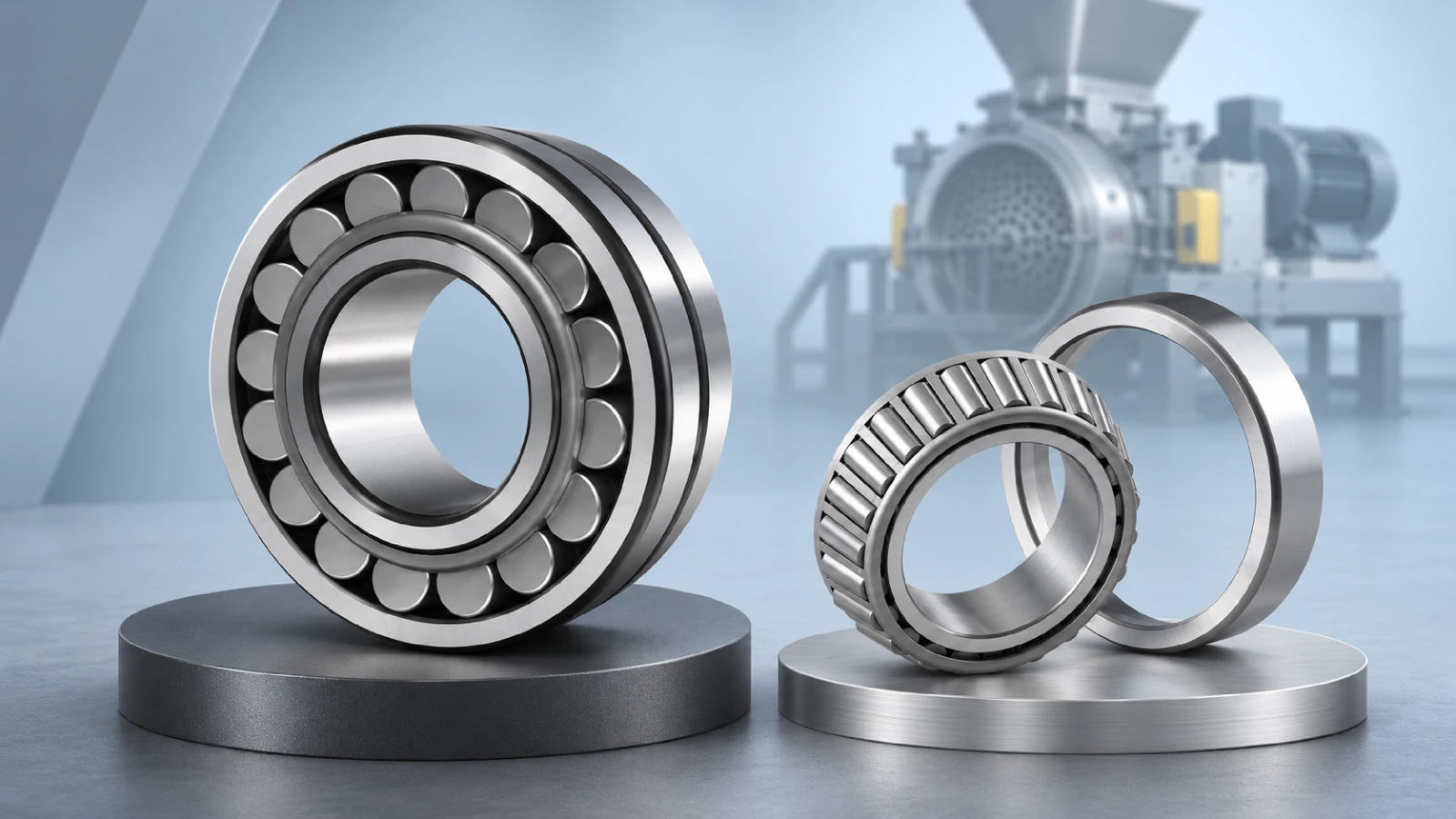
Pellet mill bearings should not be selected from a generic description such as “roller bearing”. Press roller assemblies, die drives, main shafts, and gearboxes operate at different positions and can have different loads, speeds, lubrication systems, and mounting arrangements. Before requesting a quote, buyers should identify the mill make and model, the exact bearing position, and the existing bearing or housing reference.
Operating symptoms also need to be separated from the bearing specification. A hot press roller may involve seals, lubricant supply, or contamination as well as the bearing itself, while main shaft vibration can have several possible causes. By confirming the affected assembly and complete bearing details first, buyers can obtain a more accurate quote and avoid ordering the wrong bearing for the shutdown.
Where Do Pellet Mill Bearings Work?
In a ring-die mill, press rollers force conditioned feed or biomass through die openings. The roller shells rotate on their supports while the die and drive transmit the process torque. Bearings inside a press roller assembly must carry the forces imposed at that contact. Main shaft bearings support the principal rotating assembly, and gearbox bearings support transmission shafts in machines with a gearbox.
The arrangement changes with mill design. Some mills use two press rollers and others use more; roll adjustment and bearing access also vary. A drive-end bearing, roller bearing and main shaft bearing must not be combined into one request simply because all sit in the same machine. Identify the position on the equipment drawing and photograph the actual removed assembly.
Feed and biomass service can differ in material, moisture, conditioning and duty cycle. However, those labels alone cannot specify a bearing. The compaction load, roller assembly design and lubricant route determine which part the plant needs. Record the process conditions as context for the bearing review, not as a substitute for a complete model.
Which Bearing Structures and Assemblies Matter?
A press roller service item may include a shell, shaft, internal bearings, seals and spacers. If its drawing shows a tapered-roller pair, identify both bearings, their orientation, spacers and specified setting. If a cylindrical radial bearing is shown, locate the separate feature that controls axial movement; do not assume the radial bearing does so. Main-shaft and drive bearings have different housings, retention and lubricant routes. The mill drawing and complete designation determine which arrangement applies.
| Position | Typical sourcing scope | Key verification point |
|---|---|---|
| Press roller | Internal bearing set or complete/rebuilt roller assembly | Roller shaft, bearing arrangement, housing, seals, spacers, and setting |
| Main shaft | Main bearing and associated mounting or retention parts | Bearing position, locating arrangement, shaft/housing fits, and lubrication route |
| Gearbox or drive | Shaft bearing and related gearbox service parts | Gearbox model, exact shaft position, bearing designation, and lubrication system |
The table defines what to ask, not a cross-reference between mill brands. A roller shell is a wear part, while the internal bearing is a separate rotating support. Ordering a new shell does not necessarily address a hot or rough bearing. Conversely, a bearing replacement will not correct a worn shell profile or incorrect roller-to-die setting.
Check whether the installed assembly is designed for field replacement or workshop rebuilding. An unavailable standard bearing may require a full assembly number and drawings before a replacement can be reviewed. Do not infer interchangeability from overall roller diameter.
How Do Load, Heat and Lubrication Affect Service?
The roller-die contact creates high forces that vary with feed rate, formulation and adjustment. These loads reach the roller bearings through the shell and shaft. Misalignment or damaged seats can concentrate load on the rolling elements. Thus, a bearing with an apparently adequate basic rating may still suffer in a worn housing.
Lubrication design is especially important. Certain pellet mills use automatic grease supply for press rolls and main shaft bearings. Other designs use circulating oil for roller or main bearings, which can also remove heat. A circulating-oil roller system may monitor flow to individual rollers. Therefore, obtain the specific lubrication schematic rather than assume every pellet mill uses grease.
Seals separate lubricant from dust, fines and the process chamber. A failed seal can allow contamination into the bearing or lubricant into material being processed. The plant should inspect the seal land, grease or oil delivery, return path and temperature trend. Where feed-contact requirements apply, the plant must separately confirm its lubricant and hygiene specifications; a bearing quote alone does not establish compliance.
What Failure or Custom Work Needs Investigation?
Rising roller temperature, vibration, metal particles or repeated lubricant alarms call for inspection. They do not by themselves prove bearing failure. A blocked grease line, low oil flow, excessive roller adjustment, worn seal or damaged shaft can create similar symptoms. Record which roller is affected, the load at the time and what the maintenance team found during disassembly.
Inspect the bearing, inner and outer seats, spacer stack and retaining parts together. A loose seat can invalidate a bearing-only replacement. Contaminated lubricant can damage the next bearing if the circuit is not cleaned. Compare the old components with the mill drawing before changing clearance, cage or seal design.
For an obsolete assembly, a custom bearing or component needs verified dimensions, tolerances, material requirements and installation method. The engineering team should approve any change against operating speed, load and lubricant flow. HSN can discuss a drawing- or sample-based option, but it cannot validate the mill’s complete roller assembly from a bearing number alone.
What Should a Pellet Mill Bearing RFQ Include?
Send the mill make, model and serial number, feed or biomass duty, exact bearing position and complete installed bearing code. Include the roller or main shaft assembly number when available, photos, drawings, dimensions and quantity. State whether the plant needs a loose bearing, a bearing set or a rebuilt assembly, and list seals and spacers separately.
Add the lubrication method, lubricant type, flow or grease-delivery observations, speed, temperature history and failure evidence. For a U.S. plant planning a die-and-roll change, give the required receiving date and the start of the maintenance window as separate dates. The shop can then inspect the bearing and related parts before the press is opened.
HSN can review the complete model, drawing or sound sample for possible stock or a defined custom supply route. Agree on dimensional and material checks appropriate to the bearing position. The plant remains responsible for matching the mill drawing, restoring the lubrication system and validating the assembled machine after installation.
FAQ
Are press roller and main shaft bearings the same?
No. Identify the exact assembly, mounting and lubricant circuit before comparing numbers.
Can I replace a roller bearing after a heat alarm?
Inspect the bearing, seal, seats and lubricant delivery first; an alarm alone does not prove the cause.
What should a U.S. plant include in a shutdown RFQ?
Send the mill and assembly codes, position, scope, quantity, receipt date and maintenance window.
How can HSN review a discontinued mill bearing?
Provide a complete code, drawing or sample; HSN can assess stock or custom supply with agreed checks.
Remarks
For pellet mill bearings, send HSN the complete model, photos, dimensions, quantity and working conditions. Include the mill and assembly identification, exact position, lubricant route and related seal requirements.
This article is based on independent analysis of publicly available technical information and industry understanding for knowledge sharing. All brand names and trademarks mentioned belong to their respective owners. HSN Bearing Group is an independent bearing supplier and technical service provider.
Tel: +86 156 6578 7336 Email: service@hsnindustrial.com Website: www.rollingparts.com www.hsnbearing.com
Need Help with Pellet Mill Bearings?
Contact HSN to confirm a hard-to-find model or discuss a replacement after technical review.