

Why a Magnetic Bearing Proposal for a Wind Turbine Needs Review?

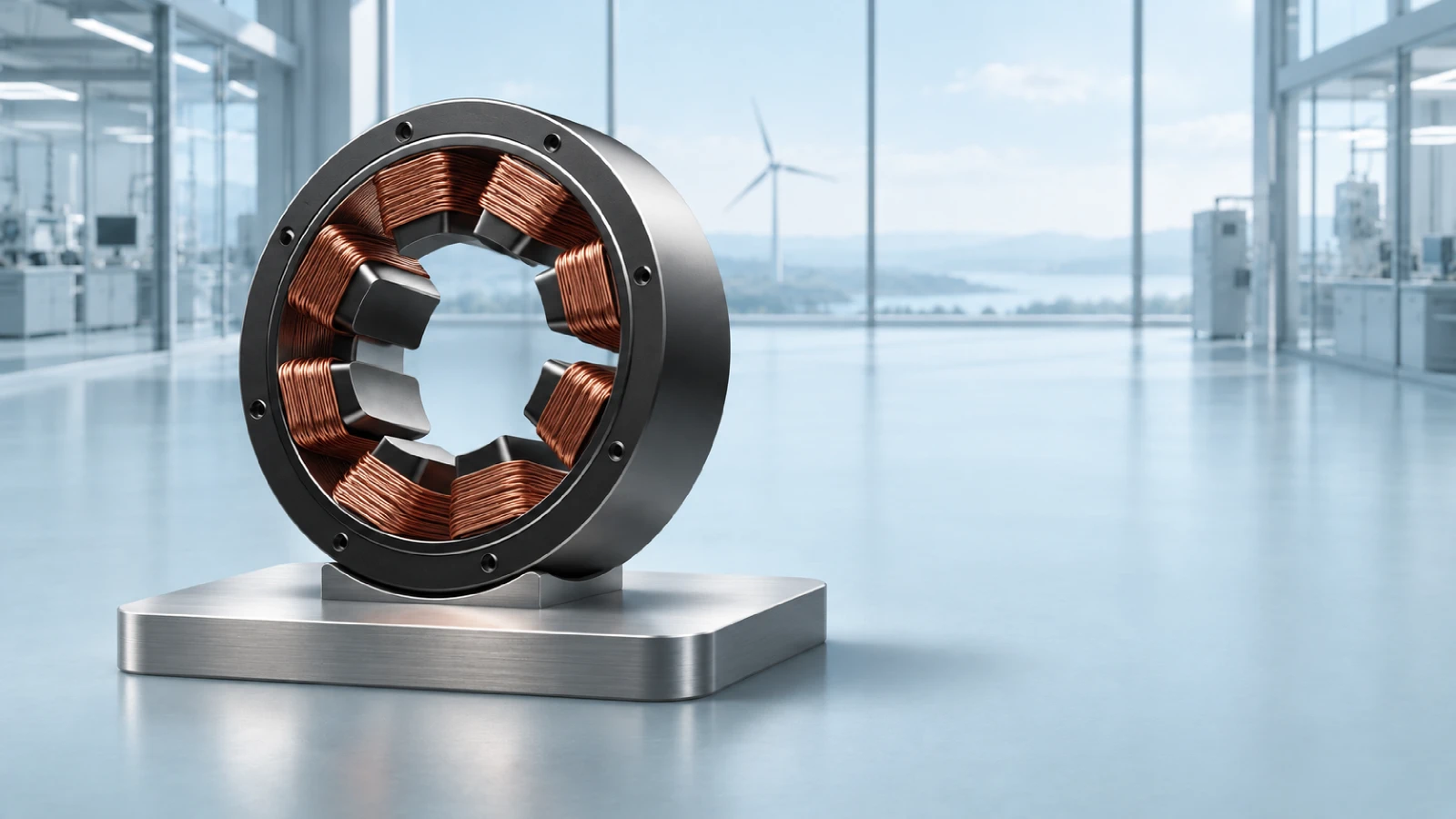
A magnetic bearing wind turbine inquiry should first confirm whether the installed machine actually uses magnetic rotor support. Conventional wind turbines may use rolling bearings at the main shaft, gearbox, pitch, or other rotating positions, while a magnetic bearing relies on a controlled support system with different load, control, and backup requirements. It should therefore not be treated as a drop-in replacement for a catalog rolling bearing.
For an existing turbine repair, buyers should identify the exact installed component from the turbine maker’s drawing before requesting stock or a replacement. For a development or prototype project, the inquiry must define the supported rotor, radial and axial loads, control system, air gap, backup bearing, and safe-shutdown behavior. These two cases require different engineering reviews and purchasing scopes.
Where Might a Magnetic Bearing Fit?
A magnetic bearing supports a rotor through a controlled magnetic field or another engineered magnetic arrangement. Active systems use sensors, power electronics and a controller to adjust electromagnetic force as the shaft moves. The supported shaft must stay within a designed air gap during operation. A passive or hybrid proposal has its own stability and load-sharing limits; the label “magnetic” alone does not define the system.
Small wind-generator research has explored magnetic suspension. The leap from a laboratory or prototype rotor to a commercial turbine drivetrain requires testing against the actual rotor mass, wind-driven transients and certification basis. It also requires a credible path for commissioning, service and faults. No general claim that mainstream commercial turbines carry magnetic main bearings follows from such studies.
An engineer should distinguish the main shaft from a generator rotor. A concept for supporting one does not automatically support the other. Ask for the exact location, shaft speed, radial and axial loads, permitted displacement, and the system boundary before evaluating a supplier’s proposal.
Which Turbine Positions Still Need Rolling Bearings?
Conventional wind turbines still use rolling bearings at several critical positions, even when a magnetic-bearing concept is being evaluated for a generator or rotor. The bearing type depends on the load path, shaft arrangement, speed, and turbine design, so one magnetic-support proposal should not be applied across the entire drivetrain.
| Turbine position | Common bearing types | Main buyer check |
|---|---|---|
| Main shaft | Spherical roller bearings or tapered roller bearings | Shaft arrangement, radial and axial loads, locating method, and housing fit |
| Gearbox shafts | Cylindrical roller, tapered roller, spherical roller, or ball bearings depending on position | Exact gear shaft, speed, load direction, clearance, and lubrication |
| Pitch system | Slewing bearings, commonly ball or roller slewing designs | Blade interface, bolt pattern, gear arrangement, load, and sealing |
| Yaw system | Slewing bearing or sliding-pad arrangement | Nacelle interface, gear drive, support type, and installed design |
The main shaft transfers rotor loads into the nacelle, while gearbox bearings support shafts operating at different speeds and loads. Pitch and yaw systems serve structural rotation functions and use their own dedicated bearing or sliding arrangements. A magnetic bearing proposed for a generator rotor does not automatically replace any of these positions.
Therefore, buyers should confirm the exact installed position and full bearing designation before requesting a replacement. If the maintenance list calls out a main-shaft bearing, gearbox bearing, pitch slewing ring, or yaw support, the installed drawing and machine configuration should control the purchase rather than a turbine-wide search term. This matches the article’s existing point that procurement should remain position-specific.
Can Magnetic Support Carry the Actual Loads?
Wind input changes the thrust and bending applied to a drivetrain. Radial support, axial restraint and tilt response must all be accounted for in the whole rotor model. A magnetic force rating at a nominal centered position cannot, by itself, establish capacity through gusts, stops or grid disturbances. Thermal movement and housing deflection can reduce the available air-gap margin.
The control loop matters as much as the electromagnets. Sensor placement and resolution affect the measured rotor position. Controller bandwidth, actuator current and power supply determine how the system reacts. The engineering package should show operating load envelopes, transient simulations, stiffness and damping assumptions, and what happens when a sensor or power module fails.
Active magnetic bearings often need mechanical touchdown or backup bearings for a loss-of-levitation event. Those parts have a separate duty: accept a rotor during a defined fault and coastdown, rather than carry its normal continuous load. Their speed, impact energy, clearances and number of permitted events must be specified. An ordinary bearing selected by bore size alone cannot be assumed to meet that emergency duty.
What Does Failure Monitoring Mean Here?
Magnetic support offers different signals from a rolling bearing. Rotor position, control current, air gap, vibration and fault logs can reveal a changing condition. Yet an alarm does not identify whether the source is a sensor, actuator, control parameter, rotor imbalance or adjacent hardware. Trend the records against speed and operating state before assigning a cause.
Following a touchdown, inspect the backup bearing and contact surfaces under the system maker’s procedure. A controller reset does not prove that the mechanical backup remains fit for another event. Likewise, a damaged backup bearing may be a consequence of a loss of levitation, not the initiating fault.
If the installed turbine uses conventional rolling bearings, follow its normal diagnostic path instead. Lubricant condition, temperature and vibration trends help direct inspection, while teardown evidence and the machine drawing support the replacement decision. Calling those parts magnetic does not improve a fault diagnosis.
What Belongs in a Feasibility or Replacement RFQ?
For an existing machine, send its maker, model, serial number, bearing position, assembly drawing, complete bearing code, photos and measured dimensions. State whether the request concerns the active magnetic system, a touchdown bearing, or an unrelated rolling bearing. An installed sensor/control package needs its own configuration and fault records.
For a development request, provide rotor geometry and mass, speed range, radial and axial load cases, air-gap and displacement limits, allowable power loss, coastdown scenario, environment and acceptance tests. Name the party responsible for rotor dynamics and control validation. A quote for a mechanical backup component is only one part of that system review.
For a U.S. repair or prototype build, state the document-review deadline, quantity and receiving date. HSN can review a hard-to-find conventional or touchdown bearing by complete model, drawing or measured sample and discuss agreed inspection records and a realistic supply window after technical review. The qualified design team approves magnetic-system and fault-duty requirements.
FAQ
Are magnetic bearings standard in wind turbines?
Do not assume so. Identify the installed design from the turbine maker’s assembly drawing.
Can a magnetic system replace a main bearing directly?
No direct interchange follows. Rotor, controls, loads and fault response need system-level design approval.
What should a U.S. prototype RFQ contain?
Send rotor and load data, drawings, fault duty, quantity, review date and required delivery window.
Why ask HSN to source a backup bearing?
HSN can check the full code or drawing, agree on inspection evidence and quote availability and lead time. The designer approves fault duty.
Remarks
For detailed wind turbine bearing models related to this magnetic-bearing inquiry but not listed above, please contact HSN for model confirmation and supply discussion. When checking other bearing references, you can also send the complete model, photos, dimensions, quantity, application, and working conditions.
This article is based on independent analysis of publicly available technical information and industry understanding for knowledge sharing. All brand names and trademarks mentioned belong to their respective owners. HSN Bearing Group is an independent bearing supplier and technical service provider.
Tel: +86 156 6578 7336 Email: service@hsnindustrial.com Website: www.rollingparts.com www.hsnbearing.com
Need Help Identifying a Wind Turbine Bearing?
Contact HSN to confirm a hard-to-find model or discuss a replacement after technical review.