

Why Oilfield Bearings Need Equipment-Specific Sourcing

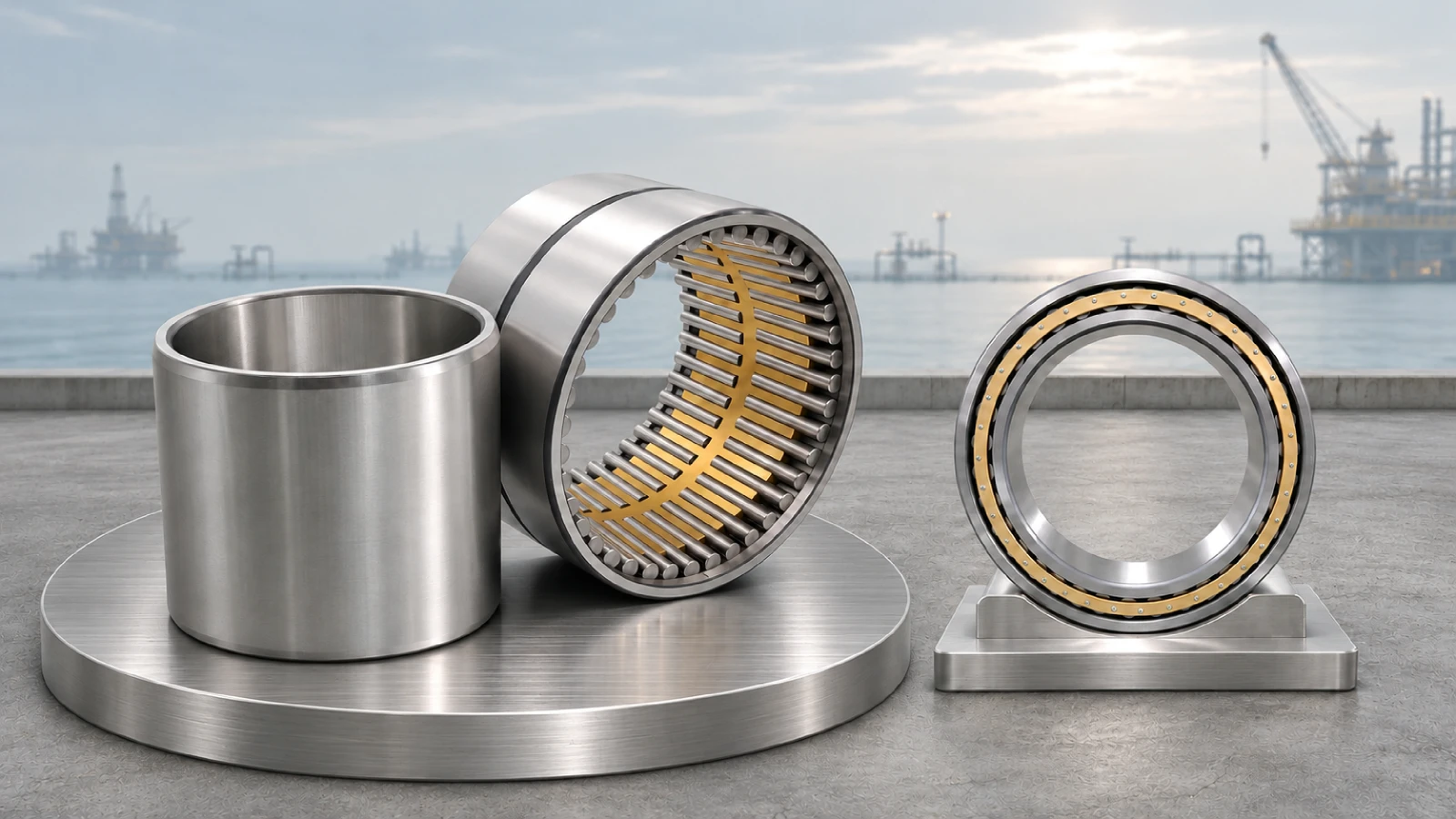
Oilfield bearings are used across top drives, mud pumps, hoisting blocks, drawworks, and downhole equipment, but these positions do not share one generic bearing specification. Load direction, lubrication, mounting, contamination, and repair scope can vary widely between assemblies. Buyers should therefore identify the equipment type and exact bearing position before checking stock or discussing a replacement.
An oil and gas bearing inquiry should also define whether the request is for a loose bearing, a pre-set unit, or a larger assembly that requires workshop rebuilding. The complete bearing or assembly code, drawing, lubrication route, and working conditions should be confirmed whenever possible. This position-specific approach helps buyers separate different repair scopes, avoid incorrect cross-references, and obtain a quotation that can be technically reviewed before ordering.
Which Equipment Groups Use Oilfield Bearings?
Surface drilling equipment includes top drives, rotary swivels, mud pumps, drawworks and crown or traveling blocks. Top drives have main-shaft and transmission positions; mud pumps have power-end bearings; block sheaves rotate on their own bearing arrangements. Downhole motors form another category, sometimes using bearing stacks exposed to the drilling fluid. These positions should remain separate in a purchasing system.
| Equipment family | Bearing scope to identify | Distinct question |
|---|---|---|
| Top drive or swivel | Main shaft or transmission | Thrust, radial or gearbox position? |
| Mud pump | Power-end shaft bearing | Pinion or crankshaft location? |
| Crown or traveling block | Sheave bearing or unit | Pre-set assembly or serviceable part? |
| Downhole motor | Bearing stack or module | Mud-lubricated or sealed design? |
The table is a routing aid, not a fitment chart. Equipment makers use different assemblies and revisions. A requested bearing may also be part of a certified machine rebuild process, so the buyer must identify who can approve the finished assembly.
How Does the Search Term Become a Part Request?
A category request often begins with a failure report, photograph or partial bearing marking. Match that evidence to an equipment tag, model and position. Then obtain the complete bearing code and the maker’s assembly number. A mark on a removed race may describe only one component of a multi-part bearing or pre-set unit.
Next, define the purchase boundary. A loose bearing does not include the seals, spacers, retaining parts or settings of a complete unit. A pump bearing frame or top drive gearbox may contain several bearings. Quote each required item on its own line, with the drawing revision and quantity. This prevents an alternative for one shaft from being approved accidentally for another.
When the model is discontinued, dimensions alone are an incomplete replacement specification. Internal geometry, cage, clearance or setting, contact angle and load direction may matter. The buyer should request technical review before presenting a cross-reference as a direct interchange.
The receiving team also needs a way to distinguish visually similar parts from adjacent shaft positions. Put the assembly and position on the order and inspection record, rather than only on a shared spare-parts list. For a separable bearing, identify which rings and rolling assembly the quote covers. This matters when a worn component was removed at one facility and the replacement will be installed at another.
Which Lubrication System Governs Each Position?
The lubricant belongs to the equipment design, not to the industry label. Top drives commonly use oil at main-shaft and transmission positions, though some special designs use grease. A mud pump power end can distribute oil from a sump through splash and collection features. A pre-greased sheave unit follows a different service plan; a mud-lubricated downhole bearing stack is different again.
Because of those differences, “oilfield grease” is not a universal purchase answer. Record the actual oil or grease, flow path, filtration, relubrication interval and seal arrangement. A contaminated oil sample calls for inspection of ingress points and circulation. More grease will not restore a failed oil circuit, and changing lubricant cannot correct a worn housing.
Temperature or vibration trends need location and operating context. Note the speed, load and machine state when a reading was taken. The same number has a different meaning at a top drive gearbox than at a pump crankcase. This context helps the maintenance team prioritize inspection before it asks for a bearing replacement.
What Can a Failure Report Prove?
Spalling, scoring, heat discoloration or debris denting describe bearing condition. They do not establish the root cause without the shaft, housing, lubricant, seals and duty history. A repeated failure may involve poor lubrication, ingress, mounting error, overload or another machine defect. Keep the observed damage separate from the proposed explanation.
For a top drive, ask whether oil reached the bearing position and whether seals kept drilling fluid out. In a pump, confirm that the power-end oil reached the affected location. When inspecting a pre-set sheave unit, check whether the repair team installed the unit and axle as designed. Each investigation helps identify which components the next order should include.
If an upgraded rig or pump changed duty, a previous bearing number may still fit physically while its load assessment needs a new review. Record the machine change and the approval authority before ordering. HSN can discuss a candidate bearing, but it cannot authorize equipment ratings or repair certification from a dimensional match.
What Should an Oilfield Bearing RFQ Contain?
Provide the equipment type, maker, model, serial and exact bearing position. Add the complete installed part and assembly numbers, drawing revision, photographs, dimensions, quantity and required scope. State load direction, speed, lubricant route, contamination findings and any inspection measurements available from the repairer.
For a U.S. drilling contractor or MRO distributor, distinguish an immediate breakdown request from scheduled overhaul stock. The required arrival date and the approving repair facility should appear on the same inquiry. Where a bearing is quoted as a custom alternative, agree on drawing approval, inspection records and receiving checks before release.
HSN can review a confirmed number, drawing or sample for stock or a technically defined replacement route. The equipment owner or qualified repairer validates mounting, lubrication and machine operation. This position-specific process turns a broad oilfield search into a quote that can be checked before downtime begins.
FAQ
Are oilfield bearings interchangeable across machines?
No. Identify the equipment, shaft position, assembly and lubricant system for each request.
Can dimensions alone confirm a bearing substitute?
No. Review internal design, setting, load direction and mounting before approval.
Can U.S. buyers expedite an oilfield bearing substitute?
Yes, but confirm the exact position, drawing, approval route, and inspection scope before releasing an urgent order.
Why send an oilfield spare list to HSN?
HSN can review each position separately, then confirm supply scope, agreed checks and a quoted lead time for each line item.
Remarks
For oilfield bearings, send HSN complete models, photos, dimensions, quantities and working conditions. Include the equipment and assembly identifiers, position, lubricant route and repair scope.
This article is based on independent analysis of publicly available technical information and industry understanding for knowledge sharing. All brand names and trademarks mentioned belong to their respective owners. HSN Bearing Group is an independent bearing supplier and technical service provider.
Tel: +86 156 6578 7336 Email: service@hsnindustrial.com Website: www.rollingparts.com www.hsnbearing.com
Need Help with Oilfield Bearings?
Contact HSN to confirm a hard-to-find model or discuss a replacement after technical review.