

Why Wind Turbine Bearing Failure Requires Position-Specific Diagnosis

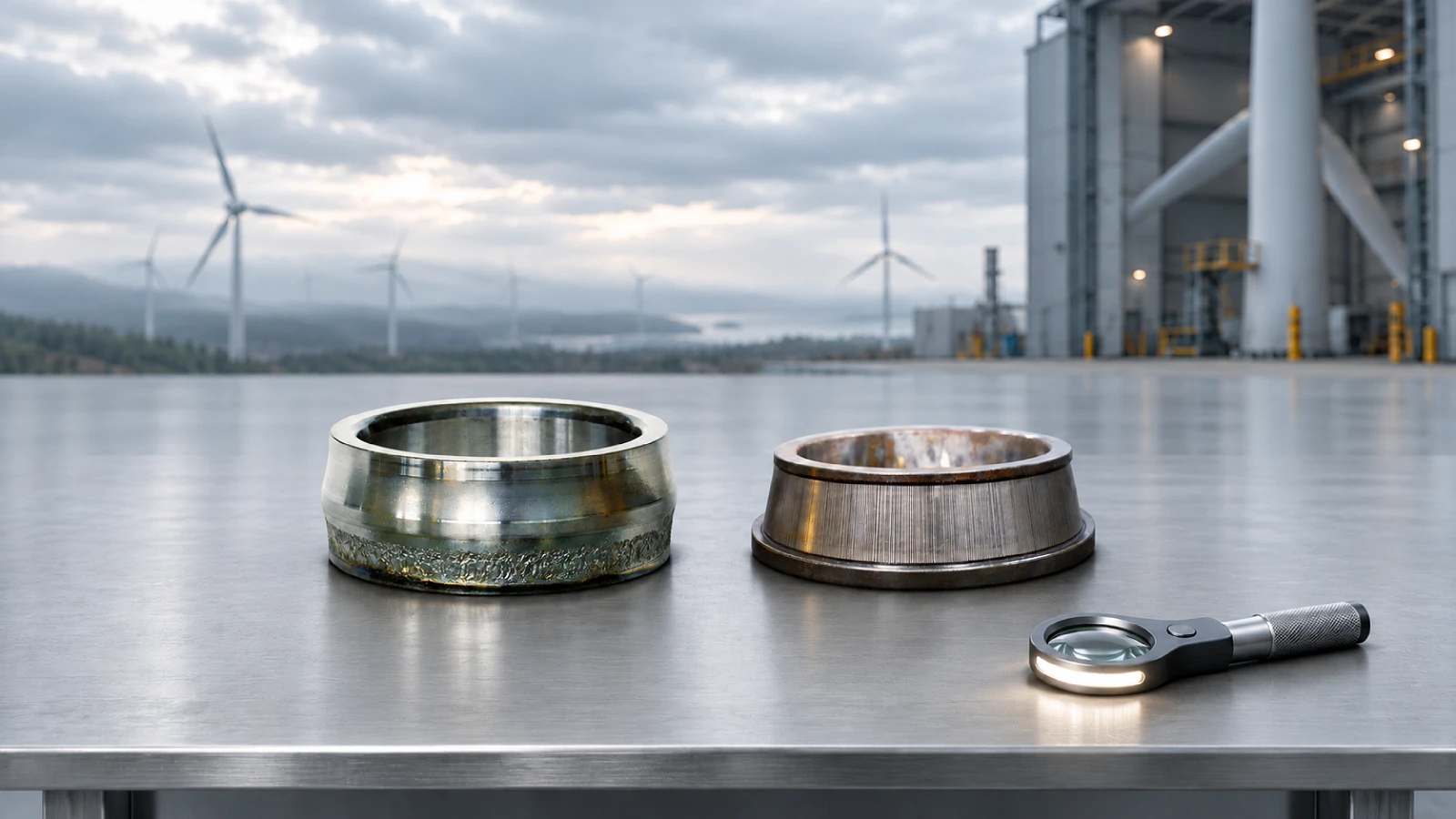
Wind turbines use bearings at several critical positions, and each position has different load, lubrication, and mounting requirements. When a wind turbine bearing failure occurs, buyers and maintenance teams should first identify the affected position before deciding what to inspect or replace.
The observed damage can guide the investigation, but it does not by itself confirm the root cause. Main-shaft, gearbox, pitch or yaw, and generator bearing problems may involve different surrounding components and failure mechanisms. Therefore, the repair team should preserve damage evidence, inspect the shaft, housing, seals, and lubrication system, and compare the findings with operating history and condition-monitoring data.
A replacement decision should also consider the broader outage scope. A new bearing can fail again if it is installed in a damaged seat, distorted interface, or contaminated lubrication circuit. By confirming the exact position, failure evidence, adjacent-part condition, and repair boundary first, buyers can define a more accurate replacement specification and RFQ.
What Causes Damage at Each Bearing Position?
Main-shaft positions may use spherical roller bearings or tapered roller bearing arrangements, depending on the turbine design. These bearings carry rotor reactions that vary with wind thrust, gravity and bending. Load distribution depends on the shaft support arrangement. Uneven contact, excess axial movement or housing distortion can damage the bearing and alter forces reaching the gearbox. The original bearing’s race pattern and shaft-seat condition are useful clues, but neither alone proves the initiating cause.
Gearbox bearings face different duty from the main shaft. Research has examined axial cracking and white-etching-related damage at some gearbox positions. Smearing and debris damage are other possibilities. Identify the stage and actual damage morphology before assigning a mechanism.
Pitch and yaw rings see slow oscillation or intermittent rotation plus structural moments. Localized raceway damage, gear-tooth wear, ineffective grease distribution or mounting distortion deserve attention. A generator bearing introduces its own electrical and lubrication considerations. Record the position first, then select the relevant inspection and replacement criteria.
| Position | Evidence to retain | Adjacent check |
|---|---|---|
| Main shaft | Row wear, grease, shaft movement | Seats, housing and gearbox interface |
| Gearbox | Stage label, oil debris, race damage | Oil feed and shaft setting |
| Pitch or yaw | Wear sector, gear and fasteners | Flanges, lubrication and drive |
How Does Failure Change Downtime Planning?
A main-shaft or gearbox repair may require a major nacelle intervention, heavy lifting or workshop work. Pitch and yaw repairs involve large bolted interfaces and different access constraints. The bearing purchase is only one part of the outage. Crane availability, weather window, seal and fastener scope, and the facility’s assembly plan can control the schedule.
The first decision is whether inspection can safely continue before teardown under the turbine maker’s procedure, or whether the machine must stop. An abnormal temperature or vibration trend calls for investigation. It does not independently authorize continued running, and it does not prove a particular bearing is damaged. Capture the trend, operating conditions and alarm history for the responsible engineer.
For a U.S. wind-farm outage, distinguish a confirmed replacement from a contingency part. Give the technical approval deadline and the date the service crew needs the part at the receiving site. A mismatched design can jeopardize the mobilization window.
What Should Inspection Preserve Before Replacement?
Photograph the installed arrangement before disassembly. Record the turbine model, bearing position, orientation and full markings. During teardown, document raceway patterns, rolling elements, cage, seals and lubricant or oil-debris findings. Keep samples traceable to their positions, especially if several gearbox bearings look similar.
Measure the shaft and housing seats, shoulders, mounting faces and any fit or setting values required by the machine drawing. For a pitch or yaw ring, inspect bolt holes, gear teeth, adjacent flange faces and the lubrication route. A cracked race is an important finding; a damaged support can be just as consequential for the new part.
The maintenance team should map evidence to hypotheses. Debris can come from upstream components, while a thermal alarm can follow restricted lubrication or another system fault. Compare inspection findings with operating history, oil analysis and condition monitoring. If the cause remains uncertain, document the uncertainty for the replacement engineer instead of writing it into a purchasing claim.
Which Selection and Installation Factors Matter?
The replacement needs the intended internal geometry and load capacity, not just matching bore and outside diameter. For a main bearing, review the support arrangement, axial location, misalignment allowance, seals, lubrication and any required clearance or preload. A proposed tapered-roller redesign of a spherical-roller position needs engineering assessment of the shaft and downstream gearbox loads.
Gearbox bearings require their exact stage, shaft speed, fits, lubrication method and complete code. Do not infer an interchange from a catalog dimension table. For a slewing ring, mounting-face stiffness, bolt specification and tightening sequence affect load sharing. The machine maker’s assembly procedure governs these items.
Lubrication corrections belong in the work scope when evidence points there. A clean replacement installed with blocked grease lines or unfiltered gearbox oil will not address the cause. Document lubricant type, supply method, seals and any changes made during repair so later monitoring has a clear baseline.
What Should a Failure-Related RFQ Include?
Send the turbine maker and model, serial number, installed position, complete bearing designation, photos, dimensions and quantity. Add assembly drawings, measured fits, suspected damage, lubricant findings, operating duty and the requested inspection documents. State whether procurement needs a loose bearing, matched components or a broader assembly.
When an original designation is unavailable, a readable drawing or measured removed sample is more useful than a generic search term. HSN can review a hard-to-find model, discuss a technically screened alternative, or assess a custom request using the supplied evidence. The repair engineer remains responsible for fit, load capacity, installation settings and approval to return the turbine to service.
If a supplier proposes a cross-reference, request the differences in geometry, internal design, material and installation requirements in writing. This creates a decision record for engineering and purchasing. It also prevents an urgent stock inquiry from silently turning into an unvalidated redesign.
FAQ
Does a vibration alarm prove bearing failure?
No. Compare trends with operating conditions, then inspect the relevant position under the turbine procedure.
Can a same-size main bearing be substituted?
Dimensions alone are insufficient. Review internal design, load path, fits and the turbine maker’s approval.
What should a U.S. outage buyer send first?
Send the turbine and position, full code, damage evidence, quantity, approval deadline and receiving date.
Why source a failure replacement through HSN?
HSN can screen the code or drawing, agree on dimensional and material checks, and confirm supply options and lead time for the repair plan.
Remarks
For detailed wind turbine bearing models not listed above, please contact HSN for model confirmation and supply discussion. When checking other bearing references, you can also send the complete model, photos, dimensions, quantity, application, and working conditions.
This article is based on independent analysis of publicly available technical information and industry understanding for knowledge sharing. All brand names and trademarks mentioned belong to their respective owners. HSN Bearing Group is an independent bearing supplier and technical service provider.
Tel: +86 156 6578 7336 Email: service@hsnindustrial.com Website: www.rollingparts.com www.hsnbearing.com
Need Help with Wind Turbine Bearing Failure?
Contact HSN to confirm a hard-to-find model or discuss a replacement after technical review.