

Why Gyratory Crusher Parts Buyers Should Check Bearings?

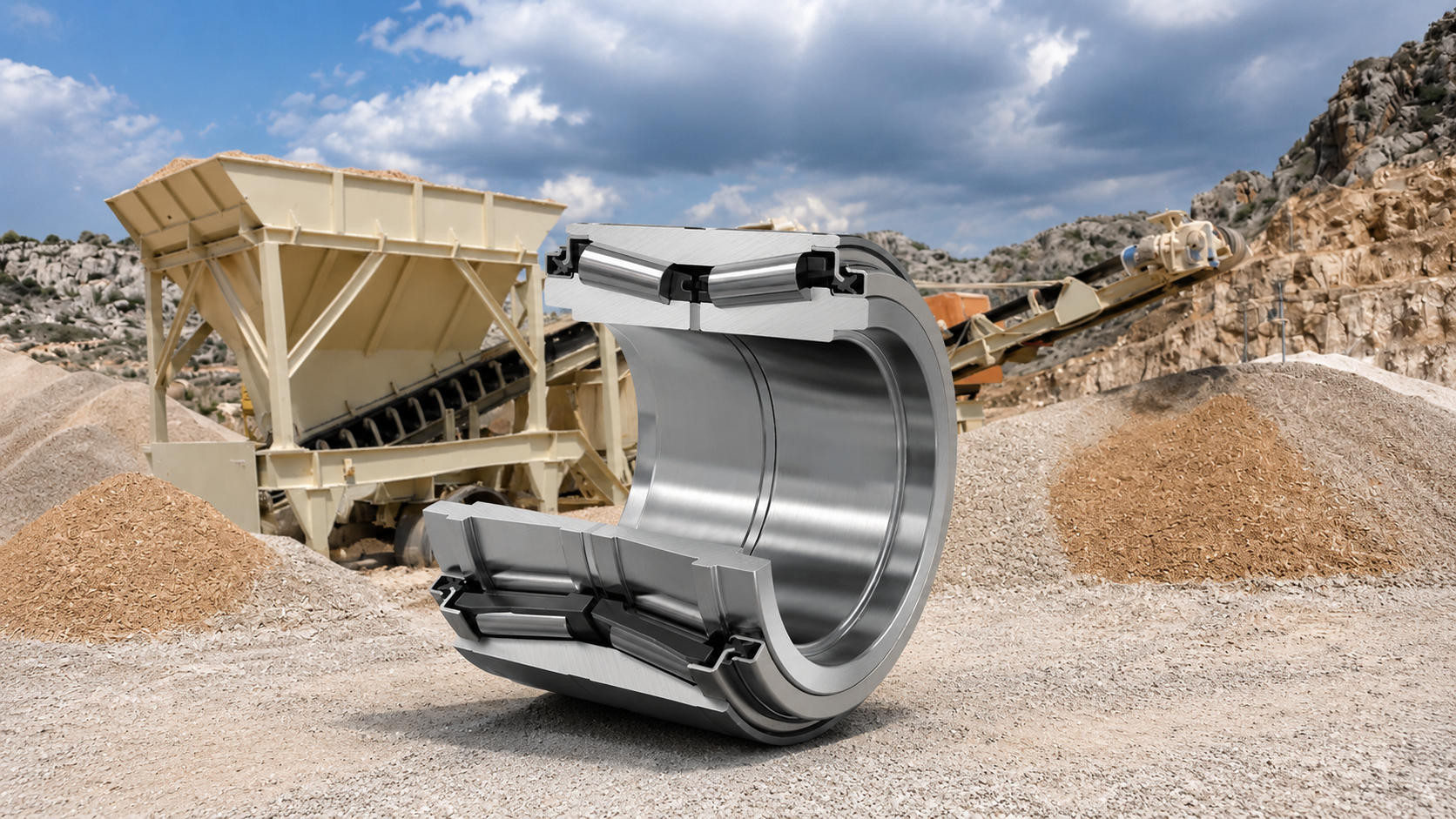
Buyers sourcing gyratory crusher parts usually work with large primary crushing equipment where a single maintenance issue can involve wear surfaces, main-shaft support, bushings, drive components, and lubrication.
Unlike a simple parts list, an effective procurement review should separate wear parts from structural spares and bearing-related support components. The machine model, installation position, drawing, and existing condition are therefore central to accurate sourcing.
Current primary gyratory parts information lists wear items such as mantles and concave segments together with main components including shells, spider, mainshaft, and eccentrics. It also identifies spider bushings, bottom-shell bushings, pinion and gear components, and step bearings as common maintenance components.
Table of contents
- What Are the Main Gyratory Crusher Parts Used in Heavy-Duty Crushing?
- Gyratory Spare and Replacement Parts Buyers Usually Need
- Which Gyratory Crusher Components Depend on Bearings and Bushings?
- Why Heavy Load, Dust and Lubrication Affect Crusher Bearing Life
- How to Match Gyratory Crusher Parts by Model, Drawing or Sample
- HSN Support for Heavy-Duty Crusher Bearing and Custom Part Supply
- FAQ
What Are the Main Gyratory Crusher Parts Used in Heavy-Duty Crushing?
A practical purchasing list can be divided into three groups.
Wear parts
- Mantle.
- Concave segments.
- Shell liners.
- Spider or arm protection.
Main structural and motion components
- Mainshaft.
- Spider and shell components.
- Eccentric.
- Drive or pinion components.
Support components
- Spider bushing.
- Bottom-shell bushing.
- Step-bearing components.
- Seals and lubrication parts.
- Bearing-related drive components.
Metso’s current primary gyratory parts list uses a similar division between wear parts, main components, and common components.
However, actual names and arrangements vary by manufacturer and model.
Gyratory Spare and Replacement Parts Buyers Usually Need
Gyratory crusher spare parts are normally stocked to support scheduled maintenance or reduce shutdown risk. Gyratory crusher replacement parts are sourced when an installed component is damaged, obsolete, or unavailable.
| Purchasing type | Main concern |
|---|---|
| Planned spare | Lead time and criticality |
| Wear replacement | Correct chamber and wear profile |
| Structural replacement | Model, dimensions, assembly |
| Bearing or bushing | Fit, clearance, lubrication, position |
| Custom part | Drawing, sample, material, tolerance |
A large part can still be easy to identify if the original drawing is available. A relatively small bushing or bearing can be more difficult when markings are missing or the machine has been modified.
Therefore, procurement priority should consider identification risk as well as physical size.
Which Gyratory Crusher Components Depend on Bearings and Bushings?
Gyratory crushers rely heavily on controlled shaft movement and support.
Important areas can include:
- Spider-bushing support.
- Bottom-shell bushing.
- Step-bearing or thrust-support area.
- Main-shaft and eccentric interfaces.
- Pinion and gear drive system.
- Drive-shaft bearing positions where used.
These parts influence alignment, operating clearance, axial support, and movement of the main shaft.
The exact arrangement depends on the crusher model. A rolling bearing used in one cone or gyratory design should not be assumed to fit another. Technical crusher-bearing references show that cone and gyratory machines can use specialized bearing arrangements selected for each model.
Bushings and bearing seats should therefore be checked together with shafts and mating surfaces.
Why Heavy Load, Dust and Lubrication Affect Crusher Bearing Life
Primary crushing exposes components to large forces and severe contamination.
Bearing and bushing condition can be affected by:
- Shock loads.
- Heavy radial or axial forces.
- Dust entering the lubrication system.
- Water or process contamination.
- Insufficient lubricant flow.
- Excessive lubricant temperature.
- Worn shaft or housing surfaces.
- Misalignment.
- Incorrect installed clearance.
Lubrication is particularly important because contaminated or overheated oil can affect both rolling bearings and sliding support surfaces.
Crusher-bearing references also emphasize correct shaft and housing fits. A fit that is too tight or too loose can contribute to creep, vibration, temperature problems, or premature damage.
Therefore, failure analysis should not stop at the damaged bearing.
How to Match Gyratory Crusher Parts by Model, Drawing or Sample
Start with the machine information:
- Manufacturer and complete crusher model.
- Serial information when available.
- Original part number.
- Exact installation position.
- Assembly name.
- Clear photographs.
- Drawing or dimensional records.
- Quantity and delivery requirement.
For bearing or bushing components, also confirm:
- Bore and outside diameter.
- Width or length.
- Shaft and housing dimensions.
- Material when known.
- Internal clearance where relevant.
- Lubrication method.
- Groove, hole, or locating features.
- Operating symptoms.
A sample can help with confirmation, but a badly worn sample should be compared with mating parts and drawings before dimensions are finalized.
HSN Support for Heavy-Duty Crusher Bearing and Custom Part Supply
HSN focuses on bearing-related supply rather than claiming to provide every gyratory crusher component.
For bearings and related custom parts, HSN can review:
- Original bearing reference.
- Drawings and samples.
- Boundary dimensions.
- Internal bearing structure.
- Fits and clearance.
- Material requirements.
- Lubrication and sealing.
- Working conditions.
When a standard bearing is unavailable, replacement or customized production can be discussed after technical confirmation.
Before shipment, HSN focuses on dimensional tolerance, hardness, and clearance. Additional quality checks can be discussed according to customer requirements.
This approach is suitable for distributors, maintenance companies, engineers, and industrial plants sourcing difficult-to-identify crusher bearings.
FAQ
What are common gyratory crusher parts?
Common groups include mantles, concaves, main shafts, eccentrics, bushings, step bearings and drive components.
Why are gyratory bushings important?
They help control shaft support, movement and clearance and should be checked for wear during major maintenance.
Can a bearing be selected by dimensions alone?
No. Position, structure, clearance, fits, lubrication and operating requirements should also be confirmed.
What should buyers send for a gyratory inquiry?
Send the model, part reference, position, photos, drawings, dimensions, quantity and working conditions.
Remarks
For detailed gyratory crusher bearing models not covered here, please contact HSN for model confirmation and supply discussion. For other bearing types, you can also send the complete reference, photos, dimensions, quantity and working conditions.
This article is based on independent analysis of publicly available technical information and industry understanding, and aims to provide knowledge sharing. All brand names and trademarks mentioned in this article belong to their respective owners. HSN Bearing Group is an independent bearing supplier and technical service provider.
Tel: +86 156 6578 7336 Email: service@hsnindustrial.com Website: www.rollingparts.com www.hsnbearing.com
Need Help Confirming Gyratory Crusher Bearings and Bushings?
If you urgently need a hard-to-find bearing from stock in China or want to discuss a cost-effective alternative or improved solution after technical confirmation, contact HSN with your inquiry details.