

What Can Vibrating Screen Bearing Monitoring Reveal?

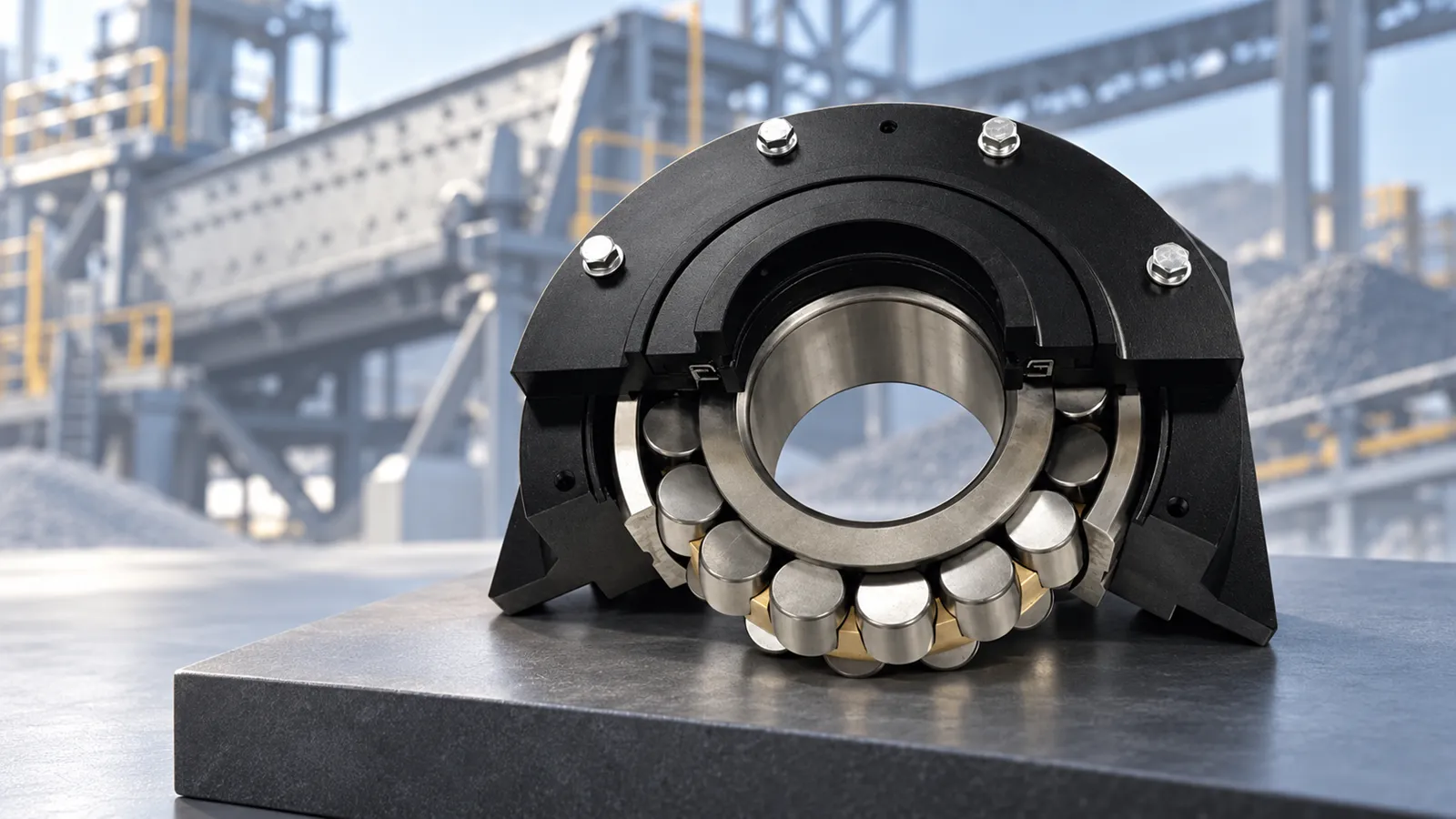
Vibrating screen bearing monitoring can reveal changes before a failure interrupts aggregate production. Interpretation matters: a screen vibrates by design, and an alarm can reflect process conditions, looseness, lubrication trouble or bearing damage. When an aggregate plant books a shutdown, maintenance should tie the trend to the exact bearing position before purchasing orders a spare.
How Does Monitoring Support Maintenance Decisions?
Monitoring follows the condition of an operating screen over time. Typical inputs include vibration at the bearing housing, bearing-area temperature, machine speed and relevant process observations. A useful program establishes normal readings at comparable operating conditions, then records the size and timing of any change.
Vibratory screen bearing monitoring describes the same task under another machine name. It does not specify a sensor or bearing. Identify each measurement position and keep the method consistent.
| Recorded item | What it can show | What it cannot prove alone |
|---|---|---|
| Vibration trend | Change in machine or bearing behavior | The exact failed component |
| Temperature trend | Rising friction or changed operating conditions | Bearing damage without further checks |
| Process log | Feed, screen and operating changes | A specific bearing fault by itself |
Which Signals Separate Screen Motion From Faults?
A screen’s normal motion creates substantial vibration. Look for a change from its own baseline, not just a high absolute reading. Compare the drive and opposite sides under similar speed, feed and stroke conditions. Note whether the change coincides with a blocked deck, loose mesh, altered load or a change in grease practice.
SKF’s Copperhead fault detection approach is a real example of a monitoring system designed for vibrating screens. It combines vibration and temperature measurement and can help distinguish normal screening motion from abnormal process or machine behavior. Copperhead is a monitoring system name, not a bearing designation or an HSN product.
An increase in vibration can reflect looseness or an exciter problem. Higher temperature can also follow excess grease, insufficient lubrication or a changed load. Therefore, ask the site technician to inspect the screen structure, fasteners, lubricant and seals before describing a bearing as failed.
Sensor location affects interpretation. Measure near the bearing housing and protect the equipment from stone and moving parts. For a new installation, agree with the monitoring provider on mounting, data frequency and alarm review.
Which Bearing Types Are Behind Screen Trend Data?
Trend data belongs to a specific exciter shaft and bearing position. Many vibrating screens use spherical roller bearings designed for vibratory duty, while some machine designs use cylindrical roller bearings for vibratory machinery. Engineered locating and non-locating arrangements may also use a CARB toroidal roller bearing at one support. The machine drawing and complete bearing designation, rather than the sensor alarm alone, identify the installed bearing.
Different bearing arrangements also affect how monitoring data should be interpreted. A locating bearing may control shaft position, while a non-locating bearing accommodates thermal or operating displacement. Therefore, buyers should link each vibration or temperature trend to the exact bearing position, sensor location, and installed arrangement before using the data for spare planning or replacement.
| Bearing type at monitored position | What to confirm | Buyer should record |
|---|---|---|
| Spherical roller bearing for vibratory duty | Which support position and complete designation are installed? | Full bearing code, housing position, sensor location, baseline trend |
| Cylindrical roller bearing for vibratory machinery | Is the position locating or non-locating, and how is axial displacement handled? | Full code, shaft position, axial arrangement, sensor location |
| CARB toroidal roller bearing | Is it the non-locating support that accommodates axial displacement? | Complete designation, support position, shaft/housing arrangement, baseline trend |
For example, SKF uses the VA405 and VA406 suffixes for specific spherical roller bearing executions intended for vibratory applications. VA406 includes features for a non-locating arrangement, while some approved screen designs may instead use a CARB toroidal roller bearing at the non-locating support. These suffixes are not complete bearing model numbers, so buyers should always confirm the full designation and exact support position against the screen or exciter drawing.
Monitoring records should also identify the screen, exciter position, bearing position, sensor location, speed, feed condition, and operating state. Each support should be compared with its own baseline because bearing type alone cannot diagnose a fault. A rising vibration or temperature trend can support inspection and spare planning, but the drawing or inspected assembly should still confirm which bearing to order.
How Should Data Shape a Bearing Replacement Decision?
First, compare the latest readings with a reliable baseline at similar operating conditions. Look at trend direction and any change after maintenance work. If the vibration pattern and temperature rise together, inspect lubricant supply and the bearing position; if only one changes, investigate other operating causes as well.
Next, check physical evidence. Photographs of leakage, damaged seals, looseness and old bearing markings can clarify the repair scope. During teardown, measure the shaft and housing seats. An alarm does not tell purchasing whether a worn seat, defective seal or entire exciter assembly also needs attention.
| Finding | Maintenance response | Purchasing response |
|---|---|---|
| New trend without confirmed damage | Recheck operating and process conditions | Identify an approved spare, avoid premature substitution |
| Confirmed bearing or seat damage | Inspect mating parts during shutdown | Quote the exact position and full repair scope |
| Unreadable or obsolete code | Measure sample and review drawing | Request technical review before custom production |
A replacement order also needs agreed pre-shipment checks. HSN Bearing Group can review an existing bearing code, drawing or sample and discuss agreed pre-shipment dimensional tolerance, hardness and clearance checks. Operating monitoring at the mine and inspection of a new bearing answer different questions; one does not substitute for the other.
When a monitoring alarm triggers an urgent replacement request, HSN can review stock availability or discuss custom supply based on the complete bearing model, drawing, or measured sample. However, an alarm does not confirm bearing failure or prove that a proposed alternative is suitable. Buyers should verify the critical dimensions, fit, and operating requirements before obtaining technical approval and placing an expedited order.
What Should Buyers Prepare for Monitoring and Supply?
If the quarry plans to buy monitoring hardware, it should ask a qualified equipment provider about sensor type, mounting protection, data access and alarm workflow. For a bearing inquiry, the buyer should send the information that identifies the actual replaceable component. These are separate purchasing scopes.
- Provide the screen make, model, serial number and measured bearing position.
- Share the trend period, speed, feed changes, temperature and vibration records.
- Send the full bearing designation, old-part photos and assembly drawing if available.
- Note lubricant, seals, shaft and housing condition, plus the repair scope.
- State quantity, agreed inspection checks, delivery destination and required arrival date.
A qualified site engineer or repair contractor should confirm how the trend relates to the observed physical fault. Once the bearing position and replacement design are verified, request a quotation that distinguishes stock supply from a custom option. This connects the monitoring decision to a bearing that can actually be installed.
Finally, keep the post-repair readings with the maintenance record. A new baseline under comparable operating conditions will help the next inspection. The monitoring process is useful only when the screen identity, sensor position and bearing specification remain traceable.
FAQ
Does an alarm prove a screen bearing has failed?
No. Compare baseline, speed, feed, structure, lubrication and temperature before ordering a replacement.
Can monitoring data identify the exact bearing to buy?
No. Send the machine position, full bearing code or drawing, and inspect mating parts before purchase.
Why contact HSN after a screen bearing alarm?
HSN can review the confirmed bearing code and position, then discuss supply and agreed checks. Trend data alone cannot confirm fit.
What should a U.S. buyer send with an urgent RFQ?
Include the trend, screen and bearing positions, bearing code, photos, repair scope, quantity and required date.
Remarks
For a vibrating screen bearing monitoring inquiry, share the trend, machine and bearing identifiers, photos, quantity and operating conditions. State whether the request concerns monitoring equipment or replacement bearings.
This article is based on independent analysis of publicly available technical information and industry understanding for knowledge sharing. All brand names and trademarks mentioned belong to their respective owners. HSN Bearing Group is an independent bearing supplier and technical service provider.
Tel: +86 156 6578 7336 Email: service@hsnindustrial.com Website: www.rollingparts.com www.hsnbearing.com
Need a Bearing After Vibrating Screen Bearing Monitoring?
Contact HSN to confirm a hard-to-find guide wheel or discuss a technically reviewed alternative.