

How Can a Motor Bearing Vibration Sensor Guide Replacement?

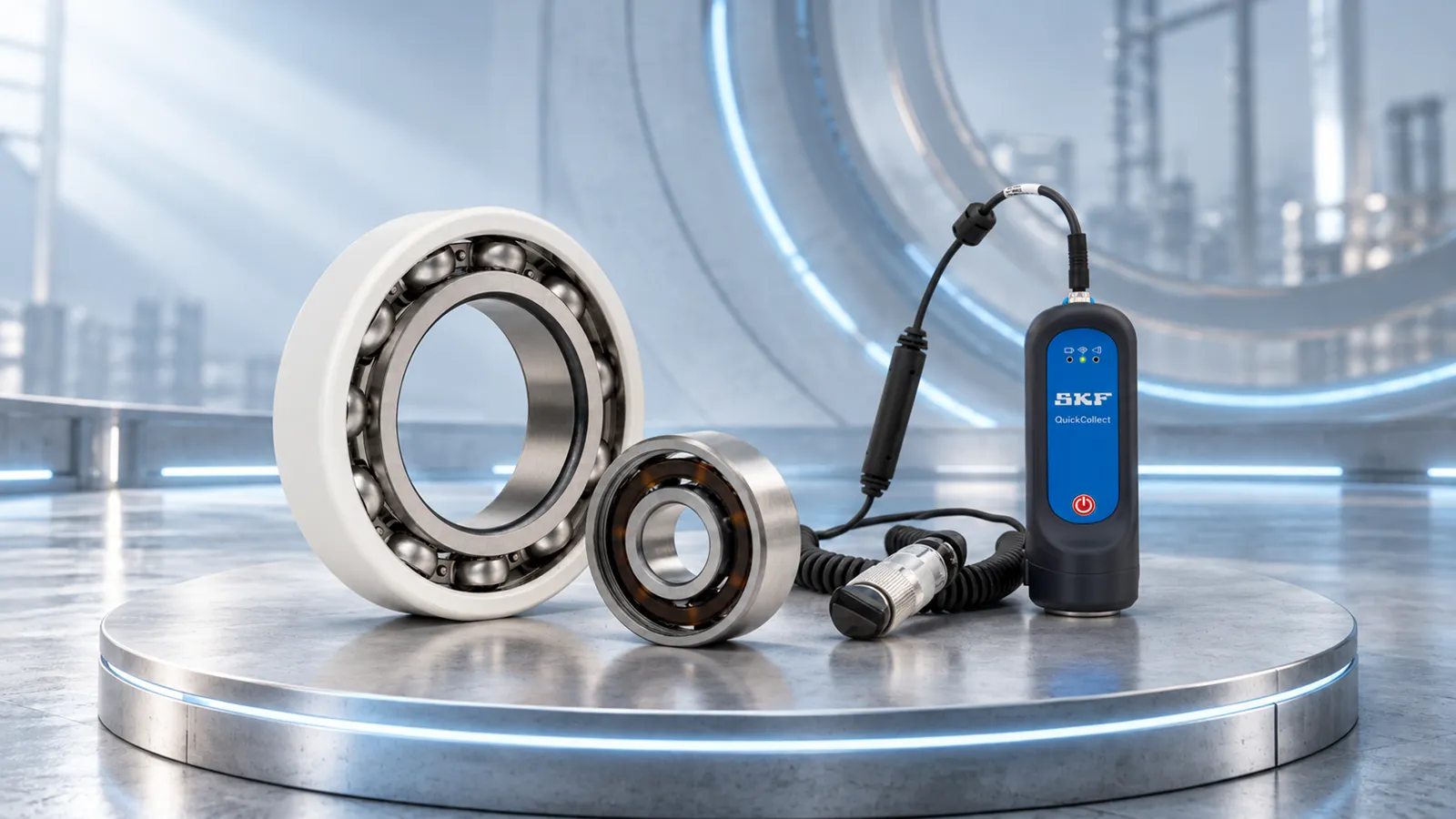
For a quarry drive that cannot stop unexpectedly, a motor bearing vibration sensor can reveal a changing condition before the next shutdown. Yet a higher reading does not identify the failed part or the replacement bearing. Maintenance and purchasing need the motor position, operating baseline and physical findings before a sensor alarm becomes a purchase order.
How Does a Motor Bearing Vibration Sensor Help?
Mining motors run conveyors, pumps and crushers, often near dust, washdown water or heavy start-up loads. The motor has a drive-end and an opposite-end support; a reading near one housing should remain tied to that exact position. Record motor speed and operating state so a trend from a loaded conveyor is not compared with a reading taken at no load.
A handheld sensor suits scheduled walk-around measurements. A fixed sensor and data system suit positions that need more frequent trending. For a verified example, SKF’s QuickCollect CMDT 392 is a handheld sensor for vibration and temperature checks on rotating equipment, including electric motors. The site selects measurement hardware with its equipment provider.
For a sensor purchase, ask the monitoring provider to confirm the required vibration measurements and frequency range, temperature capability, sampling interval, mounting method, environmental protection, data access and alarm workflow. The site should also specify whether it needs a portable route or continuous readings. Compare devices against the motor and site requirements rather than selecting a bearing from a sensor model.
HSN Bearing Group can support a bearing inquiry once the installed designation, motor drawing or removed sample is available. Sensor readings help plan inspection timing; pre-shipment bearing checks serve a separate purpose. The purchase team should keep those two work scopes distinct.
Which Vibration, Heat and Noise Changes Matter?
Start with a repeatable baseline at each motor end. Record the measurement point, mounting method, speed and operating load. Track whether overall vibration increases steadily, changes abruptly after a repair or appears only during a start. Temperature and audible noise add context, but no single reading proves bearing fatigue.
| Observation | Site investigation | Bearing purchase implication |
|---|---|---|
| Rising vibration at one motor end | Recheck sensor position, alignment and coupling | Identify that end before reserving a spare |
| Temperature rise after relubrication | Check grease amount, seals and operating load | Avoid ordering solely from a hot reading |
| Noise with changing load | Inspect driven equipment and motor together | Confirm whether the bearing is the faulty item |
The waveform and measurement bandwidth matter when a reliability team is looking for a rolling-element defect. A basic overall value may instead reflect imbalance, looseness or misalignment. Ask the monitoring specialist to interpret the data, then confirm the suspected bearing during an appropriate inspection. A sensor should not be described as measuring factory bearing clearance or hardness.
Electrical damage deserves a separate check on variable-frequency-drive motors. SKF 6316/C3VL0241 is a real insulated bearing designation used in technical work on motor currents. It is only a reference example: a vibration trend cannot establish that this size or insulated construction fits a particular quarry motor.
Where Do Mining Motors Need Bearing Monitoring?
On a conveyor drive, a failing motor support can interrupt the material route from crushing to screening. On a slurry-pump motor, operating changes may alter the vibration of both the motor and the driven machine. Crusher-drive motors face demanding duty as feed and start-up conditions vary. In each case, asset identification is more useful than a generic alarm threshold.
First, name the motor make, frame, serial number and coupling arrangement. Then label measurements at the drive end and opposite end. Compare results under similar speeds and loads, noting any new belt tension, base work or coupling adjustment. This prevents a process or installation change from being mistaken for a bearing defect.
Harsh conditions also affect the measurement plan. Choose safe, repeatable access to the motor housing, protect mounted hardware from dust and impact, and identify the responsible technician for alarm review. The monitoring provider should confirm mounting and data requirements. HSN’s bearing role begins when the site has a replacement specification or a part to identify.
At a U.S. quarry planning a maintenance stop, monitoring creates time to inspect the motor and source an approved spare. A trend cannot guarantee how long a bearing will run. Maintenance should set the intervention point from machine condition and site risk.
When Should Trend Data Trigger a Bearing Order?
A rising trend calls for investigation before an emergency purchase. Compare the two motor ends; inspect mounting, coupling alignment, electrical supply, grease condition and seals. If the motor is opened, retain photographs of the bearing markings and raceways. Look for wear at the shaft and housing seats as well as on the rolling elements.
After inspection, decide whether the purchase covers one bearing, both ends or adjacent repairs. A motor may use different locating and non-locating positions. It may also need an insulated or otherwise application-specific construction; an identical bore does not settle these details. Obtain technical approval for any alternative full code.
HSN can discuss stock availability or customization based on the complete bearing model, drawings, samples and working conditions. Before shipment, HSN focuses on dimensional tolerance, hardness and clearance checks. If the buyer needs extra agreed inspection records, name them on the RFQ. Source monitoring sensors from a qualified equipment provider and specify the replacement bearing separately.
When sourcing is urgent, purchasing may reserve a candidate spare while maintenance confirms the affected position. Release the purchase order after the full designation, quantity and delivery date have been approved.
What Should Buyers Include in Sensor and Bearing RFQs?
The sensor and bearing requests go to suppliers responsible for different scopes. Give the monitoring equipment provider the motor access, measurement and data requirements. Give a bearing supplier the identification and application information needed to quote a part that can be installed.
- Identify the motor, driven machine, serial number, speed and drive arrangement.
- Mark drive-end and opposite-end measurement and bearing positions.
- Attach trend history, temperatures, inspection photos and changes in operating duty.
- Send the original bearing code, drawing or measured sample, including any insulation requirement.
- State shaft and housing condition, lubricant, quantity, agreed checks, delivery destination and required date.
An SKF QuickCollect sensor part number, such as CMDT 392, identifies monitoring equipment; an SKF bearing code such as 6316/C3VL0241 identifies a bearing construction. Neither proves the other belongs on the machine. Keep the two identifiers in separate RFQ lines and obtain the motor manufacturer’s or engineer’s approval where design changes are proposed.
Once the replacement is installed, record a new baseline under comparable load. That gives the next maintenance team a reference linked to the correct motor, bearing position and approved part number.
FAQ
Can a vibration sensor tell me which motor bearing to buy?
No. Confirm the bearing position and full code using the motor record, drawing or inspected part.
Should a buyer order both motor ends after one alarm?
Ask maintenance to inspect both ends; order the parts specified by the approved repair scope.
Why contact HSN after a motor sensor alert?
HSN can review the installed bearing code or sample, discuss supply and agree checks. Sensor hardware remains a separate scope.
What should a U.S. buyer send for an urgent bearing RFQ?
Send the motor details, end position, full bearing code or sample, photos, quantity and required date.
Remarks
For a motor bearing vibration sensor related bearing inquiry, send HSN the motor identity, bearing position, full code or sample, trend context, photos, quantity and operating conditions. Clarify whether the request is for monitoring hardware or a replacement bearing.
This article is based on independent analysis of publicly available technical information and industry understanding for knowledge sharing. All brand names and trademarks mentioned belong to their respective owners. HSN Bearing Group is an independent bearing supplier and technical service provider.
Tel: +86 156 6578 7336 Email: service@hsnindustrial.com Website: www.rollingparts.com www.hsnbearing.com
Need a Motor Bearing After a Vibration Alert?
Contact HSN to confirm a hard-to-find guide wheel or discuss a technically reviewed alternative.