

Why Custom Ball Mill Bearing Blocks Need Drawing Checks?

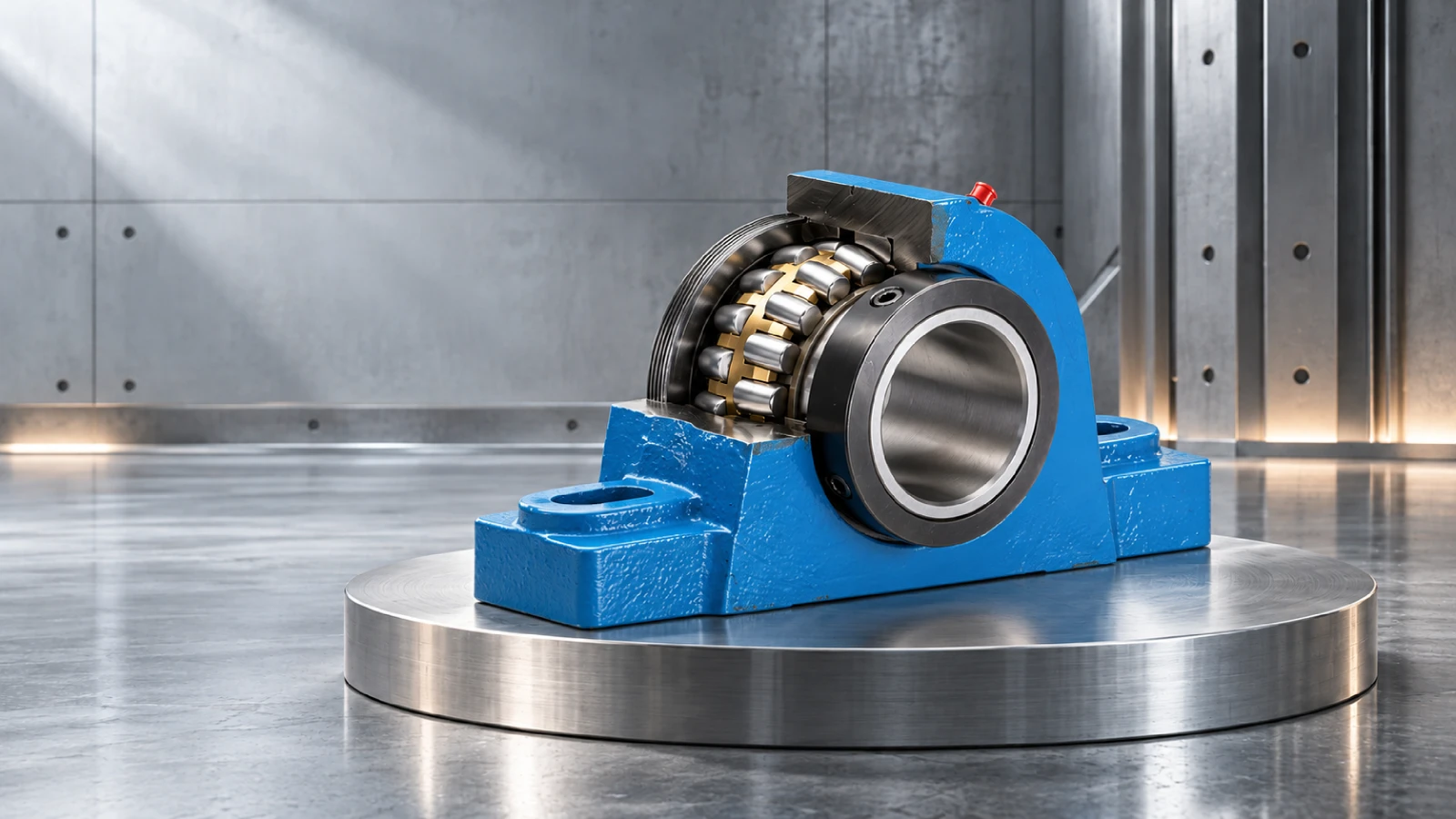
A plant may need a custom ball mill bearing block when a damaged housing no longer matches an available standard unit or earlier machining has changed its mounting geometry. First determine whether the plant needs a bearing insert, a split block or a complete support. Those scopes need different drawings, lead times and acceptance checks. This guide helps mining and cement buyers prepare a usable inquiry for a planned or urgent shutdown.
Where Are Custom Blocks Used on a Ball Mill?
A bearing block is the stationary structure that holds or locates a bearing at a defined shaft position. On a ball mill, a buyer may mean a trunnion support, a slide-shoe support structure, or a drive-side pillow block for the pinion. These arrangements have different interfaces. Identify the exact mill and installed support before asking a supplier to price a replacement.
The main mill support carries shell and charge loads through the installed bearing design into the base. Its block may also integrate oil passages, seal seats, temperature fittings and hold-down details. By contrast, a pinion-shaft pillow block carries a separate drive shaft. A block for that shaft cannot be priced or installed as though it were the mill’s main support.
A distributor or maintenance contractor should label the component in a photo and mark its position on the general arrangement drawing. Record whether the site needs one loose housing half, a matched cap and base, a bearing insert or the installed assembly. If a shaft journal or pedestal has been repaired, include the repair drawing with its current revision.
How Does the Installed Support Design Change the Block?
The installed bearing design determines what the block must support and which interfaces must be copied. An oil-film trunnion support needs its journal and oil-passage geometry, while a slide-shoe station needs the approved pad seat and load path. A pinion-shaft pillow block instead houses a rolling bearing and has its own shaft fit, seals and mounting footprint. The table below separates these purchase scopes; none is a universal replacement for another.
| Position | Possible installed support | Block inquiry must identify |
|---|---|---|
| Mill trunnion | Journal, sliding insert and housing | Feed or discharge end, journal and oil passages |
| Slide-shoe station | Shoe pad and support structure | Pad seat, load path and lubrication interfaces |
| Pinion shaft | Rolling bearing in a pillow block | Shaft fit, cap, seals and mounting footprint |
Within a mill, one main support may locate the shell axially while another accommodates expansion. Do not swap a locating and nonlocating block because their axial guidance may differ. An approved assembly drawing should show which side performs each role and how the base transfers load to the foundation.
What Loads, Oil and Alignment Must Be Checked?
A custom block has to restore the designed load path. Tell the supplier whether the mill operates in cement grinding or mineral processing, and provide the loaded speed, drive arrangement and known abnormal events. Record cracks, fretting, distortion, broken hold-downs and movement at the pedestal. A new block cannot correct a damaged foundation without a separate repair plan.
Oil-film supports require more than a matching cavity. Confirm the installed lubricant, oil inlet and return locations, passages, grooves, seal arrangement and temperature-probe provisions. If the support has a lift-oil function, the plant engineer must define its design and restart procedure. An incorrectly placed oil connection can prevent the assembled bearing from operating as intended.
Alignment requires an installed datum. Measure the journal, center height, base mounting holes, seating surfaces and the spacing to the opposite support. Record any shims or previous field machining. The plant should approve its alignment and machining limits before a new cap, base or insert enters production.
When wear is found, distinguish the original design dimensions from the dimensions of the damaged part. A reverse-engineered sample can document geometry, but copying a distorted split joint or worn bore may reproduce the fault. If the original drawing is missing, request verified measurements and an engineering review before fixing the production dimensions.
What Must a Custom Bearing Block Quote Include?
Block customization can involve casting or fabrication, machining, material selection, bolt pattern and oil or seal details. The manufacturing route and checks depend on the installed design. Buyers should ask for a written scope that distinguishes the bearing component from housing work and on-site services. “Supply a new block” is too broad for comparable bids.
- State whether the offer covers a base, a cap, a matched pair, an insert, seals or a complete assembly.
- Provide the drawing revision, material callout, tolerances, fit and finish requirements.
- Identify oil fittings, sensors, jacking points, lifting features and all included fasteners.
- Separate journal machining, foundation repair, alignment and installation from supply scope.
- Agree on inspection records and a dimensional release point before shipment.
For a split block, the cap and base may be machined as a matched set. Confirm whether the plant will reuse either existing half; a loose replacement cap must not be assumed to fit a worn base. Likewise, an insert made for another housing can change oil distribution or seating contact even when its nominal diameter appears similar.
HSN Bearing Group can review a model, drawing or measured sample with the operating conditions and quantity to discuss stock or custom bearing-component supply. Its pre-shipment checks focus on dimensional tolerance and hardness; clearance checks apply to a rolling-bearing assembly where specified. For a large custom block, buyers should define material verification, interface measurements and any special inspection as purchase requirements. Do not assume a complete mill rebuild or field installation is included in a bearing quotation.
Which Drawings Define a Replacement Block RFQ?
A useful RFQ lets the supplier locate the part, quote the same scope as competing vendors and identify dimensions that still await site measurement. When a maintenance team has a fixed shutdown window, the approved drawing revision and inspection release point also affect whether the block can arrive and fit before restart.
| RFQ item | What to send | What it resolves |
|---|---|---|
| Identity | Mill make, serial, support position, photos | Correct end and component scope |
| Geometry | Assembly and block drawings, revision, measured journal | Fit, center height and mounting |
| Services | Oil diagram, seal details, repair and inspection scope | Interfaces and quote boundaries |
Include the failed block’s condition, shaft and foundation condition, quantity, required delivery date and destination. Mark all dimensions as original design, measured as-found or approved after repair. Ask suppliers to identify any drawing gaps and proposed hold points before machining. This allows the plant engineer to approve the geometry once and procurement to compare bids on the same basis.
No universal model number identifies a custom main-support block. A genuine rolling-bearing code found at the pinion is not a part number for the block at the trunnion or shoe. When no approved drawing exists, organize a measurement and design review before promising an interchangeable stock unit.
FAQ
Why ask HSN to review a custom mill bearing block?
HSN can review drawings and samples, clarify the bearing-component scope, and agree on inspections and delivery timing before quotation.
Does a quotation for a block include its bearing insert?
Only if the offer lists the insert. Ask vendors to itemize the base, cap, insert, seals and hardware.
For a U.S. shutdown, can I order only a replacement cap?
Only after checking the cap and base as a matched assembly. Give the U.S. receiving site and latest acceptable arrival date in the RFQ.
What if the original housing drawing is unavailable?
Send the old block, verified measurements and repair records for an engineering review before production.
Remarks
For an inquiry about custom ball mill bearing blocks, send HSN the full mill identification, marked support position, approved or measured drawings, photos, journal and mounting dimensions, quantity, load, speed, lubrication conditions and required delivery date. Identify other bearing types in a separate inquiry with their own installation positions.
This article is based on independent analysis of publicly available technical information and industry understanding for knowledge sharing. All brand names and trademarks mentioned belong to their respective owners. HSN Bearing Group is an independent bearing supplier and technical service provider.
Tel: +86 156 6578 7336 Email: service@hsnindustrial.com Website: www.rollingparts.com www.hsnbearing.com
Need Help with Custom Ball Mill Bearing Blocks?
Contact HSN to confirm a hard-to-find model or discuss a replacement after technical review.