

Why Cone Crusher Drive Shaft Bearings May Need Customization ?

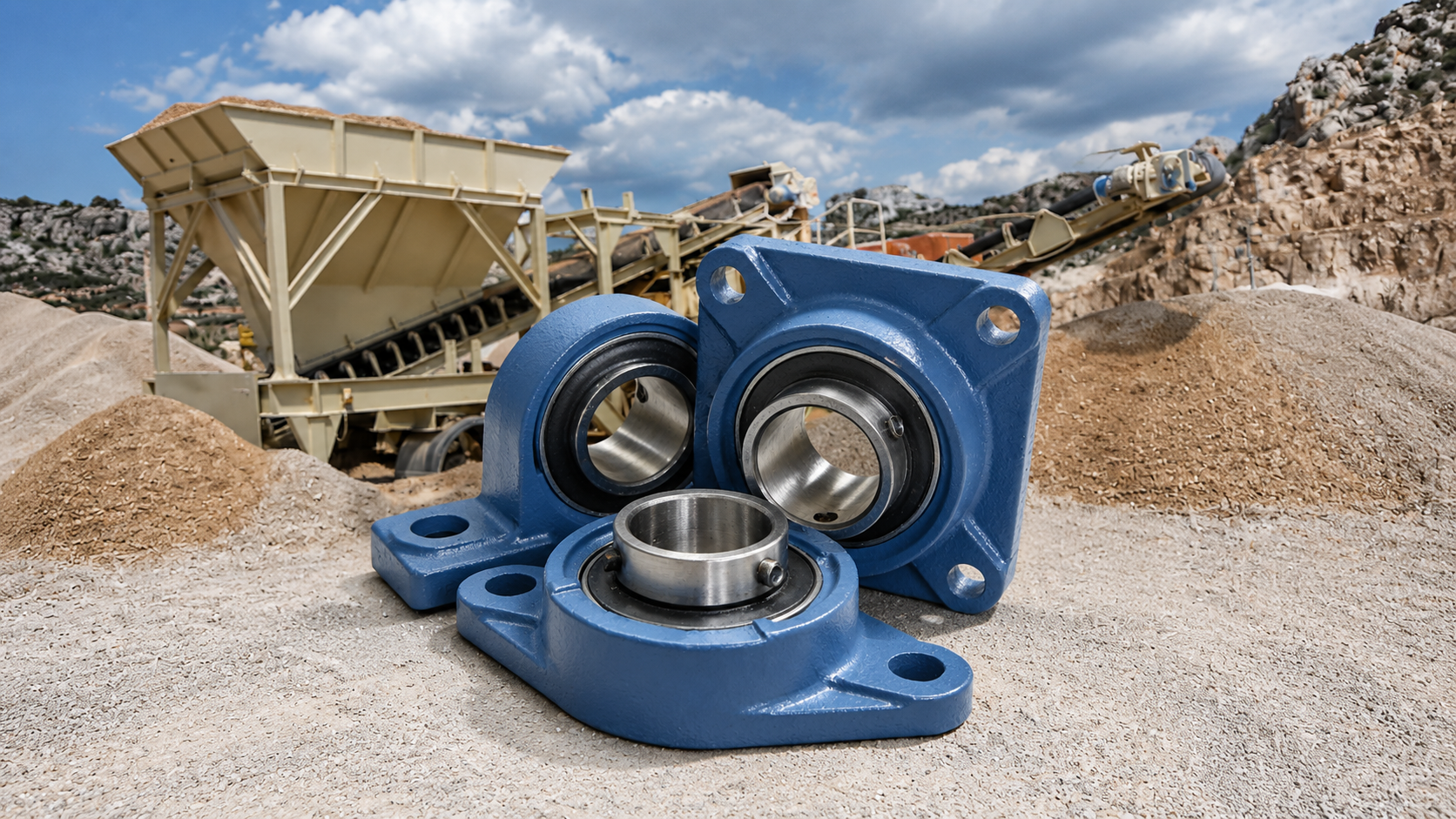
A cone crusher drive shaft transfers power from the drive system to the internal gear arrangement. The bearings supporting this shaft help maintain alignment, gear contact, operating clearance, and stable rotation. When the original bearing is damaged or unavailable, a standard catalogue bearing may not reproduce the required structure.
For distributors, maintenance companies, engineers, equipment manufacturers, and industrial users, a custom project should start with technical confirmation rather than a general model comparison.
A custom cone crusher drive shaft bearing must be checked against the shaft, housing, seals, lubrication arrangement and connected gear components.
Table of contents
- What Is the Drive Shaft Bearing Position in a Cone Crusher?
- Why Standard Bearings May Not Match Some Cone Crusher Drive Shaft Designs
- Common Problems in Cone Crusher Drive Shaft Bearing Replacement
- What Drawings, Samples and Dimensions Are Needed for Custom Bearing Supply?
- Material, Heat Treatment and Clearance Requirements for Crusher Drive Shaft Bearings
- How HSN Supports Customized Drive Shaft Bearing Supply for Cone Crushers
- Frequently Asked Questions
What Is the Drive Shaft Bearing Position in a Cone Crusher?
The drive shaft is commonly discussed as the countershaft or pinion shaft. It enters the crusher drive system from the side and transfers rotation through a pinion and gear arrangement. Bearings inside the drive housing support the shaft and control its position under torque, vibration, and changing load.
The exact arrangement varies by crusher design. One machine may use a conventional radial roller bearing arrangement, while another may use a special bearing, paired configuration, or locating feature developed for that model.
Therefore, the term “drive shaft bearing” does not identify one universal bearing type.
Before ordering, buyers should confirm:
- Whether the inquiry concerns the drive end, pinion end, or another shaft position.
- The number and arrangement of bearings in the housing.
- The shaft diameter, housing bore, shoulders, and locating features.
- The seal and lubrication arrangement.
- The pinion or gear relationship.
Any previous repair or dimensional changes.
Why Standard Bearings May Not Match Some Cone Crusher Drive Shaft Designs
Standard bearings are useful when the complete reference and installed design match a catalogue product. However, crusher drive systems can include features that are not visible from bore, outside diameter, and width alone.
A standard option may be unsuitable when the original bearing has:
- A special cage, roller profile, or internal geometry.
- Non-standard boundary dimensions.
- Modified internal clearance.
- Special grooves, holes, shoulders, or snap-ring features.
- A locating function that controls shaft position.
- Material or heat-treatment requirements linked to the application.
- Dimensions based on an older inch-series design.
- A reference that has been discontinued or replaced.
Cone crusher bearing manufacturers also use customized features such as clearances, tapered bores, lubrication provisions, and locating details for specific designs.
In addition, an old crusher may have a repaired shaft or housing. If the mating dimensions have changed, selecting only by the original bearing number can create another mismatch.
Common Problems in Cone Crusher Drive Shaft Bearing Replacement
Many replacement problems begin before the bearing is ordered. Incomplete information, worn mating parts, and assumptions about interchangeability can all delay a repair.
| Common problem | Procurement or operating risk | Recommended check |
|---|---|---|
| Partial or unreadable bearing code | Wrong internal design or clearance | Record every prefix and suffix |
| Measurements taken from a damaged part | Incorrect dimensions | Compare drawing, sample, shaft, and housing |
| Worn shaft or housing seat | Loose fit, creep, heat,or vibration | Measure seat condition and geometry |
| Different cage or roller arrangement | Changed load behavior | Confirm internal structure |
| Incorrect clearance | Preload, heat, or unstable running | Review fit and operating temperature |
| Contaminated lubricant or damaged seals | Repeat surface damage | Inspect lubrication and sealing system |
| Gear or shaft misalignment | Uneven bearing load and vibration | Check shaft position and gear contact |
| Unverified brand cross-reference | Dimensional or functional mismatch | Complete a technical comparison |
A new bearing cannot correct a damaged shaft, deformed housing, blocked oil passage, or unsuitable gear alignment. These surrounding conditions should be recorded during disassembly.
What Drawings, Samples and Dimensions Are Needed for Custom Bearing Supply?
A complete drawing provides the clearest basis for customized supply. It should show the boundary dimensions, tolerances, shoulders, radii, grooves, holes, locating features, and relevant fit surfaces.
When no drawing is available, buyers can provide an unused sample or a damaged sample with the worn areas clearly identified. Measurements should then be compared with the shaft and housing rather than copied from a damaged ring alone.
Useful information includes:
- Complete crusher brand, model, serial information, and assembly position.
- Original bearing reference and all visible markings.
- Bore, outside diameter, total width, and ring widths.
- Shoulder diameters, corner radii, chamfers, grooves, and holes.
- Shaft and housing dimensions with required tolerances.
- Roller type, number of rows, cage form, and separable components.
- Lubrication inlet, oil groove, and sealing details.
- Quantity, delivery requirement, and available sample condition.
- Speed, load direction, vibration, temperature, and contamination conditions.
- Required inspection records before shipment.
Photos should include the complete bearing, markings, rolling elements, cage, damaged surfaces, shaft seat, and housing bore. A single front-view image is not enough for a non-standard bearing review.
Material, Heat Treatment and Clearance Requirements for Crusher Drive Shaft Bearings
There is no universal material, heat treatment, or clearance specification for every crusher drive shaft bearing. These requirements depend on the original design, bearing size, load, fit, temperature, speed, lubrication, and shock conditions.
For a custom project, buyers should confirm:
- Ring and rolling-element material when known.
- Required hardness and whether a hardness profile is specified.
- Case hardening, through hardening, or another treatment when shown on the drawing.
- Cage material and guidance method.
- Radial internal clearance before mounting.
- Expected clearance after the shaft and housing fits are applied.
- Dimensional stability requirements at operating temperature.
- Surface finish and geometry of critical fit surfaces.
Clearance should not be selected only from a general “normal” or “C3” request. A tight fit and temperature difference between the rings can reduce operating clearance. Conversely, excessive clearance can affect shaft guidance and gear contact.
The final value should follow confirmed design information or an engineering review.
How HSN Supports Customized Drive Shaft Bearing Supply for Cone Crushers
HSN Bearing Group can review inquiries for custom or replacement cone crusher drive shaft bearings using the machine model, drawing, sample, dimensions and working conditions.
For a standard reference, the first step is to check whether a matching stock or sourced option is available. When the original bearing is obsolete, non-standard or structurally different from commonly available designs, HSN can discuss customized production after reviewing the technical details.
The review focuses on:
- Boundary dimensions.
- Internal design and cage.
- Clearance and mating fits.
- Material and heat-treatment requirements.
- Lubrication and locating features.
- Quantity and delivery requirements.
- Inspection requirements before shipment.
Before shipment, HSN focuses on dimensional tolerance, hardness, and clearance. Material verification, rotational accuracy, vibration, noise, and flaw detection can be discussed when the order requires them.
Buyers should still confirm installation, lubrication, and mating-part condition at the equipment site.
Frequently Asked Questions
Why customize a crusher drive shaft bearing?
Customization may be needed for obsolete models, non-standard dimensions or special structural requirements.
What dimensions are needed for customization?
Provide bore, outside diameter, width, shaft size, housing bore and any grooves, shoulders or locating features.
Can a damaged sample be used?
Yes, but confirm worn dimensions against the shaft, housing or drawing before finalizing the design.
What should be checked before production?
Confirm dimensions, structure, material, clearance, fits, lubrication, sealing and operating conditions.
Remarks
For detailed cone crusher bearing models not covered here, please contact HSN for model confirmation and supply discussion. For other bearing types, you can also send the complete reference, photos, dimensions, quantity and working conditions.
This article is based on independent analysis of publicly available technical information and industry understanding, and aims to provide knowledge sharing. HSN Bearing Group is an independent bearing supplier and technical service provider.
Tel: 86.156.6578.7336 Email: service@hsnindustrial.com Website: www.rollingparts.com www.hsnbearing.com
Need Help Confirming Cone Crusher Drive Shaft Bearing?
If you urgently need a hard-to-find bearing from stock in China or want to discuss customized supply, a cost-effective alternative, or an improved solution after technical confirmation, contact HSN with your inquiry details.