

Which Generator Bearing Arrangement Does Your Machine Use?

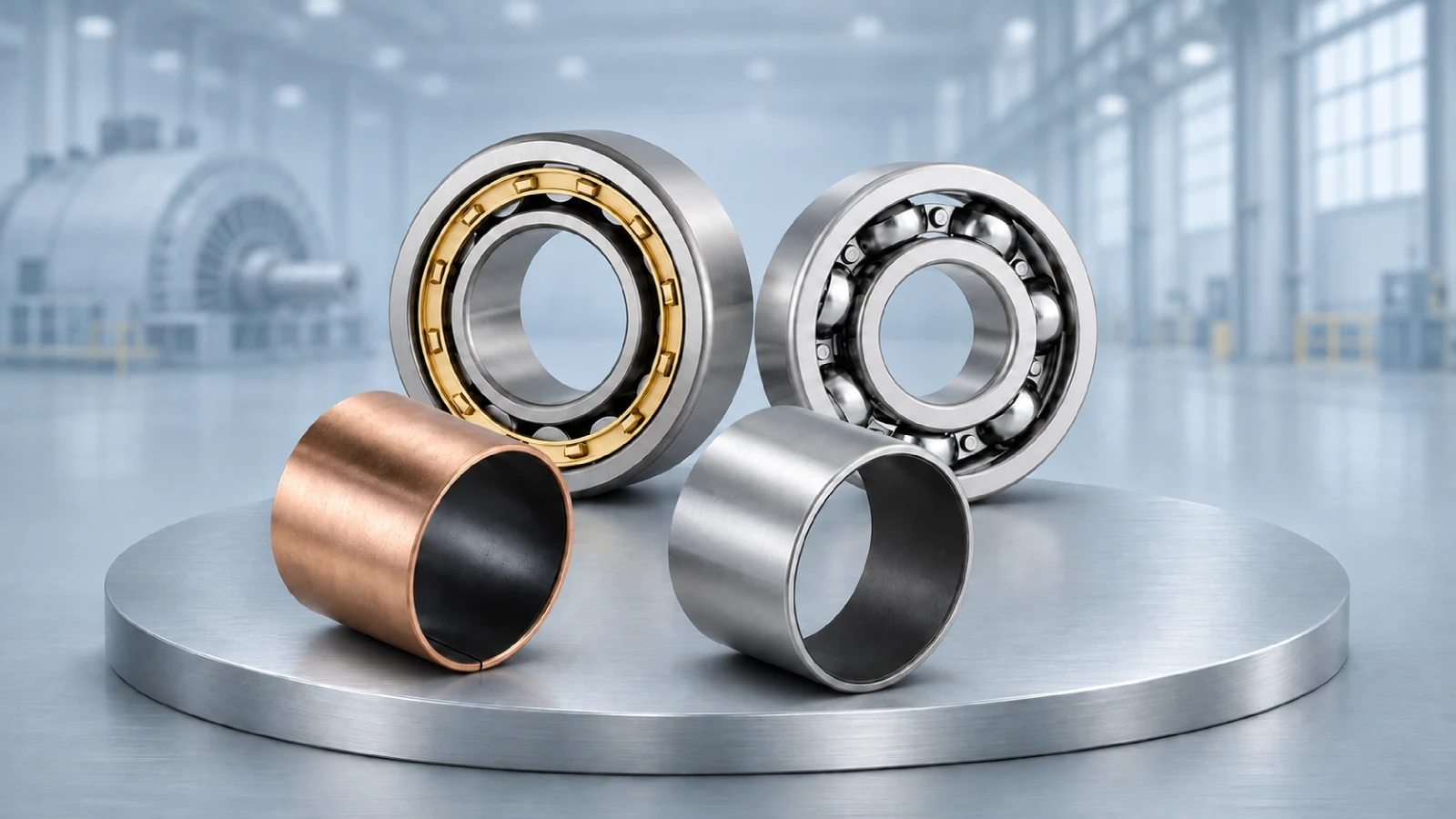
A generator bearing can mean a rolling bearing inside an end shield, a sleeve bearing in a housing, or part of an external pedestal support. Those are different order items. Before asking for a price, a buyer should identify the generator’s shaft-support layout and the exact end requiring repair. The machine’s electrical rating does not reveal bore, internal geometry or lubrication method.
Power-generation equipment ranges from engine-driven alternators to large turbine-driven synchronous machines. Some use a ball bearing in a generator end shield; others use rolling or sleeve bearings in separate pedestals. The relevant choice is the installed machine design, not a universal bearing family for all generators.
Where Does the Bearing Support the Rotor?
The rotor must remain centered within its intended air gap as it turns. Bearing supports transfer radial load into the frame or foundation and control axial movement according to the design. Identify the drive end and non-drive end, then find which support locates the shaft and which permits axial expansion. A wrong restraint can load the bearing and change rotor position as temperature rises.
End-shield bearings mount in housings integrated with the generator frame. Pedestal bearings sit in separate housings supported by a base or structure. The latter require a review of shaft alignment, soleplate, pedestal fit and sometimes electrical insulation of the housing. A pedestal bearing on a generator may contain rolling elements or an oil-film sleeve arrangement; “pedestal” describes the support construction, not the internal bearing type.
In a coupled generator set, the drive end may receive support through the prime mover in a single-bearing alternator design. Other machines have bearings at both ends. The assembly section must establish what is actually installed before a supplier quotes a drive-end part.
How Do Rolling and Sleeve Supports Differ?
Deep groove ball bearings can carry radial and limited axial load within their design, and many electrical machines use them. The machine maker still decides whether that type belongs at this position. For example, Mecc Alte lists 6309-2RS C3 at the front and 6207-2RS C3 at the rear of its ECP28-1L/2 alternator. Those are complete designations in that OEM spare list; the bearing manufacturer is not identified there. Check the actual machine build and end position before using either code.
Cylindrical or other roller bearings may serve positions with different radial loads or shaft-location needs. Larger generators may instead use oil-film sleeve bearings. Their shells, pads, journal clearances and oil systems cannot be replaced by a standard ball bearing without a machine redesign. Even within a rolling-bearing arrangement, locating and non-locating positions have distinct mounting rules.
| Support description | What it tells a buyer | What still needs confirmation |
|---|---|---|
| End-shield ball bearing | Rolling support in frame end | Code, fit, clearance and lubricant |
| Pedestal rolling bearing | Separate housing and base | Internal type, alignment and insulation |
| Pedestal sleeve bearing | Oil-film support in housing | Journal, oil system and assembly scope |
The table identifies a purchasing path, not interchangeable products. A ball-bearing choice needs the approved support design, load and speed, axial-location duty, fits, sealing, clearance and lubricant. If the drawing specifies a roller or oil-film support, keep that design unless the machine engineer approves a redesign.
Which Operating Conditions Control Selection?
Speed, rotor weight and coupling forces influence load and heat. The expected operating temperature affects fits and clearance. Grease-fed rolling bearings, sealed bearings and circulating-oil sleeve bearings require separate lubrication plans. Before ordering, record the installed lubricant, replenishment or oil-flow route, and any cooling arrangement.
Electrical current can cross rolling contacts in some generator systems. Depending on the design, insulation may be applied to a bearing ring or housing, or another system measure may be used. A generic “insulated generator bearing” request cannot define which surface must be isolated. Review the electrical path with the generator engineer and preserve the original protection scheme.
The foundation and coupling matter too. A pedestal can move relative to the frame, and a worn seat can reduce support stiffness. Correct the structural or alignment cause before fitting a new bearing. A higher published load rating does not compensate for a loose base or unsuitable oil supply.
How Should Inspection Shape a Generator Bearing Order?
Before ordering, record the affected end, known symptoms and installed support type. A temperature or vibration change may justify inspection, but it cannot identify the required replacement code. Keep the original bearing marking, drawing and mounting information with the inquiry.
The repair team should state whether it needs a loose bearing, a sleeve component or a broader support assembly. If teardown reveals damage or raises a question about its cause, use the generator bearing failure guide for the evidence review. For a U.S. plant outage, identify the approving engineer, inspection date and required receipt date.
What Belongs in a Generator Bearing RFQ?
Group the RFQ information so each support position can be checked:
- Machine and position: Generator maker, model, serial number, assembly drawing and exact end.
- Support and identity: Support style, complete bearing or housing code, photographs and any insulation requirement.
- Dimensions and duty: Shaft and housing dimensions, speed, load, temperature and lubricant.
- Order scope and approval: Quantity; loose bearing, sleeve component, housing or kit; approving engineer and required date.
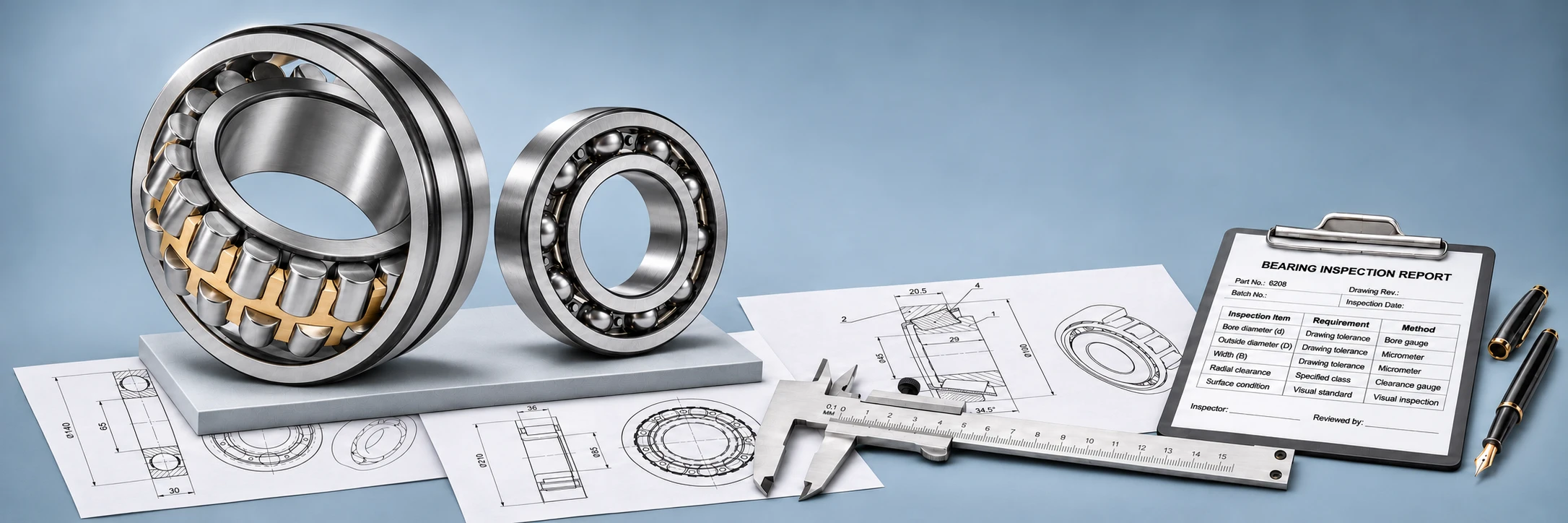
HSN can review a specified rolling bearing or a custom bearing request against its full model and drawing, and discuss agreed dimensional or material checks. If the request concerns a pedestal sleeve assembly, define its journal and oil-system requirements for a separate technical assessment. The generator owner or qualified repair engineer must approve fit, axial location and electrical protection before installation.
FAQ
Does pedestal describe a bearing type?
No. It describes the support; the housing may contain a rolling or sleeve bearing.
Can a same-size ball bearing be substituted?
Only after checking clearance, fits, grease, seals and electrical protection against the drawing.
Can delivery meet our scheduled U.S. shutdown?
Send the required arrival date and delivery ZIP code. HSN can review stock, production and transit timing before confirming a plan.
Can HSN identify a bearing from the equipment model?
HSN can help. Send the equipment nameplate plus a part number, bearing marking or parts drawing to support identification.
Remarks
For detailed generator bearing models not listed above, please contact HSN for model confirmation and supply discussion. When checking other bearing references, you can also send the complete model, photos, dimensions, quantity, application, and working conditions.
This article is based on independent analysis of publicly available technical information and industry understanding for knowledge sharing. All brand names and trademarks mentioned belong to their respective owners. HSN Bearing Group is an independent bearing supplier and technical service provider.
Tel: +86 156 6578 7336 Email: service@hsnindustrial.com Website: www.rollingparts.com www.hsnbearing.com
Need Help with a Generator Bearing?
Contact HSN to confirm a hard-to-find model or discuss a replacement after technical review.