

How Should Buyers Specify a Mud Pump Bearing?

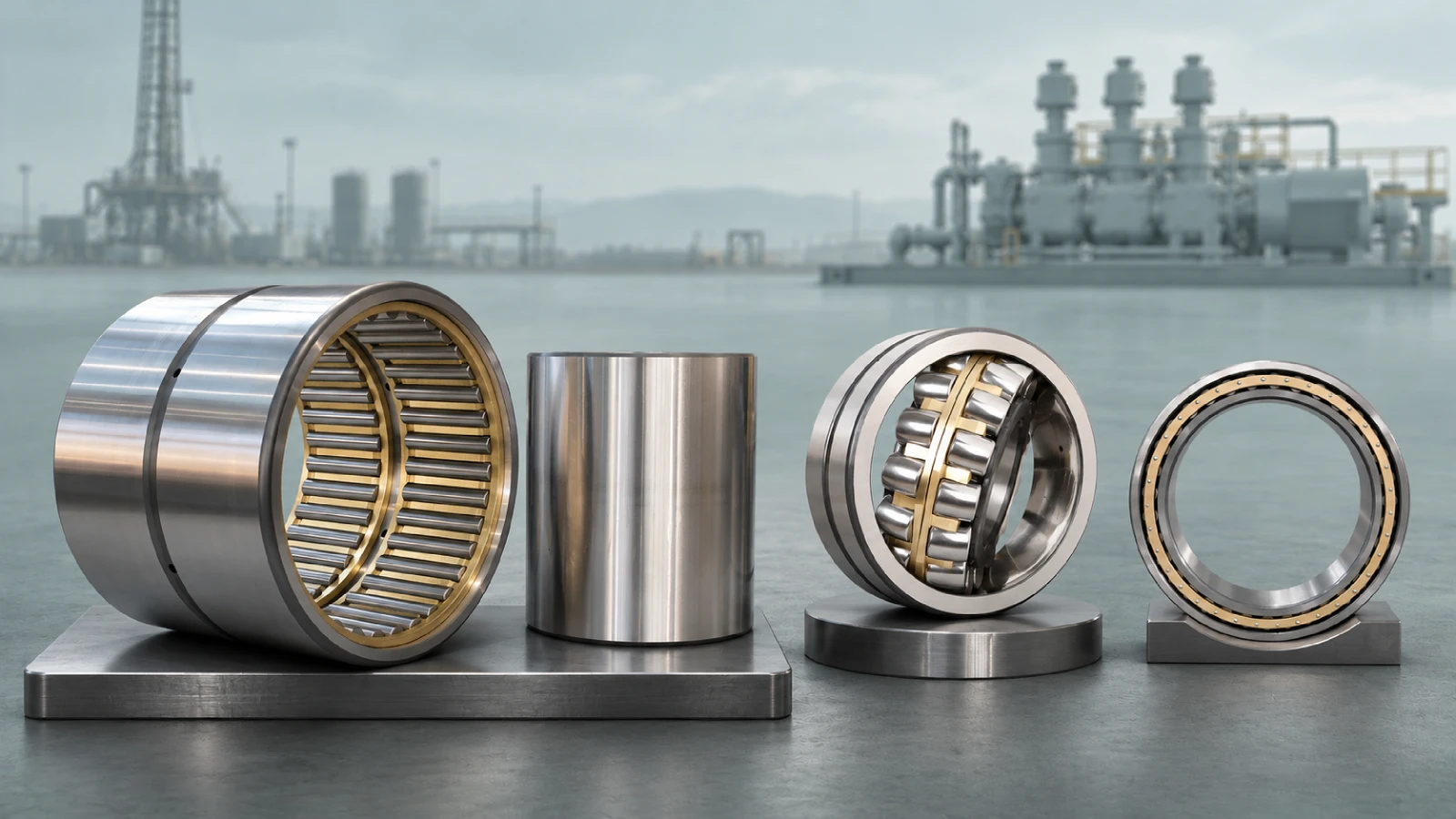
A mud pump bearing request usually concerns the power end of a drilling pump, where the pinion, gears, crankshaft, and bearings convert rotary drive into reciprocating motion. These components should not be confused with fluid-end wear parts such as liners or valves. Before requesting a quote, buyers should identify the pump model, exact pinion or crankshaft bearing position, and the required repair scope.
Bearing selection also depends on more than the installed model number. Oil delivery, shaft and housing condition, load direction, bearing setting, and contamination can all affect the replacement decision. If the pump runs hot, knocks, or shows debris in the oil, the maintenance team should first locate the source and inspect the surrounding power-end components. This helps prevent a bearing-only order when the pump also needs work on its lubrication system, shaft seats, housing, seals, or related parts.
Where Is a Bearing Used in a Mud Pump?
In a triplex pump, the power end converts rotary drive into reciprocating motion. Pinion and crankshaft bearings support rotating shafts in the gear and crank mechanism. Crossheads slide in liners and need lubrication, but a crosshead liner is not automatically a rolling bearing. The fluid end handles drilling fluid through cylinders, valves and liners. Its wear parts belong to a different purchase scope.
The exact bearing layout depends on the pump maker and model. For example, NOV’s Type P triplex design uses gears, bearings, crossheads and liners in the power end. That description confirms the component families, not a universal bearing number for every pump. Use a parts drawing and the installed bearing designation to identify the location.
| Position or component | What the buyer must identify | Why it matters |
|---|---|---|
| Pinion shaft bearing | Shaft side and housing | Fit and oil delivery vary by location |
| Crankshaft main bearing | Exact main position | Load, setting and access differ |
| Crosshead liner | Sliding part, not a generic rolling bearing | Prevents an incorrect bearing quote |
Clarify whether the shop requests a loose bearing, a bearing set or an assembled power-end component. Related seals, retainers and shims may be separate line items.
Which Radial and Axial Functions Need Checking?
The pinion transmits torque into the gear train, while the crankshaft carries the changing forces from the reciprocating pistons. Bearings may locate a shaft radially, control axial position or work with another bearing in an adjusted arrangement. The installed design determines those functions. Do not substitute a bearing based only on bore, outside diameter and width.
Record the complete designation, cage, clearance or setting requirements, and the seats on the shaft and in the housing. Where a pump uses an adjusted tapered arrangement, the correct race pair and assembly setting matter. Elsewhere, a different bearing construction may apply. The pump-specific drawing and repair procedure must resolve the choice.
The pump bearing is not the same as a complete bearing frame or power-end housing. An assembly can include gears, spacers and seals. A quotation should list exactly what it includes so the repair facility can compare it with the disassembled pump.
How Do Oil Supply and Seals Affect the Bearing?
Power-end bearings rely on the pump’s lubrication system, which may use splash and gravity distribution or additional oil supply at specific operating conditions. In NOV Type P pumps, a rotating crankshaft gear carries oil from the sump, and wiper arms distribute it to bearings and crossheads. That arrangement explains why a low oil level or misdirected flow can affect more than one part.
Oil viscosity must follow the pump maker’s temperature and duty guidance. Before replacing a damaged bearing, inspect the sump, troughs, filters where fitted, and oil paths. A new bearing cannot restore a blocked passage. Record temperature and operating speed when a problem occurs, including slow-speed running that may change oil distribution.
Rod wipers help keep drilling mud and wash water out of the power end. A failed barrier can contaminate the oil and then reach the bearing. The wiper may be greased under its own maintenance procedure, but that does not mean the power-end bearings themselves should be packed with grease. Distinguish those lubricant locations in the work order.
What Does Noise or Wear Mean for Replacement?
Knocking, vibration or debris in the oil can indicate wear, looseness, gear damage or inadequate lubrication; none identifies a failed bearing on its own. For knocking, rule out fluid-end causes before treating a power-end bearing as the source. Then inspect gear mesh, shaft seats, bearing races, crosshead condition and oil distribution. Document damaged parts and measurements before ordering.
A pitted race may justify bearing replacement, while a loose housing bore or scored journal may require further repair. If contamination entered from a rod-wiper area, correct the barrier and clean the oil system. Otherwise, the new bearing can run in the same abrasive environment. Keep the fluid-end diagnosis separate from the power-end bearing finding.
For a custom or unavailable part, compare the original construction, load rating, fit, cage and lubricant path. An alternative needs approval from the pump repairer. A proposed cross-reference is not evidence that the installed shaft setting or housing condition will accept it.
What Should a Mud Pump Bearing RFQ Include?
Send the pump maker, full model, serial number, exact power-end position and complete installed bearing designation. Include assembly drawings, photographs, measured shaft and housing seats, quantity and any shims or seals the shop needs. State the oil type, delivery route, speed range, observed symptoms and inspection results. For a U.S. rig maintenance schedule, specify the date the part must reach the repair facility and the expected pump return date separately.
HSN can examine a full bearing code, drawing or sound sample for supply feasibility and agreed dimensional checks. The pump repairer remains responsible for oil distribution, power-end assembly and operating validation. A useful quote describes the bearing and its boundaries, rather than promising to cure pump noise without diagnosis.
FAQ
Is a fluid-end valve a mud pump bearing?
No. Identify a pinion or crankshaft power-end position before requesting a bearing quote.
Do you support custom or application-specific bearings?
Yes. HSN offer custom designs and modifications based on drawings or samples to meet unique industry requirements.
What should a U.S. pump overhaul RFQ include?
Send the pump model, position, full code, measured seats, quantity and required receipt date.
Why ask HSN to quote a mud pump bearing?
HSN can review the code and measured seats, then confirm supply scope, agreed dimensional checks and a quoted lead time.
Remarks
For detailed mud pump bearing models not listed above, please contact HSN for model confirmation and supply discussion. When checking other bearing references, you can also send the complete model, photos, dimensions, quantity, application, and working conditions.
This article is based on independent analysis of publicly available technical information and industry understanding for knowledge sharing. All brand names and trademarks mentioned belong to their respective owners. HSN Bearing Group is an independent bearing supplier and technical service provider.
Tel: +86 156 6578 7336 Email: service@hsnindustrial.com Website: www.rollingparts.com www.hsnbearing.com
Need Help with a Mud Pump Bearing?
Contact HSN to confirm a hard-to-find model or discuss a replacement after technical review.