
Which Timken Automotive Bearings Fit Different Vehicle Systems?

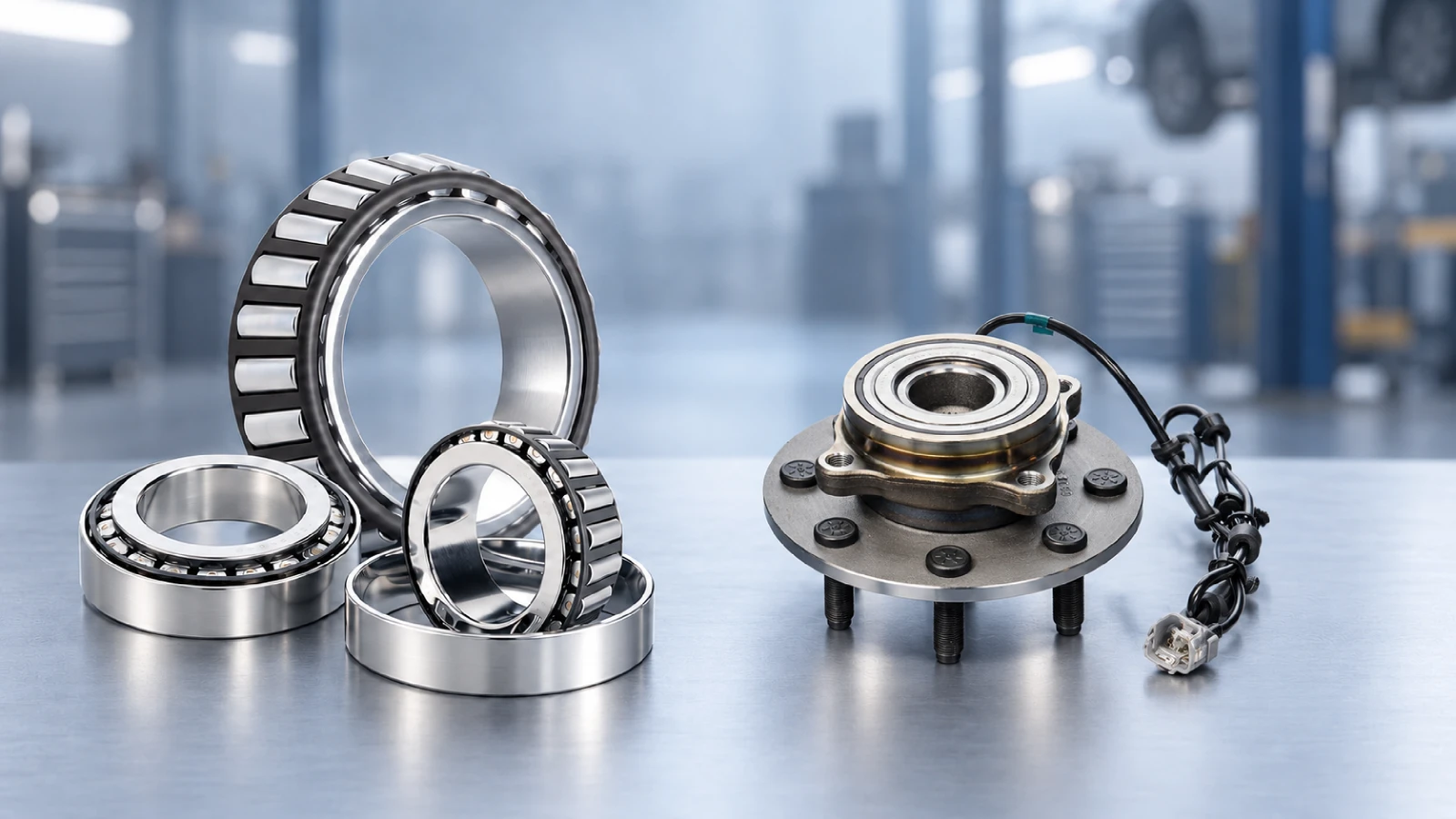
Timken automotive bearings can appear at wheel ends, differentials, transmissions, and other drivetrain positions, but these systems do not use one common fitment rule. A vehicle may require a complete hub assembly, a press-in wheel bearing, a tapered cone-and-cup set, or a bearing identified by an internal transmission or differential position. Buyers should therefore begin with the exact vehicle configuration and installation location rather than the brand name or bore size alone.
Fitment also depends on details such as model year, drivetrain, axle or hub design, ABS and sensor features, flange or spline configuration, and the complete part number. This guide explains how Timken automotive bearing forms differ, how vehicle and position data affect fitment, and what information buyers should confirm before using catalog or cross-reference data for an aftermarket sourcing inquiry.
Table of contents
Which Timken Automotive Bearings Serve Vehicle Systems?
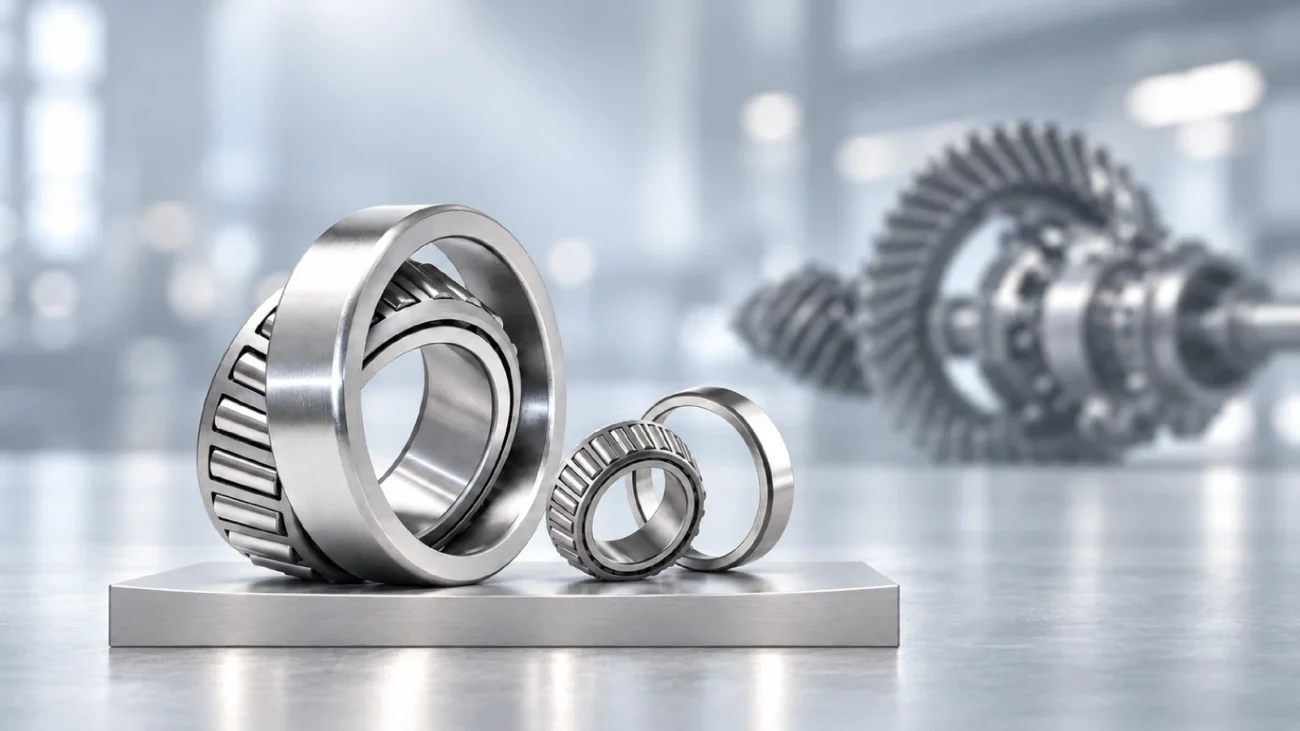
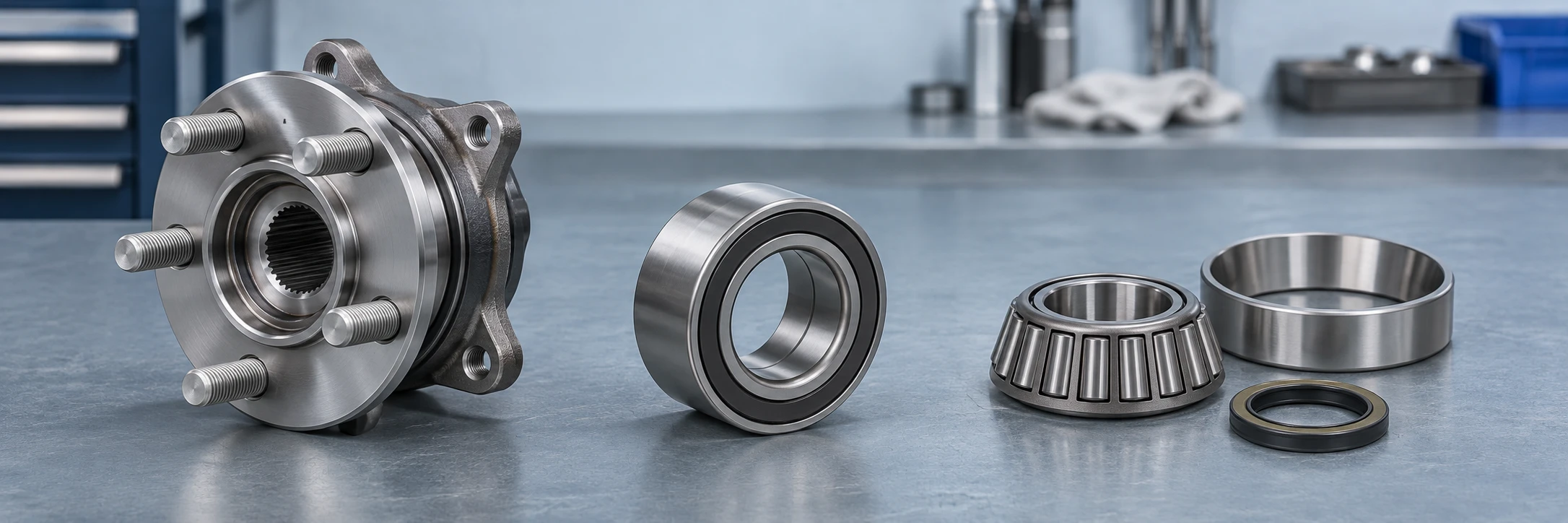
Wheel ends use bearing designs selected for load, packaging, sealing and service method. Some vehicles have a hub and bearing supplied as one assembly; others use a press-in bearing or serviceable tapered cone and cup components. Timken’s automotive aftermarket overview includes wheel-end and drivetrain products. The brand covers multiple bearing categories, but a catalog family is not a vehicle fitment decision.
A front wheel hub on a driven axle may need a splined interface and a specific ABS sensor arrangement. A rear wheel on a different drivetrain may have another flange, mounting bolt pattern or bearing construction. Differential and transmission bearings are selected by the exact internal position and assembly design, not the wheel hub lookup. Record the system and side before asking for a cross reference.
| Vehicle system | Typical item to identify | Key configuration checks |
|---|---|---|
| Wheel end | Hub assembly or separate wheel bearing | Axle, side, drive, ABS, flange, studs and splines |
| Differential | Pinion or carrier bearing set | Gear assembly, bearing pair, setting and seals |
| Transmission or accessory | Bearing specified by assembly | Position, dimensions, speed and lubrication |
These are categories, not a list of universal applications. An apparently similar vehicle may change hubs across production years or option packages. Use manufacturer application data, the installed marking and vehicle service information together.
How Do Hub Assemblies, Bearing Sets and Loose Bearings Differ?
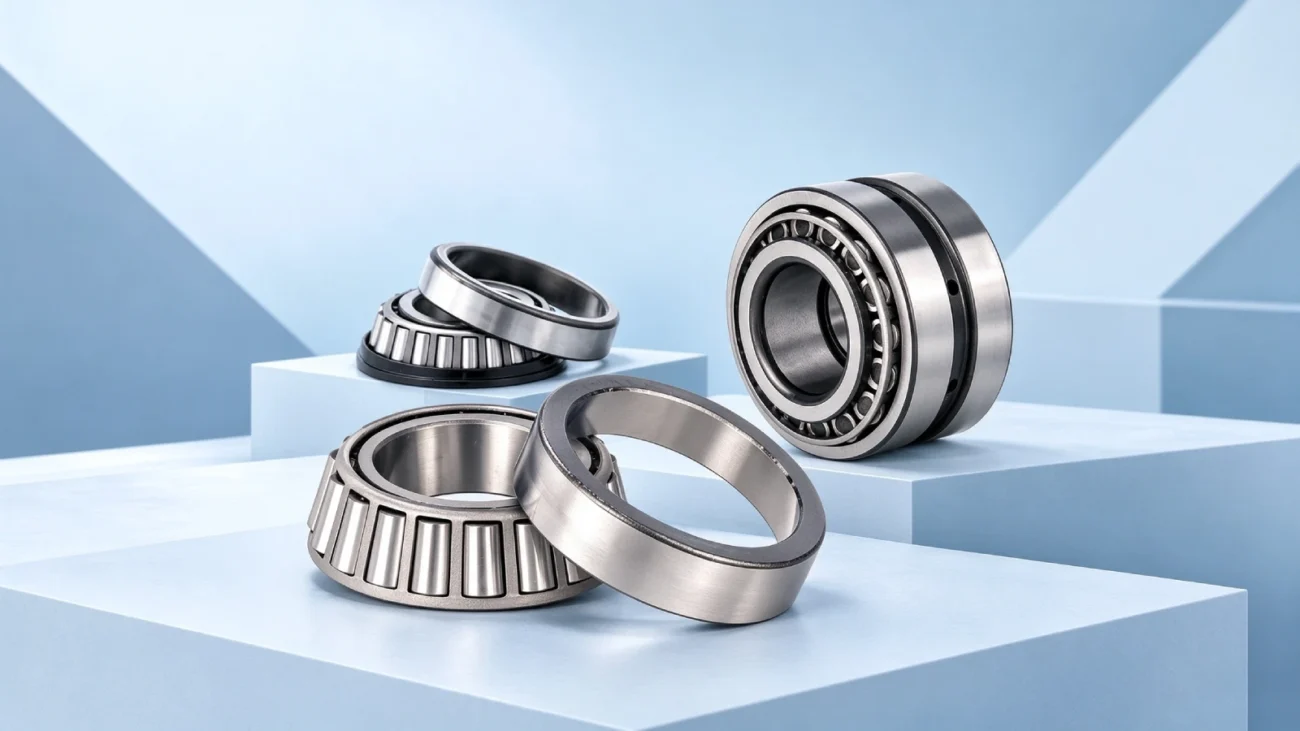
A hub assembly can integrate flange, bearing, seals and sometimes a wheel-speed sensing element. It is commonly ordered under one assembly part number. A loose bearing may be pressed into the knuckle and used with a separate hub. A serviceable tapered bearing position may require a matched cone and cup, plus grease seal and a controlled adjustment. The purchase description must say which supply scope is required.
For instance, Timken’s HA590020 product entry is a wheel bearing and hub assembly, with a tapered bearing type. Its published application summary includes the 1994–1999 Dodge Ram 2500 front 4WD. This is a example, not a recommendation for every vehicle within that nameplate. Its entry specifies features such as spline quantity and wheel-stud count, which must be checked against the vehicle.
Timken’s HA590203 entry lists 2000–2002 Dodge Ram 2500 front 4WD among its application summaries. The change in part number across years illustrates why “Ram 2500 front hub” is an incomplete RFQ. The manufacturer directs users to its full fitment catalog for details. Do not treat these two entries as interchangeable.
Other makes illustrate the scope of the lookup. Timken lists SP550221 in its 2011–2014 Ford F-150 front hub application summary for 4WD and RWD; its entry shows ABS and 45 splines. Timken also lists HA590491 for the 2014–2018 Chevrolet Silverado 1500 front 4WD. These are published summaries, not complete fitment approvals. Check Timken’s full current application data, options and the removed unit before ordering.
How Do Make, Model, Year and Drivetrain Affect Fitment?
Vehicle fitment starts with the make, model, and year, but those details are only the first filter. The same vehicle name may use different bearings across trim levels, engine or axle packages, 2WD, 4WD, or AWD drivetrains, and front or rear positions. Left- and right-side applications can also differ. Midyear production changes, brake packages, ABS systems, or axle revisions may divide one model year into several valid part listings.
After the vehicle configuration is identified, buyers should compare the physical installation features. Check the bolt circle, flange shape, stud count and size, spline count, connector and sensor layout, seal orientation, and attachment hardware. For press-in bearings, confirm width, chamfers, retaining features, and the direction of any magnetic encoder. A part may appear to fit mechanically yet still be incorrect for the axle or wheel-speed sensing system.
The VIN, service records, and removed component provide useful confirmation when a catalog description is too broad. For U.S. fleet maintenance, record the verified vehicle configuration and the source of the fitment decision before placing the order. A purchase based only on a year range can still be wrong if the vehicle has a different axle, drivetrain, or production option.
How Do OE, Timken and Aftermarket Numbers Support a Search?
An original vehicle part number, a Timken catalog number and another aftermarket number are useful search keys. They may describe different supply scopes: a complete hub, a bearing only or a kit containing hardware. A superseded number can also carry fitment changes or installation notes. Cross-reference results should be treated as leads requiring confirmation through current manufacturer application data.
Transcribe every prefix, suffix and kit identifier. If a wheel-end listing says the complete assembly includes the bearing, do not order a loose cone simply because its dimensions look plausible. Conversely, a drawing for a repairable wheel end may require individual cup and cone numbers. The Timken automotive catalog and product page can help start a search, but fitment should be checked in the current application system and against the actual vehicle.
Keep a distinction between “same category,” “catalog application” and “approved service substitute.” An independent supplier may help source or technically review a hard-to-find reference without being the vehicle manufacturer’s appointed replacement source. Any alternative manufacturing proposal needs drawings, material and feature requirements, validation criteria and the buyer’s acceptance process.
What Vehicle and Position Data Should Buyers Provide?
Send the complete year, make, model, trim, engine if relevant, VIN or production date, drivetrain, front/rear and left/right position. Add the Timken or original part number, clear marking and connector photographs, quantity and required delivery date. For a hub, record ABS presence, connector shape, bolt circle, stud size and count, and spline count. For a loose bearing, provide bore, outer diameter, width, seal or encoder details, and the installed housing.
If several vehicles are involved, submit a separate line for each configuration. The supplier can then compare the manufacturer’s application summary with the actual part and flag discrepancies before quoting. HSN can assist with identification and sourcing review or discuss a technical comparison if the specified part cannot be obtained. The repairer or vehicle owner must confirm final fitment and installation requirements using the applicable service information.
FAQ
Is a hub assembly the same as a loose bearing?
No. The assembly can include flange, seals and sensing features; confirm the requested supply scope.
What if the VIN lookup and removed hub disagree?
Pause the order. Verify the installed axle, ABS and options against current application and service records.
What should a U.S. fleet buyer include in an RFQ?
Send VIN or full configuration, position, complete number, photos, quantity and deadline.
Can HSN identify a hard-to-find automotive bearing?
HSN can review the marking and specifications, then discuss sourcing subject to fitment checks.
Remarks
For detailed models beyond those listed above, or for other bearing types, please contact HSN. Send the complete model, photographs, dimensions, quantity, and working conditions so the inquiry starts with the right information.
This article is based on independent analysis of publicly available technical information and industry understanding, and aims to provide knowledge sharing. All brand names and trademarks mentioned in this article belong to their respective owners. HSN Bearing Group is an independent bearing supplier and technical service provider.
Tel: +86 156 6578 7336 Email: service@hsnindustrial.com Website: www.rollingparts.com www.hsnbearing.com
Need Help With a Timken Automotive Bearing?
Contact HSN to confirm a hard-to-find model or discuss a replacement after technical review.