
How Should Buyers Use a Timken Tapered Roller Bearings Catalog?

A Timken Tapered Roller Bearings catalog is most useful when buyers first identify the bearing arrangement and complete component references. Tapered roller designs may use separate cone and cup numbers, single or multiple rows, spacers, and different setting methods. As a result, matching only the bore, outside diameter, or a partial model number is not enough to define the required assembly.
After identifying the construction, buyers should compare the listed dimensions, load ratings, speed guidance, fits, lubrication, and required endplay or preload with the installed machine. The catalog provides the technical starting point, while the machine drawing and operating conditions determine whether a listed bearing is suitable. This guide shows how to read those product details and what information to include in a technical sourcing inquiry.
Official catalog (PDF): Download the Timken tapered roller bearing catalog
How Does Tapered Geometry Carry Radial and Axial Loads?
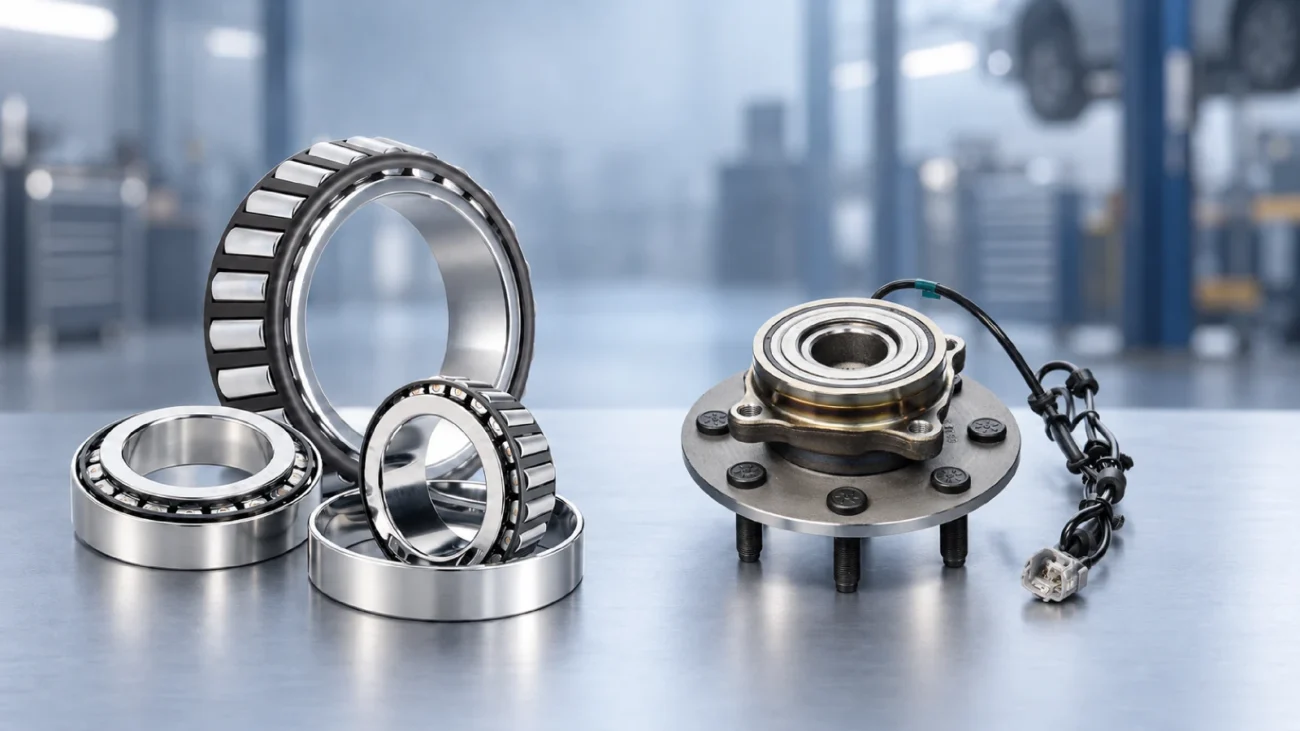
The rollers and raceways form cones whose projected lines meet at a common point. This geometry allows a tapered roller bearing to carry radial load and thrust together. A single row carries thrust principally in one direction, so an arrangement usually uses another bearing or opposing row to support thrust in the other direction. The installed setting determines how the pair shares loads.
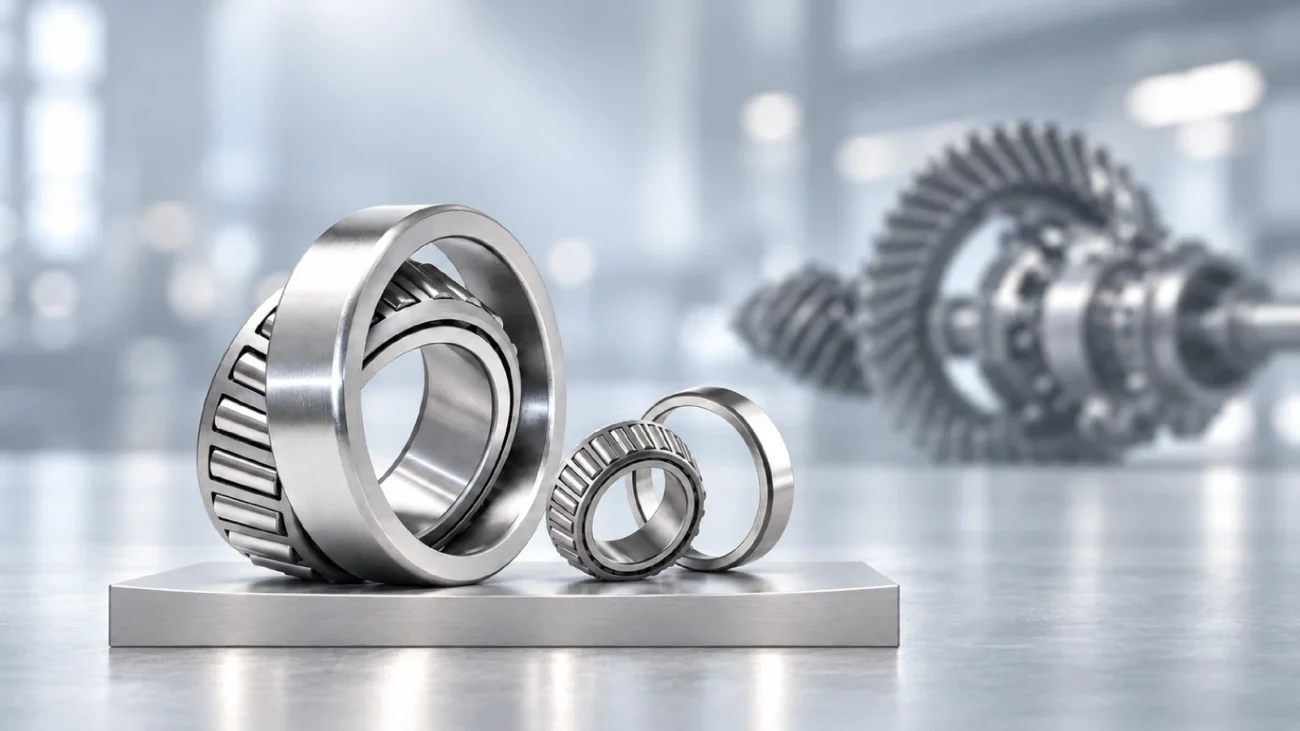
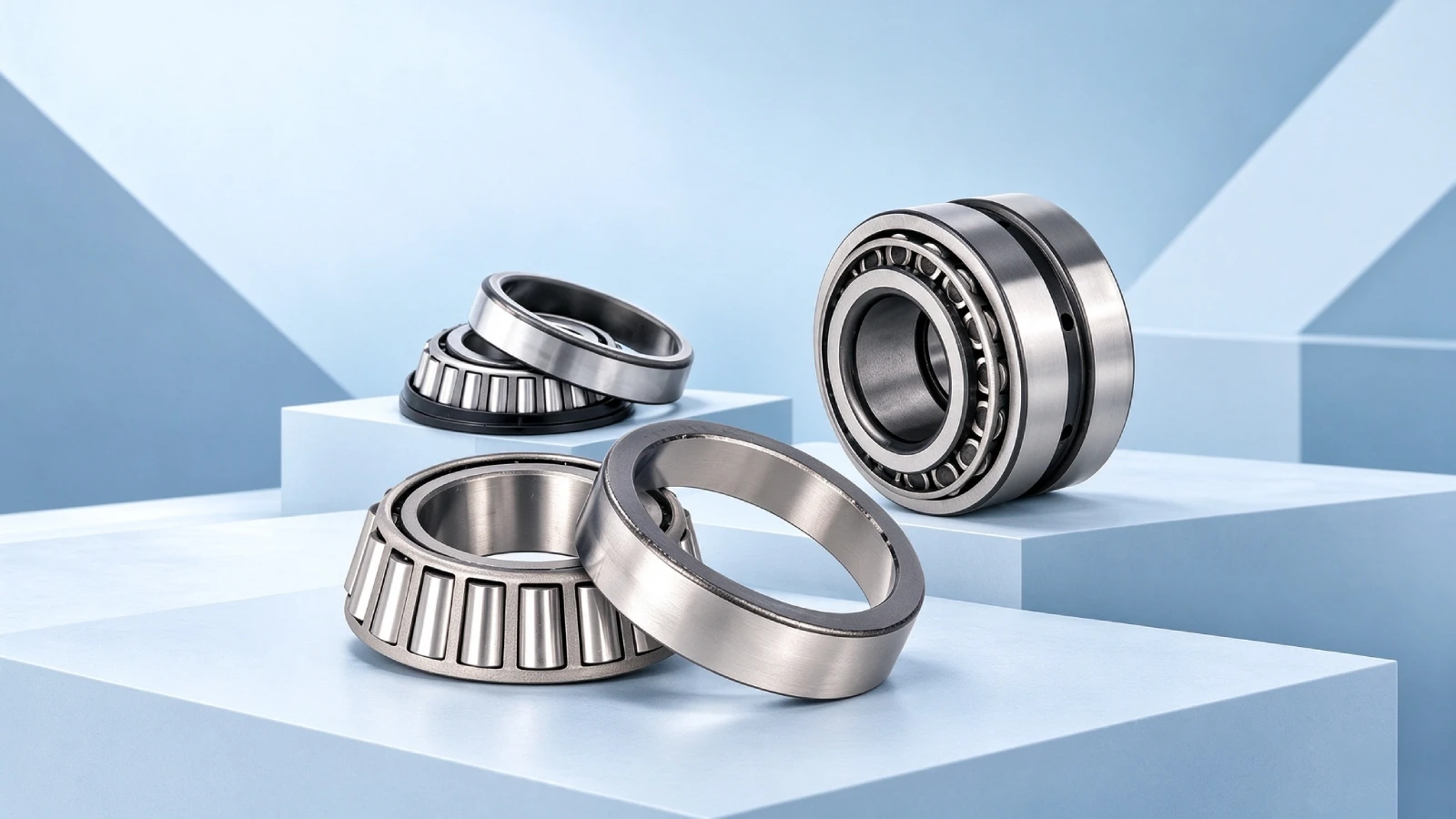
The basic separable components are a cone (inner ring with rollers and cage) and a cup (outer ring). A buyer who sees only a cone marking should not assume the matching cup number. The full assembly and associated mounting parts may be specified separately. Also distinguish radial capacity from thrust capacity: neither bore size nor a single headline rating describes a duty cycle with combined or reversing loads.
What Separates Single, Double and Four-Row Designs?
Timken lists multiple constructions, including TS single-row, TDO and TDI double-row, and four-row bearing arrangements. A TS cone and cup provide one row for a compact mounting. In a TDO configuration, the double outer ring works with two cones; TDI instead uses a double inner ring with outer components. These arrangements differ in mounting, setting and the distance between effective load centers. A four-row bearing addresses high combined loads in large machinery, but requires the exact assembly details.
| Catalog construction | What the buyer identifies | Why the distinction matters |
|---|---|---|
| TS, single row | Cone, cup and opposing support | Direction of thrust and installed setting |
| TDO or TDI, double row | Double-ring arrangement, spacers and complete assembly | Axial location, geometry and supplied components |
| Four row | Complete row and spacer configuration | Heavy-duty mounting and matched components |
Do not order an apparent single-row equivalent for a double-row unit merely because the bore and outer diameter match. Check the shaft shoulders, housing, spacer arrangement, width and installation instructions.
How Are Timken Cup, Cone and Assembly Numbers Read?
Read the marking literally and identify whether it belongs to the cone, cup or complete assembly. In the manufacturer’s LM501349/LM501310 product record, LM501349 is the cone and LM501310 the cup. Their paired designation identifies a specific TS bearing. Neither the LM prefix nor the cone number alone establishes a universal cup match; use the listed pair and check it against the installed machine.
| Code | Code section | Meaning in this verified example |
|---|---|---|
| LM501349 | Cone component | Inner ring, rollers, and cage assembly |
| LM501310 | Cup component | Outer ring matched to the listed cone |
| LM501349/LM501310 | Cone-and-cup combination | Complete listed bearing combination to verify against the machine |
Timken also uses another identification format in some metric tapered roller products. For example, the product X32205 – Y32205 lists X32205M as the cone and Y32205M as the cup in its dimensional data. This example reinforces the same purchasing rule: use the complete component references shown in the product record, including suffixes, rather than deriving a mate from a familiar base number.
Which Tables Show Dimensions, Ratings and Speed Limits?
Start at the appropriate construction section, then locate the complete component pair. Compare bore, outside diameter and total width with the drawing and measured seats. For LM501349/LM501310, Timken lists d = 41.275 mm, D = 73.431 mm and T = 19.558 mm. The same product record gives dynamic radial C1 = 74,800 N, dynamic radial C90 = 19,400 N and static radial C0 = 74,200 N. C1 and C90 use different life bases, so their numbers cannot be compared as though they were the same rating. Check units, load factors, row or assembly scope and the manufacturer’s notes before a life calculation.
A speed value is not a promise of safe operation at that speed in any machine. Lubricant, thermal balance, fit, load and mounting can change the usable operating limit. Some catalog entries show reference or limiting values with stated assumptions. Record the exact column heading, unit and applicable note. When a plant reports a shutdown, use the catalog to narrow candidates, then ask engineering to confirm the installed arrangement and conditions before a purchase commitment.
How Do Fit, Endplay, Preload and Lubrication Affect Selection?
A bearing’s listed dimensions are nominal. Shaft and housing tolerances determine ring fit, which can alter running clearance and load distribution. Tapered roller assemblies also require a controlled axial setting: endplay or preload according to the application. An overly tight setting can raise heat; excessive endplay can permit motion and affect contact. Timken’s bearing setting guidance explains why the correct setting is a system decision.
Check whether installation uses spacers, a locknut, shims or a preset assembly. Document the target setting and measurement method, along with oil or grease type, supply path, temperature and contamination exposure. A suffix or similar outline cannot replace this review. For custom work, supply the current drawing and critical inspection requirements; an independently manufactured candidate requires dimensional and performance evaluation, not just a catalog match.
For an urgent U.S. plant shutdown, the RFQ should include the full cup and cone numbers, photographs, quantity, delivery location and target date. Add bearing position, shaft and housing dimensions, load and speed, lubricant, and any spacer or seal details. HSN can review whether an identified item can be sourced or whether a proposed alternative merits engineering comparison. The machine owner retains the decision on replacement suitability.
FAQ
Can I order a cone number without the cup number?
Provide both if possible; the cone marking alone does not establish the cup or complete assembly.
Does a catalog reference speed approve my machine RPM?
No. Check the stated assumptions, lubrication, load, fit and operating temperature for the installed machine.
How can HSN help with a catalog number?
HSN can review identification and sourcing or discuss a candidate after technical checks.
Does HSN support shipping and customs clearance for U.S. customers?
Yes. HSN supports flexible trade terms, shipping arrangements, customs documentation, and delivery coordination for U.S. orders.
Remarks
For detailed models beyond those listed above, or for other bearing types, please contact HSN. Send the complete model, photographs, dimensions, quantity, and working conditions so the inquiry starts with the right information.
This article is based on independent analysis of publicly available technical information and industry understanding, and aims to provide knowledge sharing. All brand names and trademarks mentioned in this article belong to their respective owners. HSN Bearing Group is an independent bearing supplier and technical service provider.
Tel: +86 156 6578 7336 Email: service@hsnindustrial.com Website: www.rollingparts.com www.hsnbearing.com
Need Help With a Timken Tapered Bearing Number?
Contact HSN to confirm a hard-to-find model or discuss a replacement after technical review.