

Which Timken Bearings Fit Different Loads and Applications?

When a bearing is needed for a repair, the brand name alone does not identify the right product. Timken bearings span several designs, and each handles load, shaft movement, and mounting differently. The first sourcing decision is therefore the bearing category. The complete part number and operating details can then narrow the choice.
This distinction matters when a plant has a short shutdown window. A distributor may find several available Timken numbers with similar dimensions, yet only one design suits the machine’s axial location, sealing, or lubrication arrangement.
What Are the Main Types of Timken Bearings?
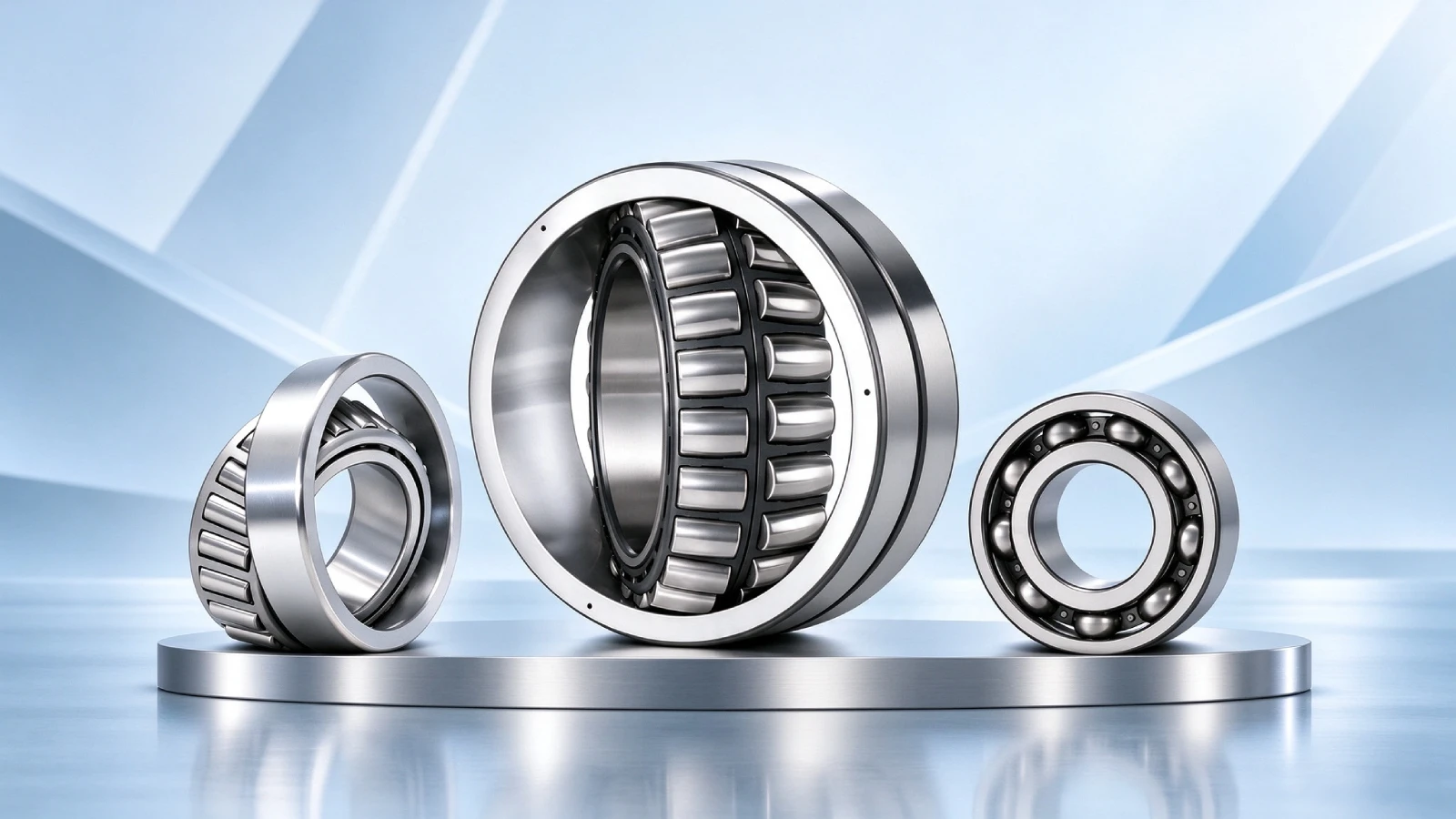
Timken industrial range includes ball, tapered roller, spherical roller, cylindrical roller, thrust, and housed bearing designs. These names describe different functions; they are not interchangeable labels for the same assembly.
| Bearing type | Main selection reason | Typical equipment position |
|---|---|---|
| Deep groove ball bearing | Radial load with limited axial load in both directions | Motors, fans, and auxiliary drives |
| Tapered roller bearing | Combined radial and axial load, with mounting adjustment considered | Hubs, gearboxes, and heavy equipment |
| Spherical roller bearing | Heavy radial load where shaft deflection or misalignment matters | Conveyors, crushers, and large drives |
| Cylindrical roller bearing | High radial load; axial function depends on ring design | Gearboxes, pumps, and motors |
| Thrust bearing | Predominantly axial load | Vertical shafts and thrust positions |
| Housed unit | Bearing, housing, mounting, and sealing selected together | Conveyor and process-equipment supports |
For concrete examples, 6205-2RS is a deep groove ball bearing, while 30205 is a metric single-row tapered roller bearing. Timken also lists 22220EJW33C3 as a spherical roller bearing and NU2226EJ as a cylindrical roller bearing. These examples illustrate categories, not alternative numbers for one machine.
The buyer should first establish whether the removed item is a bare bearing or a complete housed unit. A housing order also depends on shaft attachment, base dimensions, seal style, and the surrounding structure.
How Should Buyers Compare Bearings with Similar Dimensions?
Start with a common purchasing trap: Timken 6205-2RS and 30205 both have a 25 mm bore and 52 mm outside diameter. However, the former is a 15 mm-wide sealed deep groove ball bearing; the latter is a single-row tapered roller assembly with a 16.25 mm overall width. The load path, mounting arrangement, and components differ. Shared bore and outside diameter do not make these parts alternatives.
The same distinction applies within roller families. A tapered roller position needs the specified cone and cup, plus the assembly’s intended adjustment. A spherical roller bearing can accommodate some angular misalignment, but its clearance, cage, and lubrication provisions still need checking against the duty.
For cylindrical roller bearings, inspect the ring ribs before deciding whether a number suits a locating or floating position. An NU arrangement commonly permits axial movement within the bearing; another style may provide axial-location capability. A complete housed unit adds housing geometry, locking method, seals, and lubrication access to that decision.
Compare what the installed bearing does in the machine before comparing availability. A dimension match starts a search; it cannot finish an engineering review.
Which Industries Use Each Timken Bearing Type?
The application helps explain why a designer chose a particular category. It does not, by itself, establish a replacement number.
In a conveyor drive, a spherical roller bearing can support a heavily loaded shaft where deflection is expected. A housed unit may simplify the support arrangement and protect the bearing from plant contamination. By contrast, a gearbox can use cylindrical roller bearings at a radial-load position and a separate bearing arrangement for axial location.
Motors, fans, and smaller auxiliary drives often use ball bearings. Yet their actual specification depends on speed, temperature, grease, electrical conditions, and the fit in the motor housing. A sealed bearing ordered for a previously open, relubricated position could change the maintenance plan.
Tapered roller bearings are common where radial and axial forces act together, including wheel-end and heavy-equipment assemblies. In a cement or aggregate plant, the same broad bearing family can appear in several machines under very different loads. Record the equipment position before treating an application example as a selection recommendation.






Why Confirm Loads and Operating Conditions?
Load direction determines what the bearing must support. A radial bearing selected only from a shaft diameter may lack the axial function required at a locating position. Conversely, a floating position needs room for thermal shaft growth; restricting that movement can introduce unwanted force.
Operating conditions then refine the design. On a dusty conveyor, sealing and relubrication access can dominate the maintenance decision. In a hot gearbox, temperature changes the relationship between mounted fit and working clearance. Speed and lubrication also affect the acceptable cage and internal arrangement.
These factors interact. A heavier load does not automatically justify choosing the largest bearing that fits the housing. Extra bearing width, a different shoulder requirement, or a changed axial arrangement may prevent correct installation.
For a planned U.S. plant shutdown, confirm these details before the purchase order reaches the final approval stage. Resolving a drawing conflict while the line is still running gives the maintenance team more options than discovering it during installation.
What Data Helps Buyers Select a Timken Bearing Category?
Start with the complete marking on the removed bearing. Photograph both sides, including suffixes that may be absent from an old parts list. Then compare the shaft seat, housing seat, bearing width, shoulders, and any measured damage with the machine drawing.
An effective inquiry should include:
- Identity: Full part number, photographs, equipment model, and bearing position.
- Dimensions: Bore, outside diameter, width, shaft and housing fits, plus relevant shoulder dimensions.
- Duty: Radial and axial loads, speed, temperature, operating cycle, and contamination.
- Arrangement: Locating or floating function, seals, lubrication method, and adjacent components.
- Purchase needs: Quantity, required date, inspection requirements, and approval process.
HSN can use those records to check possible stock in China or review a drawing-based replacement request. Before shipment, dimensions, hardness, and clearance can be checked against the agreed specification. A proposed alternative remains subject to technical confirmation and customer approval.
FAQ
Can equal bore and outside diameters justify a substitution?
No. Timken 6205-2RS and 30205 share those dimensions but differ in structure, width, and mounting requirements.
What if a U.S. drawing conflicts with the installed part?
Send both records, photos, and the machine position. Ask maintenance engineering to resolve the conflict before approval.
Should an urgent RFQ request a bearing or a housed unit?
State what will be replaced. A complete unit also needs housing dimensions, shaft locking, seals, and mounting details.
Can HSN check stock and approve an alternative together?
HSN can check supply and review the design. The customer must separately approve any proposed technical change.
Remarks
For detailed models beyond those listed above, or for other bearing types, please contact HSN. Send the complete model, photographs, dimensions, quantity, and working conditions so the inquiry starts with the right information.
This article is based on independent analysis of publicly available technical information and industry understanding, and aims to provide knowledge sharing. All brand names and trademarks mentioned in this article belong to their respective owners. HSN Bearing Group is an independent bearing supplier and technical service provider.
Tel: +86 156 6578 7336 Email: service@hsnindustrial.com Website: www.rollingparts.com www.hsnbearing.com
Need Help Sourcing Timken Bearings?
Contact HSN to confirm a hard-to-find model or discuss a replacement after technical review.