

How Did Torrington Develop Its Bearing Range and Legacy References?

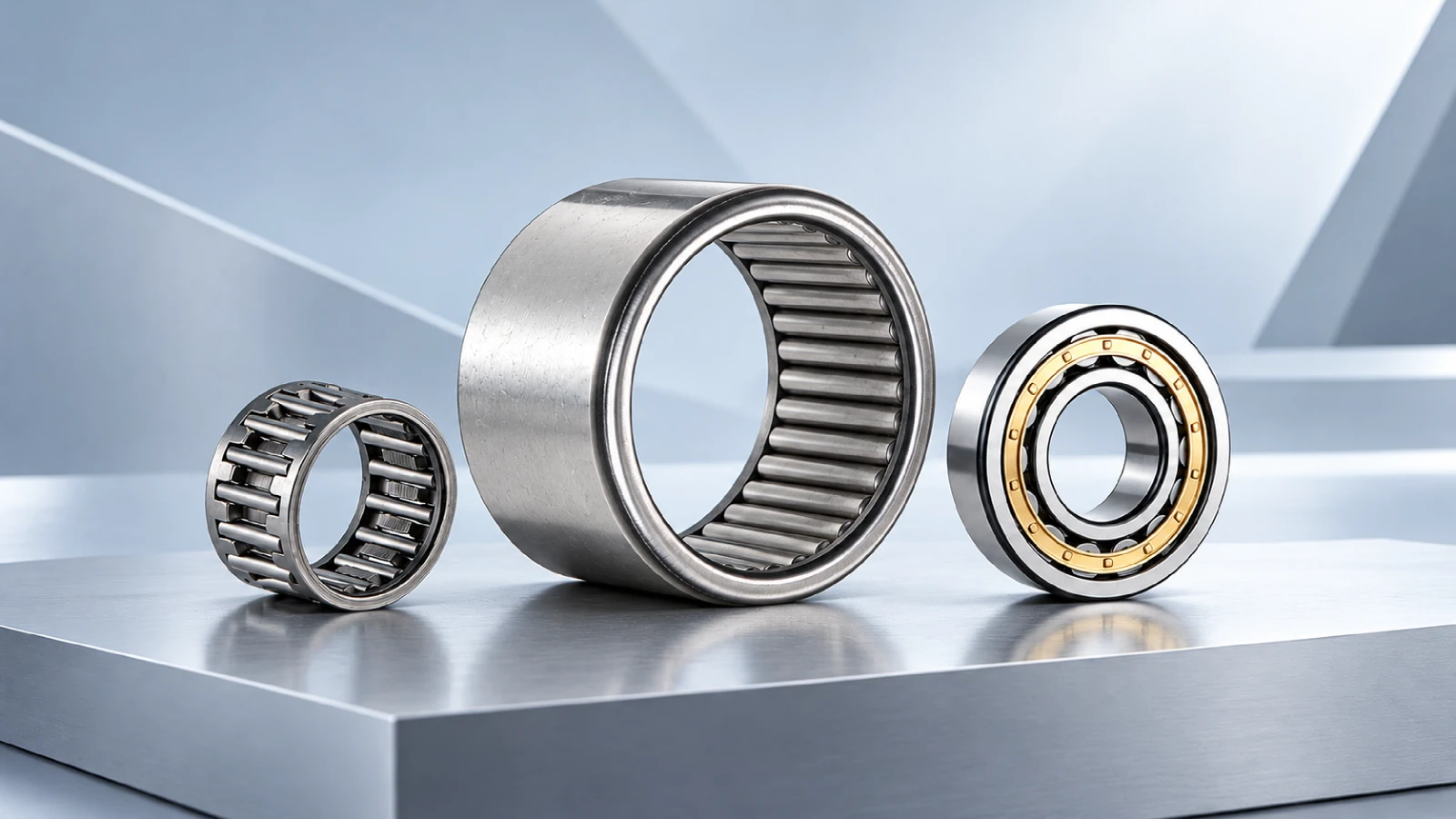
Torrington is a familiar name on older U.S. bearing records. The business developed through different products and ownership periods, so a drawing, a bearing marking, and a modern search result may point to different records. For maintenance buyers facing a short outage window, the practical goal is to trace the exact bearing design before asking for stock or a custom option. A historical name is useful evidence, but it cannot confirm present-day supply or interchangeability.
How Did Torrington Evolve Into a Bearing Brand?
Torrington roots date to 1866, when the Excelsior Needle Company began making sewing machine needles in Connecticut. In 1898, its assets became part of the newly formed Torrington Company of Maine. The business subsequently expanded beyond needles, entering ball bearing manufacture through an acquisition in 1912. By the mid-1920s, bearings had become a significant product line, laying the foundation for the company’s further growth.
A major turning point came in the 1930s, when Torrington engineer Edmund K. Brown developed a new needle roller bearing design. Alongside the company’s expanding ball bearing operations, this innovation helped shift its focus toward bearings. Wartime demand accelerated that transition, and bearing production became central to the business after World War II. Over subsequent decades, Torrington developed a broader portfolio of needle roller, heavy-duty roller, and ball bearings, establishing its identity as a bearing manufacturer serving automotive and industrial applications.
How Did Ownership Changes Affect the Torrington Name?
Timken acquired The Torrington Company in 2003. At the end of 2009, Timken completed the sale of its Needle Roller Bearings business to JTEKT. The second event concerned that defined business; it did not describe every historical bearing family associated with Torrington. A dated catalog, removed part, and modern supplier listing may therefore use different names.
An ownership change does not alter a number already stamped on a bearing. It also cannot validate a cross-reference between an older design and a current product. Use the original component description, the date and scope of the catalog, and the machine position to connect a historical reference to a new purchasing request.
| Historical event | What changed | Sourcing implication |
|---|---|---|
| Earlier Torrington production | Several bearing structures entered service under historical markings | Identify the design and period of the available record |
| Timken acquisition in 2003 | Torrington became part of Timken’s business at that time | Check which product line a dated reference describes |
| Needle roller business sale completed in 2009 | That business passed from Timken to JTEKT | Do not extend the transaction to unrelated historical bearing lines |
Which Torrington Product Families Appear in Legacy Records?
Legacy Torrington records require a bearing-family check before any part-number comparison. Needle roller arrangements need attention to the inner ring, shaft raceway, and the presence of a separate assembly. Radial cylindrical roller bearings instead require a rib and ring check because those features govern axial float or location. A thrust-bearing inquiry must establish the axial load path and all mating components. Do not transfer one family’s identification rules to another.
The supplied Torrington radial cylindrical roller catalog gives a concrete example. It lists 40RIU130 and 40RIJ130 on the same dimensional line: 4.0000 in bore, 5.6250 in outside diameter, and 0.8750 in width. However, RIU has a double-ribbed outer ring and a ribless inner ring, allowing axial displacement. RIJ adds one inner-ring rib and can carry limited axial load in one direction. The two codes are different designs despite their shared main dimensions.
The same Torrington catalog lists 160RU93 as a metric-style radial cylindrical roller reference, with a 160 × 340 × 133 mm envelope. In this numbering scheme, the I in RIU identifies an inch-size style, while RU denotes the metric style. These are historical catalog examples, not statements of present inventory or approved replacements. Any suffix, modification code, cage, clearance, and lubrication feature on the actual part still needs confirmation.
The catalog also shows that a base number may carry modification and radial-clearance codes. For example, its nomenclature treats R3 as the standard clearance designation for the illustrated series, with lower and higher groups on either side. Do not apply that convention to another brand without its own catalog. An extra character on a removed ring may identify a feature that a simple dimensional table does not disclose.
Why Do Old Torrington Numbers Remain in U.S. Maintenance?
Industrial equipment often outlives its original parts list. A repair crew may retain a drawing from installation, while the storeroom uses a later internal stock number. A contractor might record only the marking visible on one ring. These records can describe the same machine position but omit different details. That is why “Torrington” may remain in an RFQ even when the buyer cannot find a current listing under the name.
An old number may refer to a component rather than an assembled bearing. Moreover, a rebuilt machine may contain a later design that no longer matches its first drawing. Compare the physical assembly with the latest approved repair record. Note the shaft position, adjacent parts, lubrication changes, and any modification to axial restraint. An outage date can prioritize the search, but it cannot establish availability or technical equivalence.
How Should Buyers Trace a Legacy Torrington Designation?
Begin with the complete visible marking, including prefixes, suffixes, clearance marks, and any modification code. Photograph both sides of the bearing and its separate rings. Measure bore, outside diameter, and width, then record shaft and housing seats. For a cylindrical roller design, identify rib configuration and whether the position must locate the shaft or allow axial movement. A shared catalog size line is not an interchange decision.
Match the code to the correct historical product family and catalog. Compare its drawing with the removed assembly and most recent repair record. Record load, speed, temperature, lubrication, contamination, and failure history. Flag any conflict between the installed part and documentation before ordering. For an inch-size legacy code, include measured inch and metric dimensions so rounding does not hide a mismatch.
Send the original reference, photographs or drawing, quantity, delivery target, and inspection requirements in one RFQ. HSN can examine a hard-to-find model, discuss possible stock in China, or consider a drawing-based alternative where application data supports it. Dimensions, hardness, and clearance can be checked before shipment; agree on additional inspection for the order. A candidate remains subject to technical confirmation and customer approval.
FAQ
Does RIU identify an inch-size cylindrical bearing?
Yes. In this Torrington series, I indicates inch size; still check the full code and measured dimensions.
Can 40RIU130 and 40RIJ130 be interchanged?
Do not assume so. Their ring ribs differ; compare axial function, fit, clearance, and application.
What should a U.S. buyer send for an urgent RFQ?
Send all markings, photos, dimensions, machine position, quantity, working conditions, and the required date.
How can HSN review an old Torrington reference?
HSN can compare the supplied records with the part design and discuss stock or a reviewed alternative if feasible.
Remarks
For detailed bearing models beyond those listed above, or other bearing types, please contact HSN. Send the complete model, photos, dimensions, quantity, and working conditions so the technical review starts with the right information.
This article is based on independent analysis of publicly available technical information and industry understanding, and aims to provide knowledge sharing. All brand names and trademarks mentioned in this article belong to their respective owners. HSN Bearing Group is an independent bearing supplier and technical service provider.
Tel: +86 156 6578 7336 Email: service@hsnindustrial.com Website: www.rollingparts.com www.hsnbearing.com
Need Help Tracing a Torrington Bearing?
Contact HSN to confirm a hard-to-find model or discuss a replacement after technical review.