
How Should Buyers Use a Torrington Bearing Catalog?

A Torrington bearing catalog is most useful when an older drawing, maintenance record, or removed bearing provides only part of the information needed for sourcing. It can help buyers identify the bearing family, basic dimensions, design features, and applicable clearance or suffix information before comparing a current supply option.
Catalog data should still be treated as a technical reference rather than proof of interchangeability or availability. Buyers need to match the complete designation, installed dimensions, machine position, and relevant operating requirements with the actual component. When older records and current listings differ, the catalog provides a starting point for review, while the final purchase decision should rely on the verified bearing configuration.
What Does This Torrington Bearing Catalog Cover?
Catalog access: This article is accompanied by the historical Torrington radial cylindrical roller bearing PDF excerpt. Its source-catalog pages 291–302 contain the style drawings, dimensions, and ratings used below. For current product data, consult Timken’s cylindrical roller bearing catalog. Check the edition before comparing ratings; these two publications should not be treated as one specification.
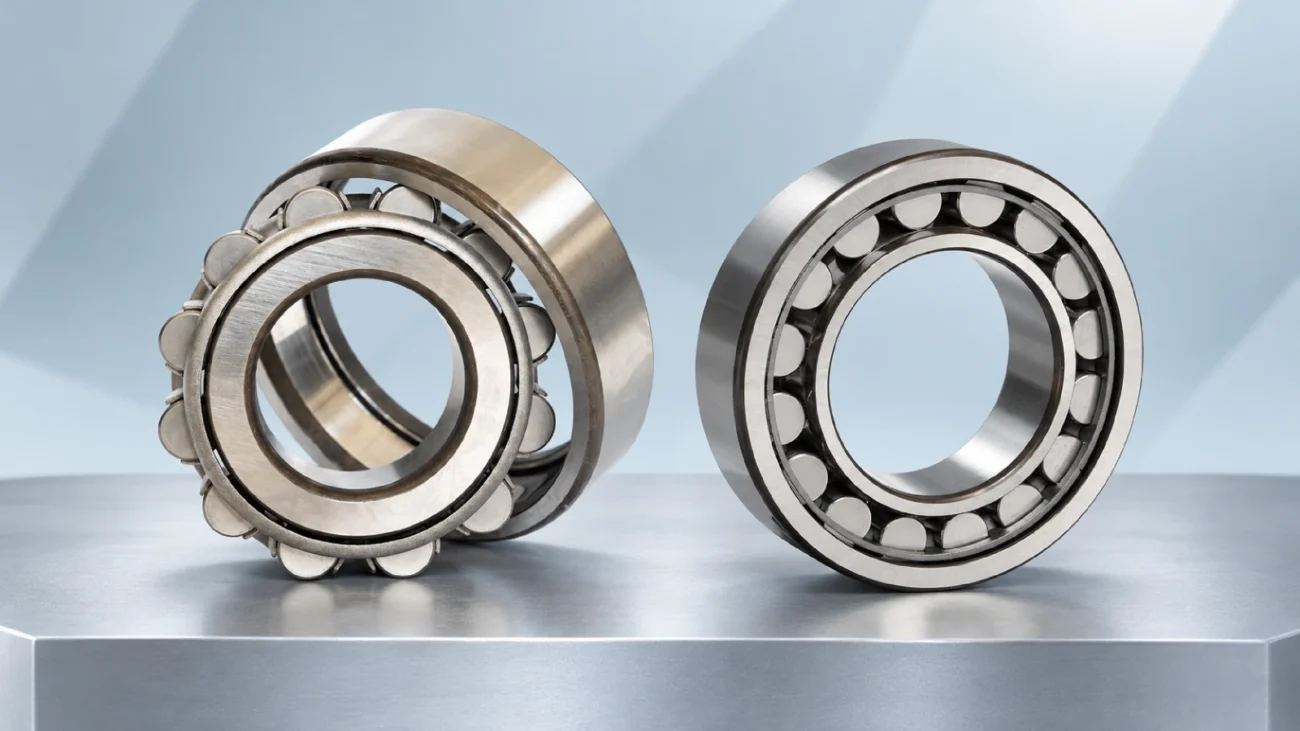
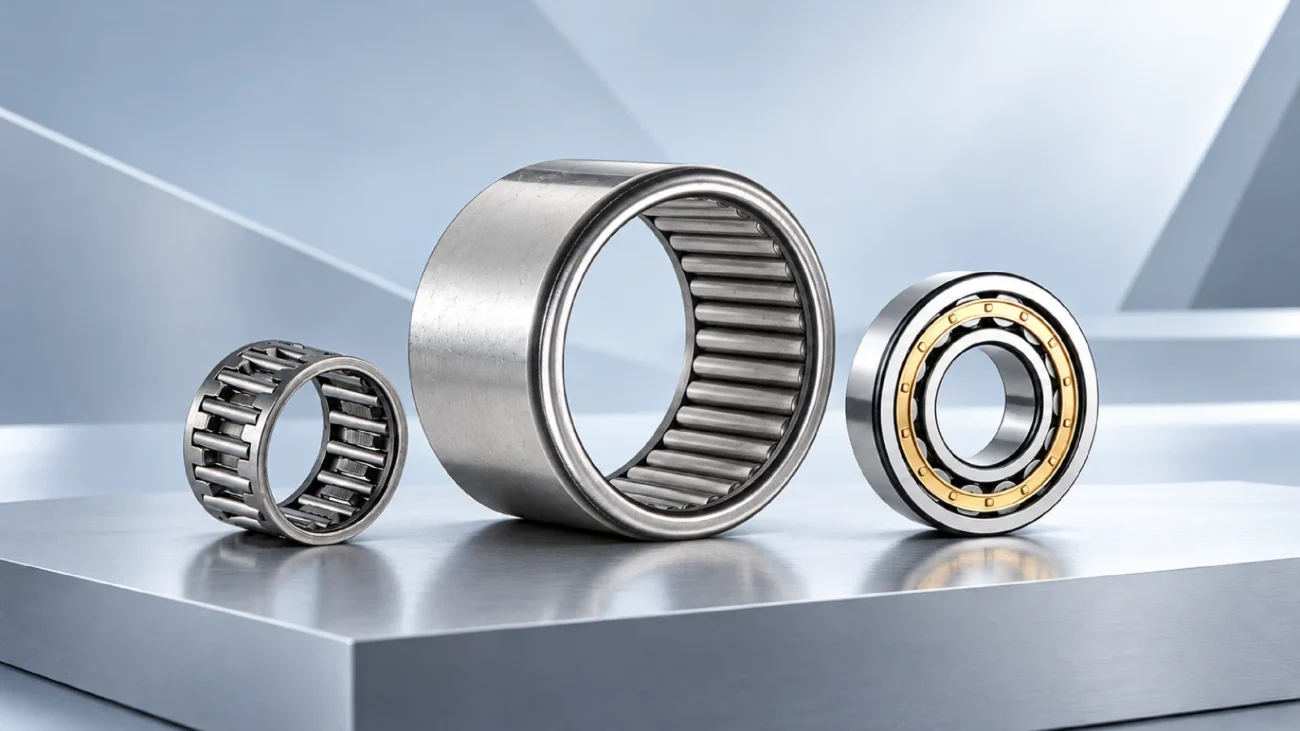
The cylindrical roller section covers radial bearings, including inch and metric standard styles and the 5200/A5200 metric series. Radial cylindrical rollers mainly carry load across the shaft. Ring ribs, however, change how the bearing permits axial movement or locates the shaft. This is the central question behind the six standard-style columns.
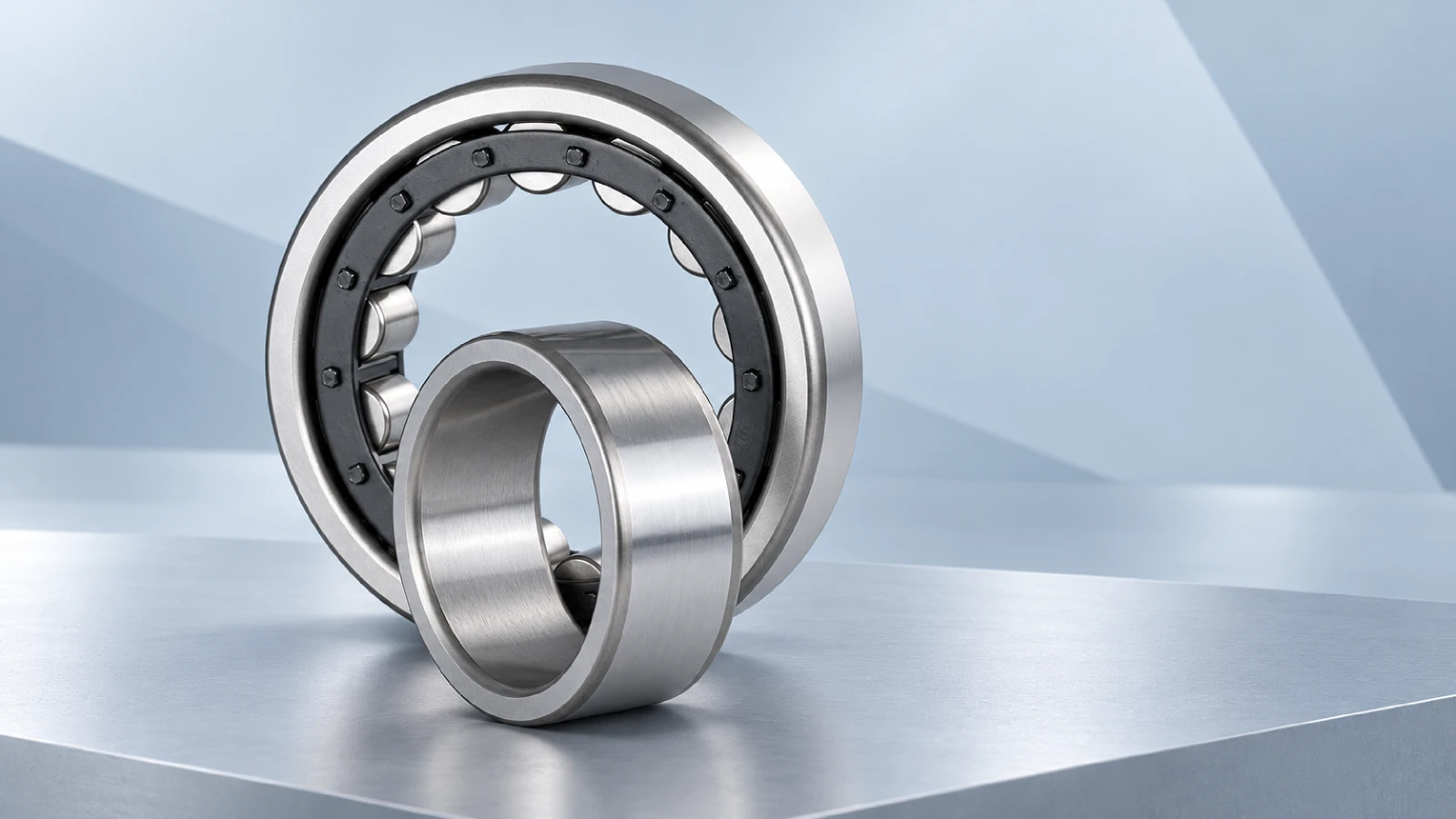
The historical tables separate a complete bearing from a roller-and-outer-ring assembly or an inner ring. That distinction matters when an old order record gives only one component number. Identify the installed family first, then follow the correct section and component column. A current Timken listing can supply another technical check, but it may show revised ratings or a fuller designation.
Which Cylindrical Roller Bearing Series Are Listed?
The standard-style table groups several cylindrical roller constructions by rib arrangement. RIU, RIN, RIJ, RIF, RIT, and RIP identify inch-style families, while RU, RN, RJ, RF, RT, and RP identify corresponding metric styles. Bearings within the same dimensional family may share a similar envelope, but their rib arrangements can give them different axial locating functions.
| Metric style | Ring arrangement | Shaft-position question |
|---|---|---|
| RU | Two outer-ring ribs; plain inner ring | Must the position allow axial displacement? |
| RN | Two inner-ring ribs; plain outer ring | Must axial displacement occur through the separable outer ring? |
| RJ / RF | Two ribs on one ring; one on the other | Which direction requires axial guidance? |
| RT / RP | Fixed ribs with a loose abutting rib | Is axial location required in both directions? |
The 5200 series uses a different product structure and should be identified separately from these standard-style families. A historical listing for 5220 WS refers to a configuration without a supplied inner ring, so its listed roller-raceway diameter should not be mistaken for the bore of a complete bearing assembly. A-5220-WS adds the inner ring and therefore represents a different supply scope. Buyers should confirm the exact component set, clearance, and shaft-raceway requirements rather than requesting “5220” alone.
How Do Series and Part Numbers Identify Design Differences?
Consider 105RJ32, a base number in the historical metric-style table. The 105 identifies the nominal 105 mm bore, while RJ identifies the rib arrangement. The 32 belongs to the dimensional series used in this numbering system; it is not a 32 mm width. Other entries such as 105RU32 and 105RT32 may share the same basic size family but use different rib arrangements, which changes how the bearing locates or permits shaft movement.
Suffixes and modification codes add further design information. R3 identifies the specified radial internal clearance class in this system, while R4 and R5 indicate progressively greater clearances. A code such as OA107 identifies an outer-ring lubrication-hole and groove modification. These details should remain attached to the complete marking because removing them can change the required configuration.
The 5200 series follows its own nomenclature, so its letters should not be interpreted using RJ-style rules. The A in A-5228-WS indicates an inner ring in the assembly. W identifies a double-ribbed outer ring, while S identifies a stamped-steel cage. A machined-bronze-cage version uses M instead of S. Buyers should therefore interpret each designation within its documented product family and quote the complete marking when requesting supply.
Which Dimensions and Ratings Should Buyers Compare?
Start with bore d, outside diameter D, and the axial width stated for the relevant style. The following historical entries illustrate why equal bore and outside diameter do not establish the same bearing or shaft function:
| Listed model | Nominal d × D × width | Identification point |
|---|---|---|
| 100RU02 | 100 × 180 × 34 mm | Axially floating RU construction |
| 100RJ02 | 100 × 180 × 34 mm | One-direction RJ rib arrangement |
| 100RT02 | 100 × 180 × 34 mm | RT loose rib for two-direction location |
| A-5220-WS | 100 × 180 × 60.325 mm | 5200 assembly with inner ring |
The first three entries share a nominal envelope, yet they cannot be selected by size alone. The fourth is wider and has a different supplied component set. The historical 5220 WS row has no complete-bearing bore because it omits the inner ring. Also read shoulder diameters and allowable fillet radii: a housing may fit the outside diameter but interfere at a corner or rib.
Static and dynamic load ratings answer different questions. The historical 100RU02 row gives 245,000 N static and 216,000 N dynamic, plus an approximate 2,150 rpm oil-bath limit. Those figures belong to that edition’s stated conditions; a current listing may use another rating basis or speed convention. Compare a candidate against its own specified ratings, lubrication method, load cycle, and actual application rather than treating the old number as a universal operating limit.
What Details Are Needed for Stock or Replacement Review?
Provide the complete markings found on the bearing and any separate rings. Include the equipment drawing, location of the fixed and floating supports, measured bore and housing seat, width, and the installed lubricant. Record the complete clearance and modification codes. For a U.S. plant shutdown, add required quantity and date so stock research does not delay engineering review.
Ask for the exact marked model first. If it cannot be sourced, compare the proposed construction, dimensions, tolerance, clearance, cage, shoulder space, axial function, and duty. HSN can check possible stock in China or discuss a drawing-based option after reviewing those details. An agreed inspection plan can cover dimensions, hardness, and clearance; the machine owner still approves the technical choice.
FAQ
What if only the outer ring still has a marking?
Send photos of all components and the assembly drawing. A ring number alone may not identify the complete bearing.
When is a historical catalog rating insufficient?
Use current candidate data and actual duty when load, speed, lubrication or the bearing version differs.
Can HSN check an older Torrington number?
Yes. HSN can review the marking and drawing, then check possible stock or a reviewed option.
Does HSN support shipping and customs clearance for U.S. customers?
Yes. HSN supports flexible trade terms, shipping arrangements, customs documentation, and delivery coordination for U.S. orders.
Remarks
For detailed models beyond those listed above, or for other bearing types, please contact HSN. Send the complete model, photographs, dimensions, quantity, and working conditions so the inquiry starts with the right information.
This article is based on independent analysis of publicly available technical information and industry understanding, and aims to provide knowledge sharing. All brand names and trademarks mentioned in this article belong to their respective owners. HSN Bearing Group is an independent bearing supplier and technical service provider.
Tel: +86 156 6578 7336 Email: service@hsnindustrial.com Website: www.rollingparts.com www.hsnbearing.com
Need Help With a Torrington Bearing Catalog Number?
Contact HSN to confirm a hard-to-find model or discuss a replacement after technical review.