
How Do Torrington Cylindrical Roller Designs Compare with SKF and FAG?

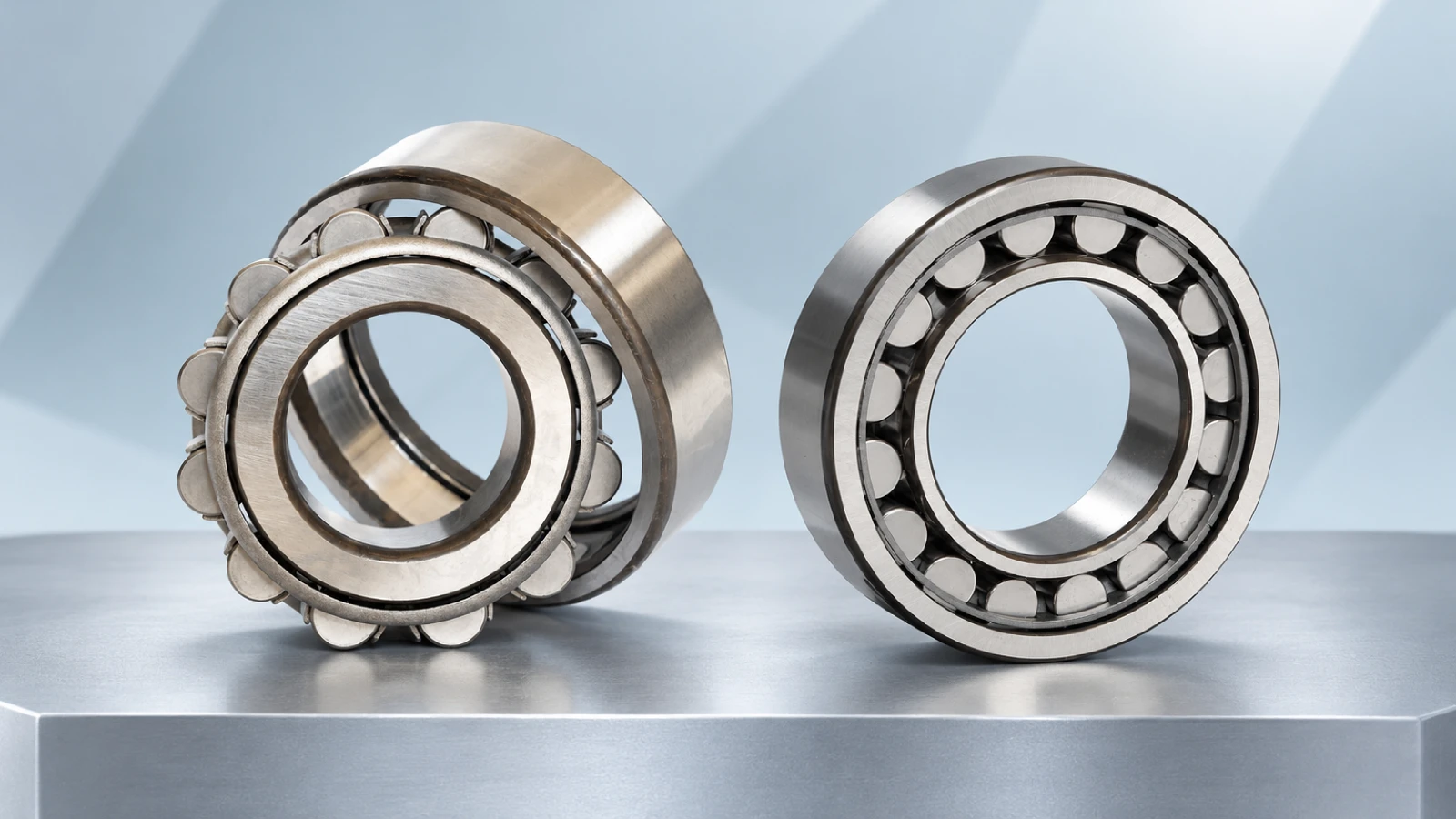
A Torrington bearing cross reference should begin with the bearing structure rather than a similar-looking number. Torrington cylindrical roller styles use different rib arrangements to control axial displacement or shaft location, while SKF and FAG use their own NU, N, NJ, NUP, and related design families. Comparing these structural roles helps buyers narrow the search before dimensions or part numbers are reviewed.
A comparable design family is only a starting point for replacement. Buyers still need to verify bore, outside diameter, width, rib orientation, internal clearance, cage, lubrication features, fits, and the bearing’s locating or non-locating duty in the machine. This guide explains how Torrington cylindrical roller styles relate structurally to SKF and FAG families, and what information should be confirmed before a replacement inquiry is approved.
Table of contents
Which Cylindrical Roller Bearing Designs Did Torrington Use?
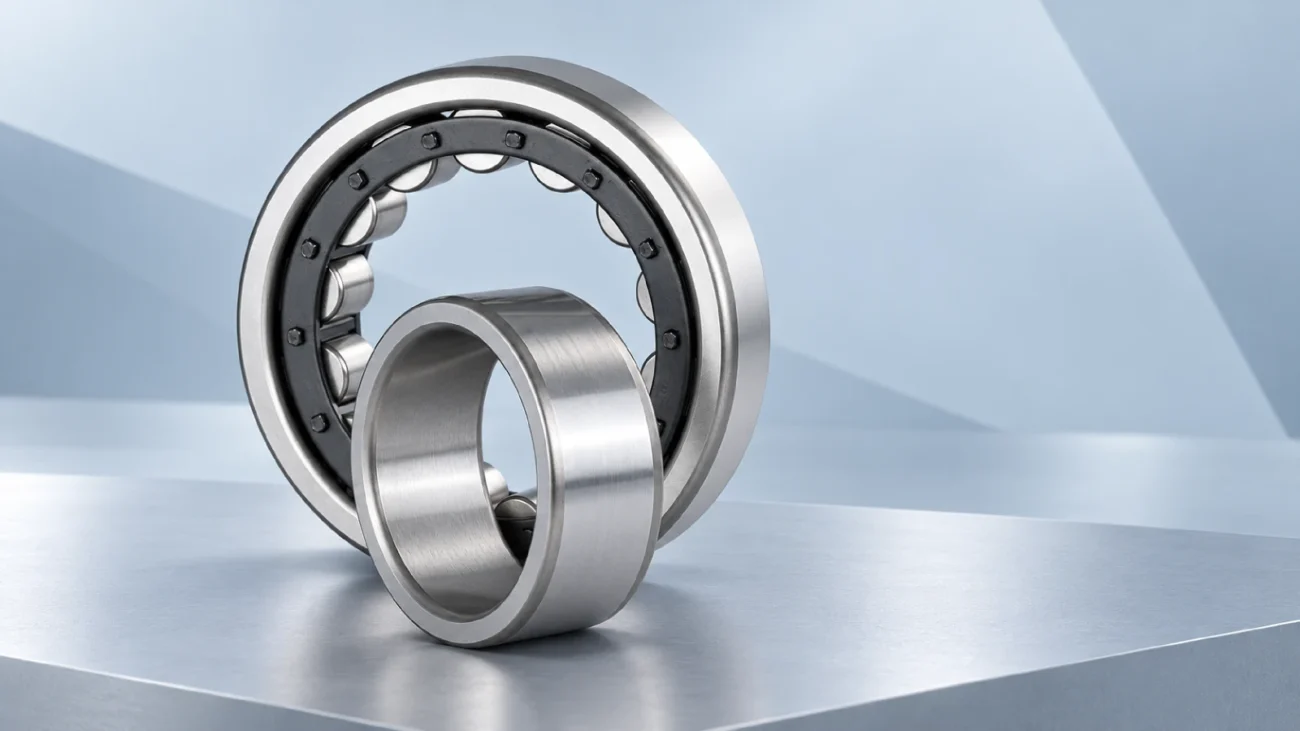
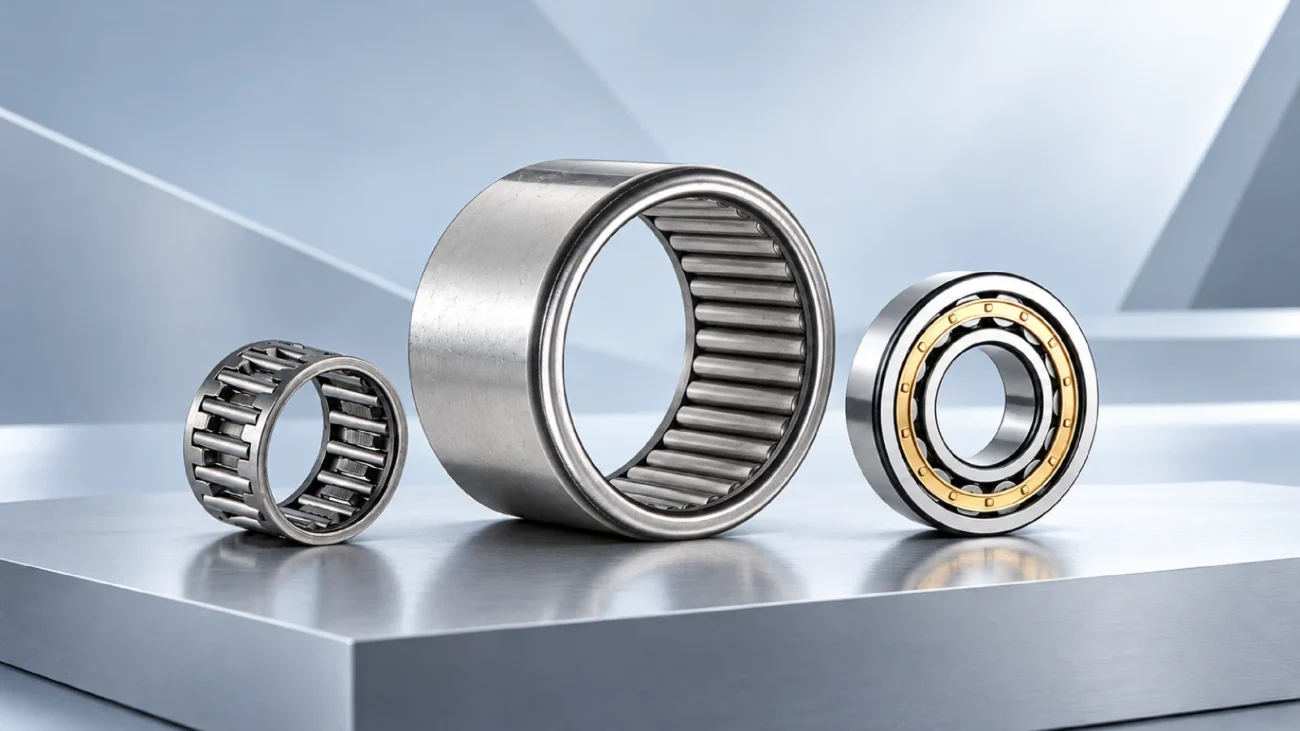
Torrington’s radial cylindrical roller range includes RU, RN, RJ, RF, RT, and RP metric styles, with RIU, RIN, RIJ, RIF, RIT, and RIP for inch-style constructions. The letters tell the reader where the fixed ribs and any loose abutting rib sit. This changes the axial role without necessarily changing the principal outside envelope.
RU and RN provide two-direction axial displacement between rings. RU places two ribs on the outer ring, while RN places them on the inner ring. RJ and RF add one rib on the opposite ring, permitting light axial guidance in one direction when the application permits. RT and RP add a loose abutting rib to establish an axial location in both directions. The R-prefixed constructions belong to their own dimensional system, so an ISO-style number cannot be inferred from a similar-looking bore code.
For example, the legacy range lists 105RU32, 105RJ32, and 105RT32 in one nominal envelope. Their roles differ despite common dimensions. This is a structural comparison, so the original clearance and modification suffixes still belong in the RFQ. Do not compress the marking into a generic “105 cylindrical bearing” line item.
How Do Rib Arrangements Define Floating and Locating Positions?
A non-locating bearing position must accommodate axial shaft displacement caused by thermal growth or changes in the surrounding assembly. In RU and RN styles, the rib arrangement allows axial movement between the rings while the bearing continues to carry radial load. The installed fits and available displacement must still match the machine design.
In contrast, a locating position performs a different function. RJ and RF styles can provide axial guidance in one direction, so the opposite direction requires another locating feature in the bearing arrangement. RT and RP add a loose abutting rib, allowing axial location in both directions.
However, these locating functions should not be confused with unlimited thrust capacity. Axial load at the rib faces creates sliding contact and heat, so allowable axial duty depends on speed, lubrication, bearing design, and operating conditions. Buyers should therefore confirm the required shaft-location function before comparing Torrington styles with SKF, FAG, or other cylindrical roller designs.
| Torrington style | Principal rib arrangement | Intended axial role |
|---|---|---|
| RU / RIU | Double-ribbed outer; plain inner | Floating, displacement in both directions |
| RN / RIN | Double-ribbed inner; plain outer | Floating, displacement in both directions |
| RJ / RIJ; RF / RIF | Two fixed ribs on one ring; one on the other | Guidance in one direction |
| RT / RIT; RP / RIP | Two fixed ribs plus a loose abutting rib | Location in both directions |
Which SKF and FAG Series Have Comparable Structures?
SKF and FAG use NU, N, NJ, and NUP configurations for these radial cylindrical structures. Compare the rib arrangement and axial role first, then find an actual model in the required dimensional series. The table provides a structural search route; it does not establish cross-brand part-number equivalence. It also does not claim that every listed design is stocked in every size.
| Torrington style | SKF design family | FAG design family | Shared structural idea |
|---|---|---|---|
| RU / RIU | NU | NU | Two outer ribs, plain inner; floating |
| RN / RIN | N | N | Two inner ribs, plain outer; floating |
| RJ / RIJ | NJ | NJ | Two outer ribs, one inner; one-way guidance |
| RT / RIT | NUP | NUP | Loose inner rib; two-way location |
RF/RIF reverse the one-way rib orientation relative to RJ/RIJ; RP/RIP reverse the loose-rib arrangement relative to RT/RIT. NF and NP describe these structural patterns in some product systems, but SKF or FAG range and availability must be checked for the actual size. Never substitute NJ for RF, or NUP for RP, simply because the numbers share a bore.
Which Dimensions and Features Must Match for Replacement?
The historical listings put 105RU32, 105RJ32, and 105RT32 together at a nominal 105 mm bore, 190 mm outside diameter, and about 65.1 mm width. That row demonstrates the trap: all three can appear dimensionally similar on a short RFQ, yet their rib layouts provide different axial behavior. The sectional drawings and shaft arrangement settle which style belongs in the machine.
After choosing the correct structure, compare bore and outside-diameter tolerances, width, shoulder diameters, fillet clearance, radial internal clearance, cage, lubrication features, and any modification codes. A bearing with equal d × D × width may still differ in internal geometry or running clearance. In an inch-series application, record the actual measured units; converting the bore to a rounded metric value risks a wrong shaft fit.
Ratings need their own review. Static and dynamic radial ratings depend on each manufacturer’s calculation and product specification. Likewise, speed values assume stated lubrication and heat conditions. A line in a comparison table is a search lead, not an approval of load capacity or service life.
What Should Buyers Document for a Replacement Review?
Begin with the complete Torrington marking, photos of both rings, and the installed bearing’s machine position. Identify the fixed and floating support, axial load direction, bore, housing seat, width, operating speed, lubricant, and required quantity. Attach the sectional drawing or removed sample when markings are damaged. This makes a Torrington bearing cross reference inquiry technically actionable.
For a U.S. maintenance shutdown, include the required date and the engineer who can review deviations. HSN can check possible stock in China, compare a candidate against a drawing, or discuss a custom bearing when a standard option does not suit the assembly. Dimensions, hardness, and clearance can form part of an agreed inspection. The plant approves any alternative only after its design differences and operating conditions are reviewed.
FAQ
Can a table row replace the original suffix?
No. Keep clearance, cage and modification marks with the base number when asking for a candidate.
What if the removed ring has no legible number?
Send ring photos, measured seats and width, and the shaft-position drawing for identification.
What should a U.S. buyer send for replacement review?
Send full markings, photos, the shaft arrangement, dimensions, quantity, and deadline.
Can HSN assess a hard-to-find cylindrical style?
Yes. HSN can check stock or discuss a drawing-based option after technical comparison.
Remarks
For detailed models beyond those listed above, or for other bearing types, please contact HSN. Send the complete model, photographs, dimensions, quantity, and working conditions so the inquiry starts with the right information.
This article is based on independent analysis of publicly available technical information and industry understanding, and aims to provide knowledge sharing. All brand names and trademarks mentioned in this article belong to their respective owners. HSN Bearing Group is an independent bearing supplier and technical service provider.
Tel: +86 156 6578 7336 Email: service@hsnindustrial.com Website: www.rollingparts.com www.hsnbearing.com
Need Help With a Torrington Bearing Cross Reference?
Contact HSN to confirm a hard-to-find model or discuss a replacement after technical review.