

How Should Buyers Choose a Conveyor Bearing?

A conveyor bearing request is incomplete until the buyer identifies the rotating component it supports. A bulk-material belt conveyor has pulley shaft supports, idler roller ends and bearings inside the drive. These locations have different interfaces, loads and sealing needs. When an outage has a fixed restart date, defining the failed position first is the fastest way to turn an urgent inquiry into a usable stock or custom quote.
For a distributor or maintenance team, the practical question is whether the order covers a loose bearing, a mounted unit, a complete idler or a drive component. One conveyor may use several bearing types. A shared machine name does not make their part numbers interchangeable.
Where Do Bearings Support a Conveyor System?
On a belt conveyor, a head or drive pulley transmits force to the belt. A tail pulley redirects it, while a take-up pulley maintains tension. The pulley shaft commonly turns in external bearing housings. These supports need a defined locating arrangement, shaft fit, mounting footprint and seal package.
Carrying and return idlers support the belt along its length. Their bearings are typically enclosed near the roller ends, with the axle secured to the conveyor frame. An impact idler at a loading zone faces different shock and contamination conditions than a return roller. The gearbox or motor has its own internal bearings and separate model identification.
Before asking for a bearing for conveyor pulley service, photograph the failed location and mark it on the equipment drawing. Record the pulley position, drive side, shaft diameter, housing code and bearing marking. For an idler, record roller assembly and frame details instead. This distinction prevents a quote for a roller-end component when the plant needs a large shaft support.
Which Bearing Types Match the Purchase Scope?
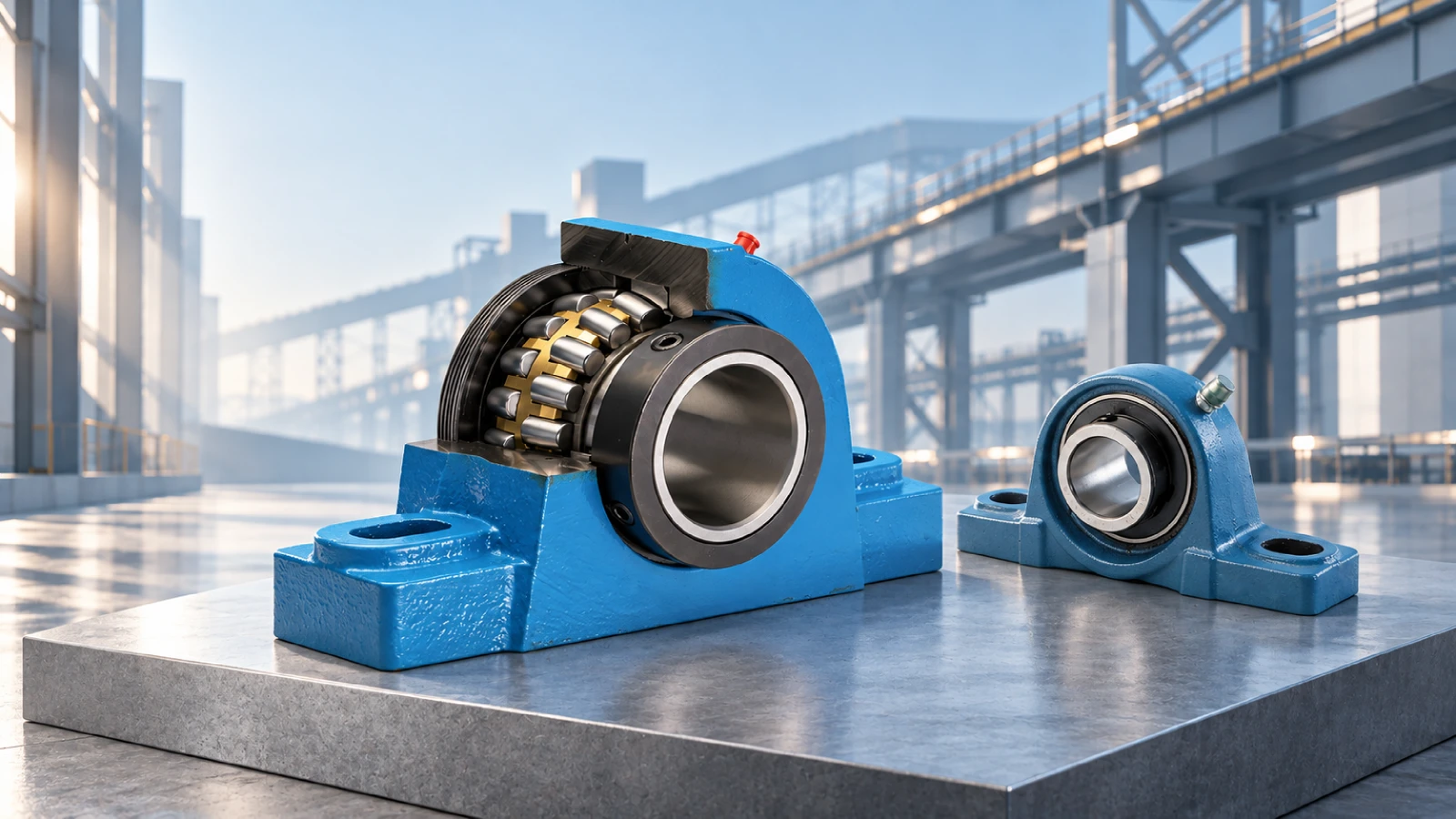
Bearing type follows the shaft support and equipment design. Spherical roller bearings in split pillow block housings are used on some heavily loaded pulley shafts. Mounted ball bearing units may serve other conveyor positions where the load, speed and alignment requirements permit. Roller-end bearings can be part of a sealed idler assembly. A motor or reducer bearing belongs to its drive model, not the pulley housing order.
| Equipment position | Likely purchase scope | Interface to verify |
|---|---|---|
| Pulley shaft | Bearing, housing, sleeve and seals or complete mounted unit | Shaft seat, base holes, locating role and seal space |
| Belt idler | Roller-end bearing or complete sealed roller | Axle, tube, end cap and frame spacing |
| Motor or reducer | Internal bearing specified by drive model | Full code, suffix and OEM service requirements |
Timken SAF 22220 is a split pillow block mounted spherical roller bearing unit designation. Timken lists SAF22220 as the full part number for the cataloged fixed assembly; a float unit requires a Float or FL suffix. It illustrates a possible pulley-support product family, not an approved spare for every conveyor. A bare 22220 bearing does not identify the matching housing, seals and accessories. Confirm the installed unit and locating role before ordering.
If the old unit was mounted on a sleeve, include the sleeve arrangement and installation method. The engineer should also confirm which support locates the shaft axially and which permits thermal movement. Copying two identical housed units without checking that arrangement can create a mounting problem.
How Do Load, Dust, Moisture and Speed Change Selection?
Belt tension, pulley diameter, transmitted drive load and shaft span affect the reaction at a pulley bearing. Idler load depends on belt weight, conveyed material, roller spacing and position. Ask the conveyor designer or plant engineer for the applicable loads and speed. Conveyor length by itself cannot establish a bearing rating.
Airborne fines can enter damaged seals and contaminate grease. Wet material, washdown or outdoor exposure adds moisture and corrosion concerns. Inspect the shaft seal, housing joint and relubrication path as a system. A more elaborate seal still needs the right mounting space and maintenance access.
During troubleshooting, record bearing temperature trend, vibration, grease condition and any shaft movement. Check pulley alignment, frame distortion and belt tracking. These observations help distinguish a failed bearing from a persistent machine condition that would damage the replacement as well. Selection should follow the installed equipment’s lubrication and clearance requirements.
What Usually Goes Wrong During Replacement?
One common error is ordering only the rolling bearing when the housing bore, seal groove or shaft seat is also worn. Another is specifying an idler-end bearing from a roller outside diameter without measuring the axle and end-cap interface. In both cases the purchased part may be genuine and still fail to fit the machine.
If the original marking is unreadable, measure the interfaces after safe disassembly. Note whether dimensions come from an unworn drawing or a damaged part. For a custom request, supply a sample or dimensioned drawing and define material, fit, clearance, seal and operating conditions for technical review. Do not describe a proposed design as directly interchangeable before its interfaces and duty are checked.
HSN Bearing Group can discuss a stock check from a complete code and review a replacement or custom request from drawings or samples. For rolling bearings, dimensional tolerance, hardness and clearance checks before shipment support the agreed specification. Any additional inspection needs to be defined for the order. Confirm whether the quotation includes only the bearing or also the housing, sleeve and seals.
What Details Make a Conveyor Bearing RFQ Usable?
State the conveyor ID, equipment position and required item scope. Attach photos of the marking, installed unit and adjacent machine area. List the full model and suffix, quantity, shaft and housing dimensions, load and speed information, lubricant, contamination and observed failure. If the inquiry is for conveyor bearings across several machines, use a separate line for each position and designation.
For a U.S. shutdown purchase, include the receiving site, latest acceptable arrival date and whether partial shipment would help the work plan. Ask the plant which components are reusable and which must arrive as a matched assembly. A distributor should carry the approved code and machine position through the purchase order so a correct part is not allocated to the wrong conveyor.
Where a custom solution is requested, identify the interfaces that cannot change and provide the engineering acceptance criteria. Confirm final dimensions and operating conditions before releasing the order. This makes a technically reviewed alternative more useful than a broad cross-reference claim.
FAQ
Can I quote from the pulley bearing number alone?
Provide the complete housing and bearing codes, shaft size, seals and locating role to define the mounted scope.
Yes. HSN supports flexible trade terms, shipping arrangements, customs documentation, and delivery coordination for U.S. orders.
Are idler and pulley bearings interchangeable?
No. Their mounting interfaces and loads differ. Identify the failed component and confirm its exact assembly.
Why ask HSN to source a hard-to-find conveyor bearing?
HSN can review the full code or sample, define the quoted components, and agree on bearing inspections and a feasible delivery plan.
Does HSN support shipping and customs clearance for U.S. customers?
Remarks
For detailed conveyor bearing models not listed above, please contact HSN for model confirmation and supply discussion. When checking other bearing references, you can also send the complete model, photos, dimensions, quantity, application, and working conditions.
This article is based on independent analysis of publicly available technical information and industry understanding for knowledge sharing. All brand names and trademarks mentioned belong to their respective owners. HSN Bearing Group is an independent bearing supplier and technical service provider.
Tel: +86 156 6578 7336 Email: service@hsnindustrial.com Website: www.rollingparts.com www.hsnbearing.com
Need Help with a Conveyor Bearing?
Contact HSN to confirm a hard-to-find model or discuss a replacement after technical review.