

Why Agricultural Bearing Selection Starts with Equipment Position?

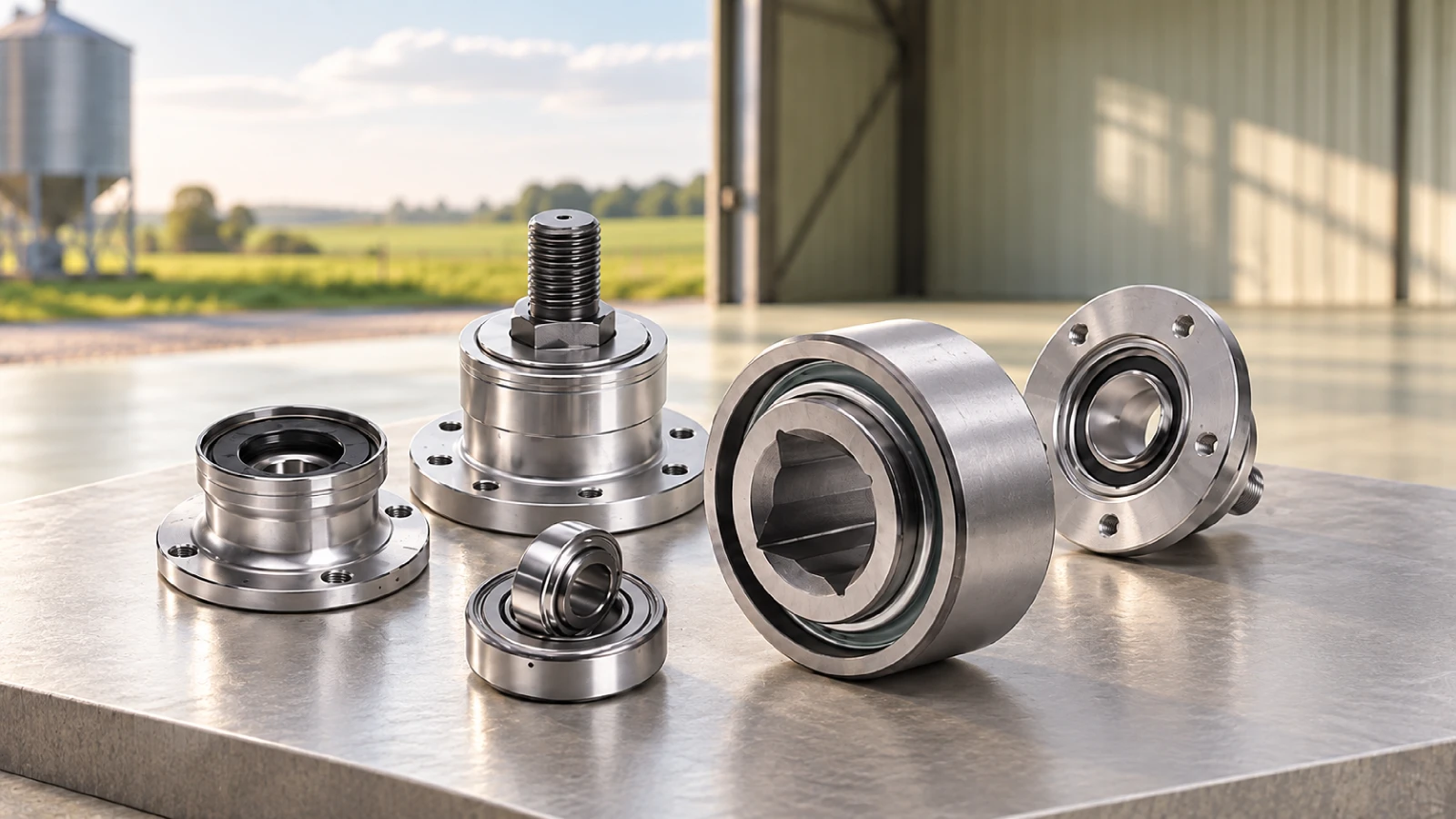
An agricultural bearing request can refer to a tillage disc, planter drive, baler shaft or tractor wheel end. The same farm may operate all four, but each position has a different shaft, housing and exposure to soil or crop residue. For an urgent purchase, identify the equipment and failed location before comparing a number from an old part with available stock.
The decision is often about the whole protected unit, not only the rolling bearing inside it. A sealed disc hub may include a flange and stub axle, while a mounted shaft bearing needs the right insert, housing and locking method. The correct quote depends on what the technician will remove and install.
Where Does an Agricultural Bearing Operate?
Independent tillage discs work close to soil, stones, water and abrasive dust. Their bearings face radial load, overturning forces and repeated impacts when a disc meets uneven ground. A unitized hub can integrate the bearing, flange, axle interface and sealing package. A loose bearing with similar dimensions may not replace that assembly.
Planters and seeders use rotating support and drive positions, including gauge wheels and transmission shafts. Balers and combines have rollers, shafts and driven assemblies that encounter chaff and variable load. Tractor transmissions, axles and wheels introduce a different set of fits and operating speeds. The buyer should name the exact component rather than use “farm equipment bearing” as a single inventory category.
For example, a disc-gang bearing on a tillage implement is exposed to packed mud, whereas a protected drive bearing inside a machine may have easier lubrication access. They need separate seal and maintenance decisions even if their bore is similar. Identify the machine make, model, serial range and position at the start of an inquiry.
Which Bearing Structures Fit the Position?
Mounted ball bearing units support many implement shafts where a housing and locking arrangement form part of the service item. Special agricultural deep-groove ball bearings can use extended inner rings, nonstandard bores or multiple contact seals. Tapered roller bearings may serve tractor axles and wheel ends where combined radial and axial loads and correct setting matter. A disc hub can be a complete preassembled unit instead of a loose bearing.
| Machine position | Possible supply form | Detail that prevents a wrong order |
|---|---|---|
| Tillage disc | Sealed hub or special bearing | Flange, shaft interface and seal package |
| Planter or baler shaft | Insert or complete mounted unit | Bore shape, locking and housing pattern |
| Tractor wheel end | Bearing pair or hub assembly | Axle design, setting and seal scope |
These examples describe structure, not universal fitment. Timken W211PP2 is a non-relubricatable, tri-ply-sealed agricultural ball bearing for severe contamination. That listing verifies the product type; it does not establish a fit for a particular disc or planter. Use the complete installed number, dimensions and equipment application to assess it.
A square bore is not interchangeable with a round bore of similar nominal size. Likewise, an insert with an eccentric locking collar has different shaft retention from a set-screw design. Record the complete mounting arrangement before requesting a substitution.
How Do Soil, Load and Seals Change Selection?
Soil and crop residue can collect at a seal and wear its lips. Water and fertilizer exposure add corrosion risk. A multi-lip or labyrinth arrangement can help keep contamination out, but the protection depends on the actual hub geometry and installation. Increasing seal drag may also affect temperature and starting torque, so a different seal package needs a technical review.
Disc angle and impact change the direction and magnitude of load. On a mounted shaft, belt pull and overhang can govern bearing and housing stresses. Meanwhile, a tractor wheel end follows axle-specific preload or endplay requirements. The same load rating on paper does not settle those mounting and duty differences.
Lubrication must match the installed design. Some agricultural hubs are factory-sealed and need no field relubrication. Other mounted units have grease fittings and an equipment-specific interval. Pumping grease into a non-relubricatable bearing or forcing too much through a seal can damage the intended arrangement. Confirm whether the maintenance team is buying a sealed-for-life unit or a serviceable one.
When Does Replacement Need More Than a Bearing?
Rough rotation, looseness, heat or a missing seal may trigger inspection, but those observations do not prove that the bearing alone caused the failure. Examine the shaft, hub, housing and seal land. Mud packed between a disc and its mount can also stress the seal system. Document the evidence before repeating the same replacement during the next field season.
A worn housing bore or damaged shaft seat can let a new bearing move under load. In that case, a like-size bearing may fail quickly unless the mating part is corrected. If a unitized hub has failed, decide whether the approved repair replaces the entire hub. Do not quote an internal bearing as though the hub can necessarily be dismantled and validated by the farm workshop.
For a custom or discontinued part, include the complete interface drawing: bore shape, outside diameter, width, flange, bolt pattern, locking detail and seal geometry. Discuss required tolerances and an acceptance method before making a sample. A brand cross-reference can start a search, but it cannot confirm direct interchange without these checks.
What Should a Farm Equipment RFQ Include?
Send the equipment make, model and serial number, exact bearing position, original marking, clear photos and quantity. State whether the request covers a loose bearing, insert, housed unit or hub assembly. Add shaft and housing measurements, operating speed or duty, contaminants, lubrication method and the needed seal scope.
For a U.S. parts distributor preparing for planting or harvest, distinguish the field breakdown quantity from planned spares. Confirm the receiving date against the service schedule and ask the shop to review the supplied mounting parts before a machine is dismantled. A seasonal deadline is useful only when the exact unit is identified.
HSN can review a complete number, drawing or sample for stock or a defined custom option. Agree on dimensional and quality checks that relate to the shaft, housing and seal arrangement. The equipment owner or technician confirms the final machine fit and installation procedure. This keeps a fast quote tied to the actual repair instead of a broad agricultural label.
FAQ
Can I order a disc hub from bearing bore alone?
No. Confirm the flange, axle interface, seal package and complete equipment application.
Does a tri-ply seal fit every tillage position?
No. Check the installed unit, seal envelope, shaft arrangement and duty before changing designs.
How can HSN review an obsolete farm bearing?
Send the full code, drawing or sample; HSN can assess supply options and relevant inspection checks.
Does HSN support shipping and customs clearance for U.S. customers?
Yes. HSN supports flexible trade terms, shipping arrangements, customs documentation, and delivery coordination for U.S. orders.
Remarks
For an agricultural bearing inquiry, send HSN the complete model, photos, dimensions, quantity and working conditions. Include the machine identification, exact position, mounting arrangement and seal requirements.
This article is based on independent analysis of publicly available technical information and industry understanding for knowledge sharing. All brand names and trademarks mentioned belong to their respective owners. HSN Bearing Group is an independent bearing supplier and technical service provider.
Tel: +86 156 6578 7336 Email: service@hsnindustrial.com Website: www.rollingparts.com www.hsnbearing.com
Need Help with an Agricultural Bearing?
Contact HSN to confirm a hard-to-find model or discuss a replacement after technical review.