

Why Bearing Adapter Sleeve Codes Matter for Mounting and Sourcing?

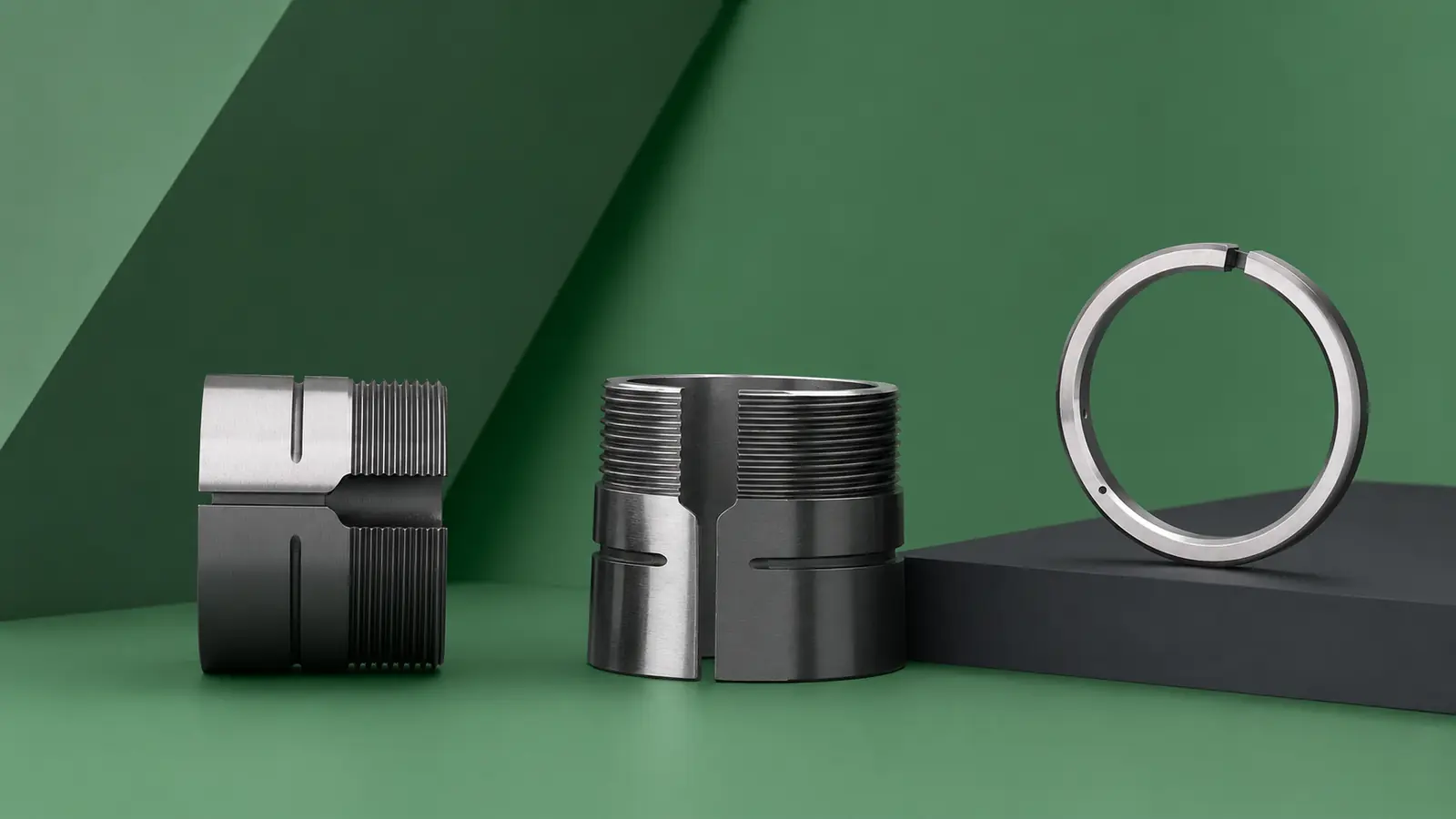
A bearing adapter sleeve locates a tapered-bore bearing on a cylindrical shaft seat. It normally combines a slotted tapered sleeve, a lock nut and a locking device. The sleeve series, shaft bore, thread, taper and matching bearing must all be correct.
A wrong bore can prevent assembly, while the wrong series may not match the bearing or housing. Buyers should confirm the complete sleeve designation with the bearing, shaft and housing details.
Table of contents
- What Is a Bearing Adapter Sleeve and How Does It Work?
- Which Sleeve Types and Sizes Should Buyers Compare?
- Where Are Bearing Adapter Sleeves Commonly Used?
- What Should Buyers Check Before Mounting?
- How Should a Sleeve Be Installed and Removed?
- Which Brand Series and Models Should Buyers Know?
- How Do Buyers Read a Bearing Adapter Sleeve Code?
- How Can HSN Support Bearing Adapter Sleeve Orders?
- FAQ
What Is a Bearing Adapter Sleeve and How Does It Work?
The sleeve has a cylindrical bore and a tapered outside surface, commonly with a 1:12 taper. As the lock nut drives the bearing onto the sleeve, the bearing moves up the taper. This reduces its radial internal clearance and creates a secure fit on the shaft.
Adapter sleeves can be used on plain or stepped shafts. Unlike a withdrawal sleeve, an adapter sleeve normally includes the nut and locking device. Buyers should still confirm whether the quotation covers a complete assembly.
The sleeve does not correct a damaged shaft or an unsuitable bearing seat. Shaft diameter, roundness, surface condition and straightness still affect mounting accuracy. In addition, the bearing must have a compatible tapered bore.
Which Sleeve Types and Sizes Should Buyers Compare?
Metric adapter sleeves commonly use H-series designations. H2, H3 and H23 forms serve different bearing dimension series. The following digits identify a size relationship, not a direct shaft-diameter value.
Inch-bore variants may use prefixes such as HA, HE or HS, depending on the manufacturer and shaft size system. Larger sleeves can also be prepared for hydraulic mounting or oil injection. These designs help reduce the force needed during mounting and dismounting, especially on large shafts.
Before comparing sleeves, check:
- Shaft bore and unit system
- Sleeve length, outside taper and thread
- Matching tapered-bore bearing
- Lock nut and locking device
- Housing space and shoulder arrangement
- Oil ducts or hydraulic features, when required
Where Are Bearing Adapter Sleeves Commonly Used?
Adapter sleeves are widely used with self-aligning ball bearings, spherical roller bearings and CARB-type toroidal roller bearings. Typical equipment includes conveyors, fans, crushers, screens, paper machines, material-handling systems and industrial gearboxes. Split plummer block housings also commonly use a bearing, sleeve, seals and locating rings as a coordinated arrangement.
Their main advantage is mounting flexibility. A tapered-bore bearing can be installed on a plain shaft without machining a tapered journal, which can simplify maintenance.
Nevertheless, the sleeve is only one part of the arrangement. A fixed bearing position may require locating rings, while a non-locating position needs axial movement within the housing. Seals must also match the shaft and housing dimensions.





What Should Buyers Check Before Mounting?
Confirm that the bearing bore is tapered. Then match the sleeve to the bearing series and actual shaft diameter. Do not select it only from the bearing bore code.
Inspect the shaft for burrs, corrosion, raised edges and dimensional errors. The sleeve bore and thread should also be clean and undamaged. Next, confirm the correct initial radial clearance and the target clearance reduction or drive-up distance for the bearing.
Large bearings may require hydraulic tools, oil injection or a hydraulic nut. Decide the method before ordering because a standard sleeve may not include oil ducts.
How Should a Sleeve Be Installed and Removed?
Lightly oil the contact surfaces only when the bearing manufacturer’s mounting procedure permits it. Position the sleeve on the shaft, place the tapered-bore bearing over it and tighten the lock nut gradually. Measure clearance reduction, axial drive-up or nut rotation according to the approved method for that bearing.
Over-driving can remove too much clearance and create heat. Under-driving can leave the bearing loose. After mounting, secure the nut with the specified locking device and check rotation.
During removal, release the locking device before loosening the nut. A withdrawal nut, hydraulic nut or oil-injection method can help with larger fits. Avoid striking the bearing rings or sleeve thread. If the sleeve will be reused, inspect the taper, slit, thread and locking surfaces first.
Which Brand Series and Models Should Buyers Know?
Several international brands supply adapter sleeves in standardized H-series forms. The examples below show complete references, but they do not prove that every brand version is interchangeable.
| Brand | Main forms or series | Complete model example |
|---|---|---|
| SKF | H metric; HA, HE and HS inch-bore variants | H 305; HE 305 |
| Schaeffler | H metric adapter sleeves | H305 |
| NSK | H metric plus selected HA and HE variants | H311; H317 |
| NTN | H-series sleeves used in SNC housing arrangements | H305 |
SKF H 305 is a metric sleeve supplied with a matching lock nut and washer. SKF HE 305 uses the same general size family but has an inch bore. NSK H311 is used in selected 50 mm shaft arrangements.
Brand should still be stated in an inquiry. Nut style, locking parts, tolerances and packaging scope need confirmation even when the standardized designation looks the same.
How Do Buyers Read a Bearing Adapter Sleeve Code?
The SKF H 305 example shows why the complete prefix and number matter.
| Code | Code section | Meaning |
|---|---|---|
| H | Product prefix | Metric adapter sleeve in the basic design |
| 3 | Basic series digit | Identifies the sleeve design and size family |
| 05 | Size code | Identifies the sleeve size and compatible bearing group |
| HE | Alternative prefix | Adapter sleeve with a metric outside form and an inch bore |
The digits do not provide every dimension. Check the bore, length, thread, matching nut and bearing designation. H305 is not selected simply because a bearing code ends in 05.
How Can HSN Support Bearing Adapter Sleeve Orders?
HSN Bearing Group reviews the sleeve and bearing as one mounting arrangement. Buyers should provide the complete sleeve and bearing references. Shaft size, taper, thread, sleeve length, mounting position, and quantity also require confirmation. Photos or drawings can clarify older or unusual designs. HSN can then check stock or discuss non-standard production.
Before shipment, agreed checks may cover bore size, taper accuracy, sleeve length, and thread condition. Material, hardness, and surface condition can also be inspected. HSN can verify matching nuts and locking devices when the order includes them. Similar sleeve numbers do not prove interchangeability. The bearing bore, shaft fit, thread, and mounting method must align.
FAQ
What does a bearing adapter sleeve do?
It mounts a tapered-bore bearing on a cylindrical shaft and allows its position to be adjusted before locking.
Can sleeve size alone confirm compatibility?
No. Check the bearing bore, shaft diameter, taper, thread, nut, locking device and complete sleeve designation.
How is mounting progress checked?
Use the specified drive-up, clearance-reduction or hydraulic method and follow the bearing maker’s instructions.
Can a bearing adapter sleeve be reused?
Only after inspection. Do not reuse a sleeve with damaged threads, taper, locking parts, corrosion or deformation.
Remarks
For detailed bearing adapter sleeve models not listed above, please contact HSN for model confirmation and supply discussion. When checking bearing adapter sleeve references, you can also send the complete model number, photos, dimensions, quantity, and working conditions for review.
This article is based on independent analysis of publicly available technical information and industry understanding for knowledge sharing. All brand names and trademarks mentioned belong to their respective owners. HSN Bearing Group is an independent bearing supplier and technical service provider.
Tel: +86 156 6578 7336 Email: service@hsnindustrial.com Website: www.rollingparts.com www.hsnbearing.com
Need Help Confirming a Bearing Adapter Sleeve?
If you urgently need a hard-to-find bearing adapter sleeve from stock in China, contact HSN. We can also discuss an alternative solution after technical confirmation.