

Why a Bearing for High Temperature Needs More Than Size Checks?

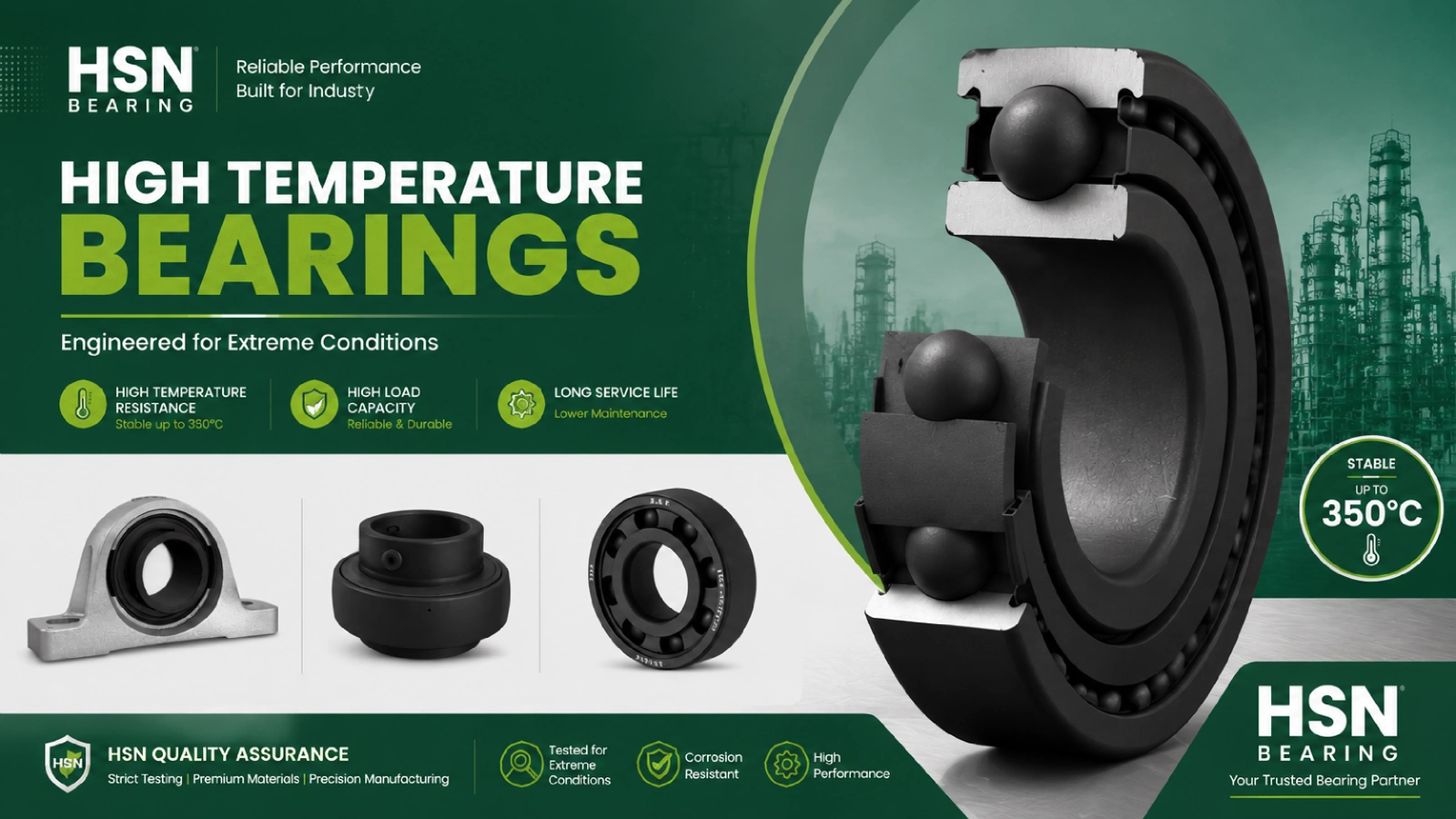
A bearing for high temperature service must protect its geometry and lubrication when normal grease, seals or cages can no longer operate reliably. Temperature alone does not define the correct bearing. Speed, load, atmosphere, contamination, thermal cycling and maintenance access also change the required design.
Buyers should therefore avoid selecting from bore size and maximum-temperature claims alone. A sealed bearing for 150°C service differs from a graphite-lubricated bearing for a slow furnace conveyor. Vacuum equipment may require another material and lubricant system entirely.
Table of contents
- What Defines a Bearing for High Temperature Service?
- Which Designs Suit Grease, Solid Lubricant, or Vacuum Duty?
- Where Are High-Temperature Bearings Commonly Used?
- What Limits Must Buyers Check Before Selection?
- What Should Buyers Know About Installation and Removal?
- Which Brand Series and Models Should Buyers Know?
- How Do Buyers Read a High-Temperature Bearing Code?
- How Can HSN Support High-Temperature Bearing Orders?
- FAQ
What Defines a Bearing for High Temperature Service?
Standard bearing steel, cages and lubricants have individual temperature limits. At elevated temperature, rings expand, hardness can decrease, grease can oxidize and seals can harden. The resulting loss of clearance or lubrication can increase friction and damage the raceways.
A high-temperature design may use heat-stabilized rings, increased radial clearance, steel or graphite cages, solid lubricant, special grease, shields or heat-resistant seals. Some bearings are dimensionally based on standard deep groove ball bearing series, which can simplify equipment design. However, identical outside dimensions do not confirm equal speed, load or lubrication performance.
The maximum published temperature is also not a universal operating target. Continuous temperature, peak temperature and heat conducted through the shaft should be reviewed separately.
Which Designs Suit Grease, Solid Lubricant, or Vacuum Duty?
High-temperature grease can support moderate or relatively high speed when its base oil and thickener suit the temperature. Sealed designs help retain lubricant and exclude contamination. Their seal material and grease life still limit continuous operation.
Graphite or other solid-lubricant designs are useful in hot, dry and slow-running applications. They reduce dependence on conventional grease, but their speed and load behavior differ from normal grease-lubricated bearings. A running-in period may also be required for some designs.
Vacuum or clean manufacturing equipment needs low-outgassing lubricants and controlled material combinations. Fluorinated grease, stainless components, ceramic elements or solid-lubricant spacers may be used. These bearings should be selected from the actual pressure, cleanliness and temperature range rather than a general high-temperature label.
Where Are High-Temperature Bearings Commonly Used?
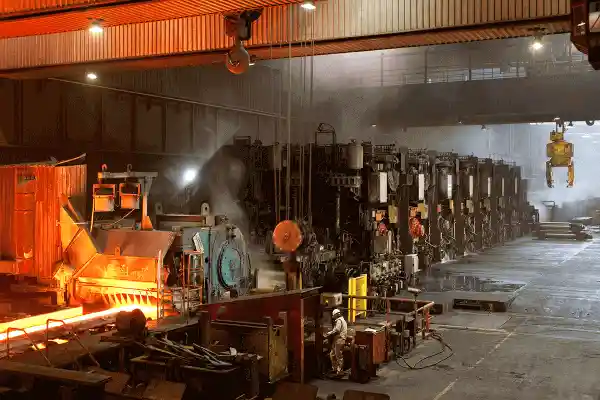
Typical industrial positions include kiln cars, roller-hearth furnaces, cooling beds, baking ovens and hot-air equipment. Furnace conveyors and heat-treatment lines often operate slowly in dry heat, making solid lubrication relevant.
Other applications include paint lines, drying equipment, food-processing ovens and hot fans. Semiconductor and film-manufacturing systems can add vacuum or cleanliness requirements. In these positions, ordinary grease evaporation or particle emission may be as important as temperature.
The bearing temperature may differ from the oven or process temperature. Heat shields, shaft conduction, airflow and duty cycle should be considered before specifying a model.



What Limits Must Buyers Check Before Selection?
Start with continuous and peak temperature at the bearing position. Then confirm speed, radial and axial load, shock, duty cycle and required life. A bearing rated for a very high temperature may still be unsuitable at the required speed.
Also review:
- Atmosphere, vacuum level and cleanliness
- Dust, scale, moisture or chemical exposure
- Shaft and housing expansion
- Required operating clearance
- Lubricant type and relubrication access
- Cage, shield or seal material
- Storage, start-up and running-in requirements
If the application includes temperature gradients, the inner ring may expand more than the outer ring. Fits and initial clearance must allow for this change without making the bearing loose when cold or overloaded when hot.
What Should Buyers Know About Installation and Removal?
Keep factory-filled or solid-lubricant bearings clean. Do not wash them or add normal grease unless the manufacturer permits it. Mixing lubricants can change high-temperature performance.
Measure the shaft and housing at a controlled temperature and check the specified fits. Apply mounting force to the ring with the interference fit. If heating is used, the mounting temperature must remain below the limit for the cage, seal and lubricant.
After installation, follow any required running-in procedure and monitor torque, noise and temperature. Slow graphite-lubricated bearings can behave differently from conventional greased bearings during initial operation. During removal, protect shields and special cages because replacement components may not be standard.
Which Brand Series and Models Should Buyers Know?
High-temperature ranges differ considerably among manufacturers. The examples below represent three distinct operating concepts.
| Brand | Main high-temperature range | Complete model example |
|---|---|---|
| SKF | VA201, VA208 and VA228 deep groove ball bearings | 6205-2Z/VA201 |
| NSK | High-temperature sealed DGBB and SPACEA special-environment series | 6205 DDU7 C3 E X26 |
| JTEKT | EXSEV special-environment bearing series | SV6205ZZSTC3 YS EX |
SKF 6205-2Z/VA201 uses shields and a high-temperature lubricant system for slow, hot operation.
NSK 6205 DDU7 C3 E X26 is a sealed design with heat-stabilized rings for service up to its specified 150°C range.
JTEKT EXSEV products cover high-temperature, clean and vacuum conditions through specialized materials and lubricant systems.
These models are not direct alternatives. Their temperature, speed, pressure, contamination and lubrication limits must be checked separately.
How Do Buyers Read a High-Temperature Bearing Code?
The code sections identify both the standard size and the special operating design.
| Code | Code section | Meaning |
|---|---|---|
| 6205 | Basic bearing number | Deep groove ball bearing with a nominal 25 mm bore |
| 2Z | SKF enclosure code | Non-contact shields on both sides |
| VA201 | SKF variant | High-temperature execution with a dedicated lubricant and clearance design |
| DDU7 | NSK enclosure code | Heat-resistant contact seals on both sides |
| C3 | Clearance code | Radial internal clearance greater than normal |
| X26 | NSK heat-treatment code | Heat-stabilized execution for the stated high-temperature range |
| EX | JTEKT series code | EXSEV special-environment execution |
The same 6205 basic size does not make these products equivalent. Buyers must retain every prefix, suffix and spacing element in the inquiry. When a code is incomplete, provide photographs of all markings and the application conditions.
How Can HSN Support High-Temperature Bearing Orders?
HSN Bearing Group reviews the complete model and required temperature range. Buyers should provide continuous and peak temperatures, speed, load, and duty cycle. Atmosphere, cooling, lubrication, cage, seals, clearance, quantity, and application also matter. These details distinguish a purpose-designed high-temperature bearing from a standard lubricated bearing. HSN checks supply resources against the exact configuration.
For discontinued or non-standard models, HSN can review drawings, samples, dimensions, and working conditions. Replacement or custom supply can follow technical confirmation. Before shipment, agreed checks may cover dimensions, hardness, clearance, material, rotation, and appearance. Vibration, noise, or other inspections can also be discussed. A shared number or temperature label does not prove interchangeability.
FAQ
Can standard bearings work with high-temperature grease?
Not always. Rings, cage, seals, clearance and dimensional stability must also suit the operating temperature.
When are solid lubricants useful?
They suit hot conditions where grease or oil cannot survive, but often involve lower speed and different friction.
Can high-temperature bearings run at normal speeds?
Not automatically. Solid-lubricant and special-clearance designs may have strict speed limits that require review.
Which temperature data should buyers provide?
Provide normal, peak and ambient temperatures, plus speed, load, duty cycle, lubrication, cooling and heat sources.
Remarks
For detailed high-temperature bearing models not listed above, please contact HSN for model confirmation and supply discussion. When checking high-temperature bearing references, you can also send the complete model number, photos, dimensions, quantity, and working conditions for review.
This article is based on independent analysis of publicly available technical information and industry understanding for knowledge sharing. All brand names and trademarks mentioned belong to their respective owners. HSN Bearing Group is an independent bearing supplier and technical service provider.
Tel: +86 156 6578 7336 Email: service@hsnindustrial.com Website: www.rollingparts.com www.hsnbearing.com
Need Help Confirming a Bearing for High Temperature?
If you urgently need a hard-to-find high-temperature bearing from stock in China, contact HSN. We can also discuss an alternative solution after technical confirmation.