

Why Cylindrical Bearing Type and Model Checks Matter for Buyers?

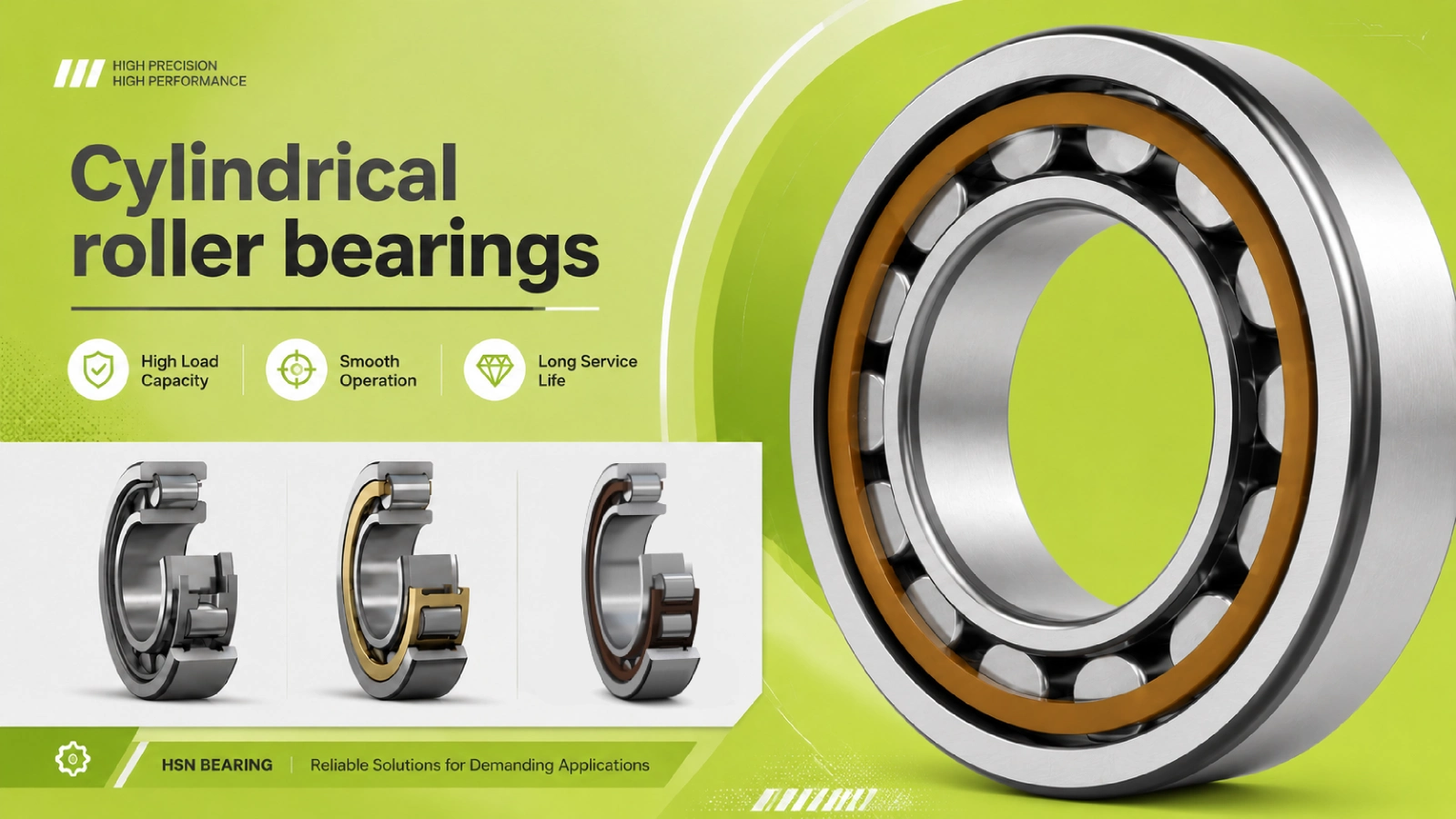
A cylindrical bearing uses rollers with line contact against the raceways, giving it high radial load capacity and good rigidity. However, the ring ribs determine whether the bearing allows axial displacement or locates the shaft. Cage design, internal clearance and precision also affect speed, heat and mounting.
For buyers, a basic size such as 2205 is not enough to define the product. NU, N, NJ and NUP arrangements can share dimensions while performing different locating functions. The complete model must therefore be checked before sourcing or comparing brands.
Table of contents
- What Defines a Cylindrical Bearing Structure?
- How Do NU, N, NJ, NUP, and Full-Complement Types Differ?
- Which Selection Factors Affect Load, Speed, and Axial Movement?
- Where Are Cylindrical Roller Bearings Commonly Used?
- What Should Buyers Check During Installation and Removal?
- Which Brand Series and Models Should Buyers Know?
- How Do Buyers Read a Cylindrical Bearing Model Code?
- How Can HSN Support Cylindrical Bearing Orders?
- FAQ
What Defines a Cylindrical Bearing Structure?
Cylindrical bearing rollers are guided between the inner- and outer-ring raceways. Their line contact spreads radial load over a larger area than ball contact, supporting heavily loaded and rigid shaft arrangements.
Many single-row designs are separable. The ring with the roller-and-cage assembly can be mounted independently from the other ring. This feature simplifies assembly when both shaft and housing require interference fits.
Most standard designs are open, so the equipment must provide sealing and lubrication. Misalignment is limited; shaft deflection and inaccurate seats can create edge loading.
How Do NU, N, NJ, NUP, and Full-Complement Types Differ?
The rib arrangement defines the axial function:
- NU type: two ribs on the outer ring and no ribs on the inner ring; commonly used as a non-locating bearing.
- N type: two ribs on the inner ring and no ribs on the outer ring; also allows axial displacement.
- NJ type: two outer-ring ribs and one inner-ring rib; can locate the shaft axially in one direction.
- NUP type: two outer-ring ribs, one fixed inner-ring rib and one loose flange ring; can provide axial location in both directions within its design limits.
- N or NU with an HJ angle ring: can modify the locating function when the manufacturer permits the combination.
Full-complement bearings contain more rollers without a conventional cage. They provide higher radial capacity but normally have lower speed capability. Double-row NN and NNU designs add stiffness for precision arrangements.
Which Selection Factors Affect Load, Speed, and Axial Movement?
First determine whether the position is locating or non-locating. A non-locating bearing must accommodate thermal expansion without becoming axially trapped. An NU or N design can permit displacement within the bearing, while other arrangements may rely on movement between a ring and its seat.
Next, review radial load, shock load, speed, shaft stiffness and lubrication. A caged design is generally preferred for higher speed. A full-complement design is considered when radial capacity is more important than speed.
Interference fits and heat reduce clearance after mounting. C3 or C4 is not a general upgrade; the correct group depends on fit, temperature, speed and load.
Where Are Cylindrical Roller Bearings Commonly Used?
Electric motors and generators use cylindrical roller bearings where the shaft carries high radial load and requires axial freedom at one position. Industrial gearboxes use them for radial capacity and compact support. Pumps, compressors and large fans can use them when the load path and thrust arrangement are defined separately.
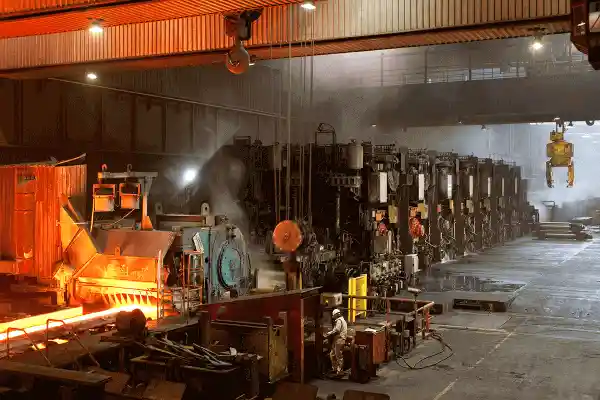
Rolling mills use single-row, double-row or multi-row designs at roll necks and drive positions. Railway traction systems, mining equipment and heavy transmissions also use cylindrical roller bearings under demanding radial loads. Machine-tool spindles often use double-row precision designs because rigidity and runout control are critical.
A motor may prioritize noise and clearance, while a rolling mill may focus on load, contamination and mounting frequency.




What Should Buyers Check During Installation and Removal?
Measure the shaft and housing seats before installation. Check roundness, cylindricity, shoulder squareness and fillet clearance. Because the bearing is sensitive to misalignment, both seats must support the rings correctly.
Apply mounting force only to the ring with the interference fit. The separable construction allows each ring to be installed directly on its seat. When joining the parts, align the rings carefully so the roller ends and ribs are not damaged.
Heating can assist an interference fit within the specified limits. Do not overheat the bearing or a polyamide cage. For frequent inner-ring removal, induction heating can reduce mechanical damage.
After mounting, verify axial movement where required, lubricant supply, free rotation, temperature and vibration.
Which Brand Series and Models Should Buyers Know?
International brands offer similar basic forms, but suffixes remain brand-specific.
| Brand | Main series or forms | Complete model example |
|---|---|---|
| SKF | NU, N, NJ, NUP; single and double row | NU 2205 ECP/C3 |
| Schaeffler FAG | NU, N, NJ, NUP; X-life caged designs | NU2205-E-XL-M1 |
| NSK | EW, EM and ET single-row series; precision types | NU2205ETC3 |
| NTN | NU, N, NJ and NUP ISO series | NU2205E |
SKF NU 2205 ECP/C3 and NSK NU2205ETC3 share the NU form and nominal 2205 size. However, ECP and ET identify different manufacturer-specific internal and cage designs. Schaeffler M1 identifies a brass cage execution, while NTN NU2205E identifies its enhanced-capacity version.
These examples are not an interchange chart. Buyers should compare dimensions, load ratings, rib geometry, cage, clearance, precision, speed and permitted axial displacement.
How Do Buyers Read a Cylindrical Bearing Model Code?
SKF NU 2205 ECP/C3 provides a useful code example.
| Code | Code section | Meaning |
|---|---|---|
| NU | Design prefix | Two ribs on the outer ring and no ribs on the inner ring |
| 22 | Dimension series | Identifies the width and diameter series |
| 05 | Bore code | Nominal 25 mm bore |
| EC | Internal design | Optimized internal geometry with higher roller capacity |
| P | Cage code | Glass-fibre-reinforced polyamide cage, roller centred |
| C3 | Clearance suffix | Radial internal clearance greater than normal |
The suffix should never be dropped from a purchase order. For example, replacing a brass cage with a polyamide cage can change temperature and lubricant compatibility. Changing clearance can also affect running temperature and vibration.
How Can HSN Support Cylindrical Bearing Orders?
HSN Bearing Group supports model confirmation, sourcing, inspection, and custom supply discussions. Buyers should provide the complete reference, quantity, and mounting position. HSN can review the bearing arrangement, dimensions, rib design, cage, bore, clearance, and precision. Load, speed, lubrication, fits, and working conditions also guide the review. Stock checks use the complete designation.
For obsolete, large, or non-standard bearings, HSN can review drawings, samples, and application data. Replacement or custom production can follow technical confirmation. Before shipment, agreed checks may cover dimensions, hardness, and radial clearance. Material, rotational accuracy, vibration, noise, or flaw detection can also be discussed. Similar NU numbers do not confirm identical execution.
FAQ
Can every cylindrical bearing locate a shaft axially?
No. N and NU types permit axial displacement, while NJ and NUP arrangements provide different locating functions.
Why are separable rings useful during mounting?
They simplify installation where interference fits are required, but matched components should remain together.
Are full-complement designs always better?
No. They offer higher load capacity but usually have lower speed capability and different lubrication needs.
Which code details must buyers confirm?
Check type, dimensions, bore, clearance, cage, precision, ring features, lubricant and complete suffixes.
Remarks
For detailed cylindrical bearing models not listed above, please contact HSN for model confirmation and supply discussion. When checking cylindrical bearing references, you can also send the complete model number, photos, dimensions, quantity, and working conditions for review.
This article is based on independent analysis of publicly available technical information and industry understanding for knowledge sharing. All brand names and trademarks mentioned belong to their respective owners. HSN Bearing Group is an independent bearing supplier and technical service provider.
Tel: 86.156.6578.7336 Email: service@hsnindustrial.com Website: www.rollingparts.com www.hsnbearing.com
Need Help Confirming a Cylindrical Bearing?
If you urgently need a hard-to-find cylindrical bearing from stock in China, contact HSN. We can also discuss an alternative or improved solution after technical confirmation.