

Why Electrical Insulating Sleeve Selection Needs Material Checks?

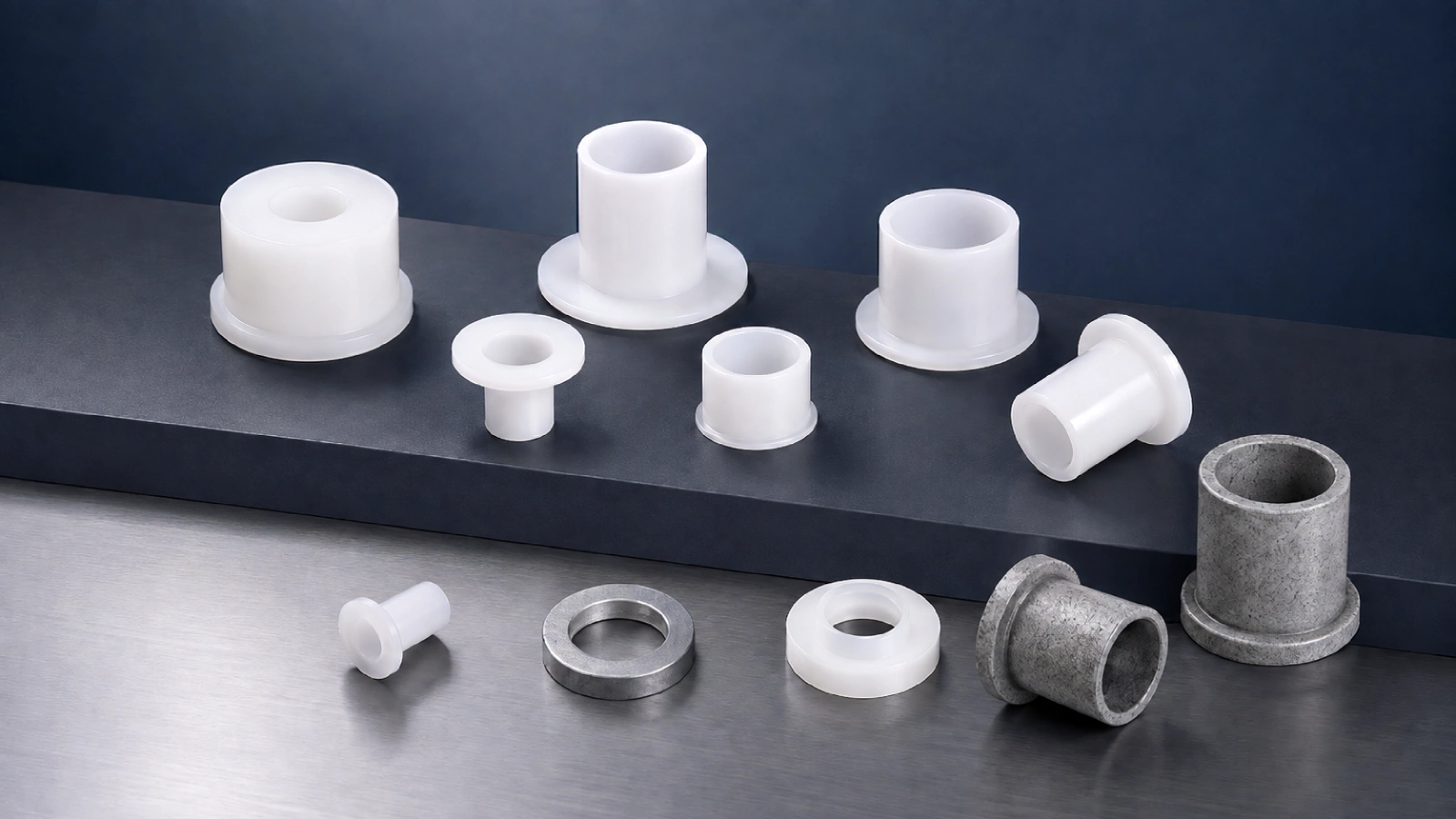
An electrical insulating sleeve separates a metal fastener from the wall of a through hole. In a sleeve-washer design, the tubular section covers the screw threads while the flange isolates the screw head or washer face. This helps interrupt an unwanted current path and reduces direct contact between dissimilar metals.
However, an insulating sleeve is not a rolling bearing or a bearing adapter sleeve. Its performance depends on material, shape, wall thickness, temperature, chemical exposure, compression, and the complete fastener stack. Buyers should confirm the installation geometry and electrical requirement instead of selecting by screw size alone.
Table of contents
- What Is an Electrical Insulating Sleeve?
- Which Sleeve Washer Shapes and Materials Are Available?
- Where Are Insulating Sleeve Washers Used?
- What Size, Material, and Operating Limits Must Buyers Check?
- What Should Buyers Check During Installation and Removal?
- McMaster-Carr Product Types and Part Number Examples
- What Part Details Should Buyers Confirm Before Ordering?
- How Can HSN Support Electrical Insulating Sleeve Orders?
- FAQ
What Is an Electrical Insulating Sleeve?
The component often resembles a flanged bushing with a thin sleeve. The sleeve fits between the screw and the mounting hole. The flange creates an insulating layer under the fastener head or a separate metal washer.
This structure differs from a flat insulating washer, which does not isolate the screw shank inside the hole. It also differs from an insulating cup washer, which covers a screw head or nut. For complete isolation, the design may need a sleeve washer on one side, another insulating washer on the opposite side, and clearance that prevents metal-to-metal contact.
Which Sleeve Washer Shapes and Materials Are Available?
Shape controls how the part sits under the fastener. Material controls the temperature, electrical, chemical, and mechanical limits. Common options include:
| Type or material | Main characteristic | Main selection concern |
|---|---|---|
| Flat-edge sleeve washer | Flat flange distributes clamping load | Flange OD, thickness, and sleeve height |
| Rolled-edge sleeve washer | Edge compresses around threads to help exclude contaminants | Thread fit and compression after tightening |
| Countersunk sleeve washer | Allows a flat- or oval-head screw to sit flush | Countersink angle and head geometry |
| Nylon | Broad general-purpose choice with some compliance | Temperature, moisture, creep, and tightening load |
| PTFE | Strong chemical resistance and higher temperature capability than nylon | Lower stiffness, creep, and required dielectric data |
| Ceramic | High-temperature electrical isolation | Brittleness, impact, and vibration |
| Hard fiber | Protects delicate surfaces such as circuit boards | Moderate insulation and moisture conditions |
Material names alone do not establish a suitable electrical rating. Buyers should request the available dielectric data and confirm that it matches the assembly voltage, environment, and applicable design standard.
Where Are Insulating Sleeve Washers Used?
Typical uses include switches, circuit breakers, control panels, electric motors, transformers, semiconductor equipment, printed circuit board mounting, ovens, kilns, and other fastened electrical assemblies.
The component can also reduce galvanic contact between dissimilar metals. However, it cannot correct an incomplete insulation path. A metal washer touching the hole wall, a sharp burr cutting the sleeve, or a screw head bridging the flange can bypass the insulating component. Review the full assembly, not only the individual washer.




What Size, Material, and Operating Limits Must Buyers Check?
Start with the screw size, but do not stop there. The sleeve inner diameter must clear the fastener without excessive looseness. Its outer diameter must fit the mounting hole while maintaining enough wall thickness. The sleeve height should cover the conductive section of the hole, and the flange must provide adequate isolation under the head or washer.
Confirm the following information:
- Screw size and head style
- Sleeve ID, OD, and height
- Flange OD and thickness
- Overall height and countersink angle, when applicable
- Nylon, PTFE, ceramic, hard-fiber, or other specified material
- Minimum and maximum operating temperature
- Available dielectric strength or other electrical rating
- Exposure to moisture, oils, acids, cleaners, or solvents
- Compression, impact, and vibration at the joint
- Required quantity, color, compliance, and packaging
The permitted tightening force depends on both the sleeve material and joint design. Therefore, use the fastener and insulation specification approved for the assembly.
What Should Buyers Check During Installation and Removal?
Deburr and clean the mounting hole before assembly. Sharp edges can shave nylon or PTFE and can crack a rigid ceramic sleeve. Insert the part without forcing it, then verify that the sleeve covers the intended conductive path.
Keep the insulating flange flat and centered. Confirm that the screw head, nut, and any metal washer cannot contact the mating surface around its edge. Tighten the fastener evenly and follow the assembly torque requirement. Excess force can crush a polymer sleeve, while impact can damage ceramic.
After installation, inspect the joint for displaced material, cracks, or a metal bridge. Apply the required electrical test to the complete assembly when the design calls for it. During removal, replace parts that show cuts, permanent compression, heat damage, or cracking.
McMaster-Carr Product Types and Part Number Examples
McMaster-Carr serves here as a product directory and procurement reference, not as the stated manufacturer of every listed item. Its product numbers identify specific combinations of shape, material, screw size, and dimensions.
| Product type | Material | Part number example | Key selection detail |
|---|---|---|---|
| Flat-edge insulating sleeve washer | Nylon | 90061A003 | No. 2 screw; dimensions and colour must match the order |
| Rolled-edge insulating sleeve washer | Nylon | 90097A116 | No. 4 screw; rolled edge and sleeve height require confirmation |
| Countersunk insulating sleeve washer | Nylon | 92354A140 | M8 screw; 90-degree countersink |
These part numbers are product references, not a universal code system. Buyers should not infer dimensions from the number itself. Keep the complete product number and verify the current listing, material, dimensions, temperature range, and package quantity before ordering.
What Part Details Should Buyers Confirm Before Ordering?
Send the complete part number when available. If the existing component has no readable number, provide clear photographs and a drawing showing the screw, hole, sleeve, and flange dimensions. Also state the material, temperature range, electrical requirement, operating environment, and quantity.
For a replacement review, explain how the component fits into the assembly. This is especially important when it belongs to an electric motor or a bearing-related insulation arrangement. A dimensional match does not confirm dielectric performance, chemical compatibility, or long-term compression behaviour.
How Can HSN Support Electrical Insulating Sleeve Orders?
HSN Bearing Group reviews the complete part number, product form, dimensions, material, and installation position. Buyers should also provide the fastener size, temperature, environment, quantity, photos, and drawings. These details help distinguish sleeve washers from unthreaded spacers or other similar parts. HSN discusses sourcing only after confirming the required geometry and material.
For difficult or non-standard parts, HSN can review samples and application conditions. Production or alternative supply can follow technical confirmation. Before shipment, agreed checks may cover dimensions, flange geometry, material, appearance, and fit. Electrical isolation also depends on full coverage and surrounding components. Therefore, a similar number or nominal size does not automatically prove suitability.
FAQ
Is an insulating sleeve a rolling bearing part?
No. It isolates a fastener from a hole or surface and should not be confused with a rolling bearing or adapter sleeve.
Can nylon and ceramic sleeves use the same limits?
No. Their temperature, moisture, compression, chemical and impact behavior differ and require separate review.
Which sleeve dimensions must buyers confirm?
Check screw size, inside and outside diameters, sleeve height, flange diameter, flange thickness and overall height.
Can visible fit confirm electrical insulation?
No. Verify material ratings, full isolation coverage and the absence of unintended metal-to-metal contact paths.
Remarks
For detailed electrical insulating sleeve models not listed above, please contact HSN for model confirmation and supply discussion. When checking electrical insulating sleeve references, you can also send the complete part number, photos, dimensions, quantity, and working conditions for review.
This article is based on independent analysis of publicly available technical information and industry understanding for knowledge sharing. All brand names and trademarks mentioned belong to their respective owners. HSN Bearing Group is an independent bearing supplier and technical service provider.
Tel: +86 156 6578 7336 Email: service@hsnindustrial.com Website: www.rollingparts.com www.hsnbearing.com
Need Help Checking an Electrical Insulating Sleeve Reference?
For a bearing- or motor-related inquiry, contact HSN with the part number, drawing, material, dimensions, quantity and operating conditions.